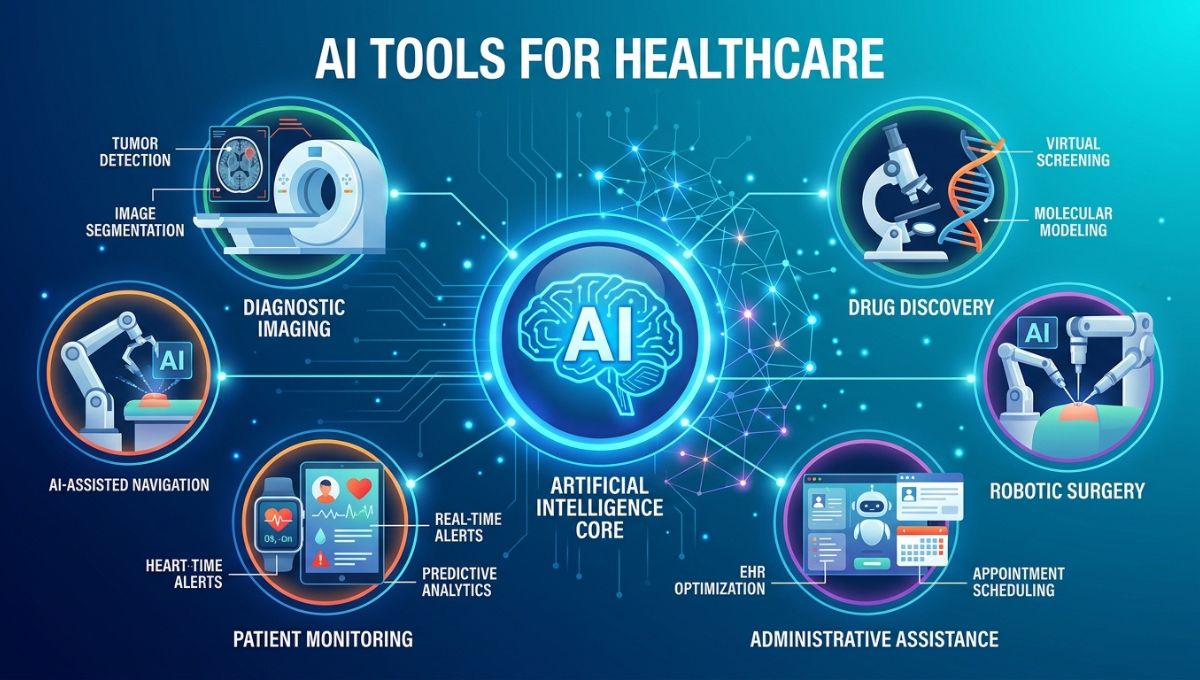
The healthcare industry is undergoing one of the most significant technological transformations in its history. Hospitals, clinics, diagnostic centers, pharmaceutical companies, insurance providers, and healthcare professionals are increasingly turning to artificial intelligence to improve patient care, streamline operations, enhance diagnostics, and reduce costs. As healthcare systems worldwide face growing patient populations, staffing shortages, and rising operational expenses, AI is emerging as a critical solution.
The adoption of AI Tools for Healthcare is accelerating across nearly every area of medicine. From medical imaging and disease detection to administrative automation and virtual patient assistance, artificial intelligence is helping healthcare organizations deliver faster, more accurate, and more efficient services. What was once considered experimental technology is now becoming a practical tool used daily by medical professionals around the world.
Healthcare generates enormous amounts of data every day, including patient records, diagnostic reports, medical images, treatment plans, laboratory results, and insurance information. Managing and analyzing this data manually can be overwhelming. AI-powered systems can process large volumes of information quickly, helping healthcare providers make better decisions while improving patient outcomes.
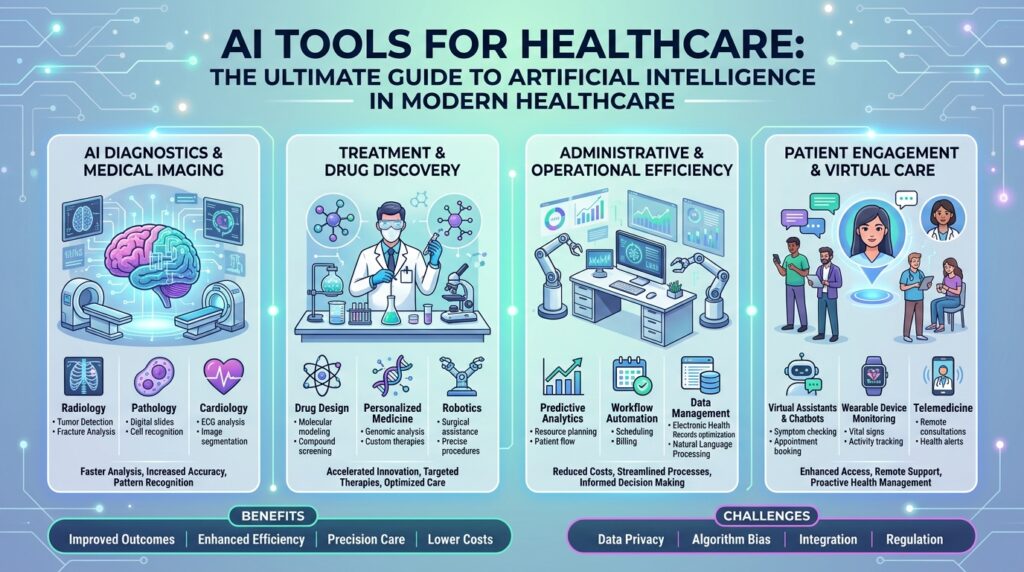
As technology continues to evolve, artificial intelligence is expected to become even more integrated into healthcare workflows. Understanding the best AI Tools for Healthcare, their applications, benefits, limitations, and implementation strategies can help healthcare organizations make informed decisions about adopting these transformative technologies.
What Are AI Tools for Healthcare?
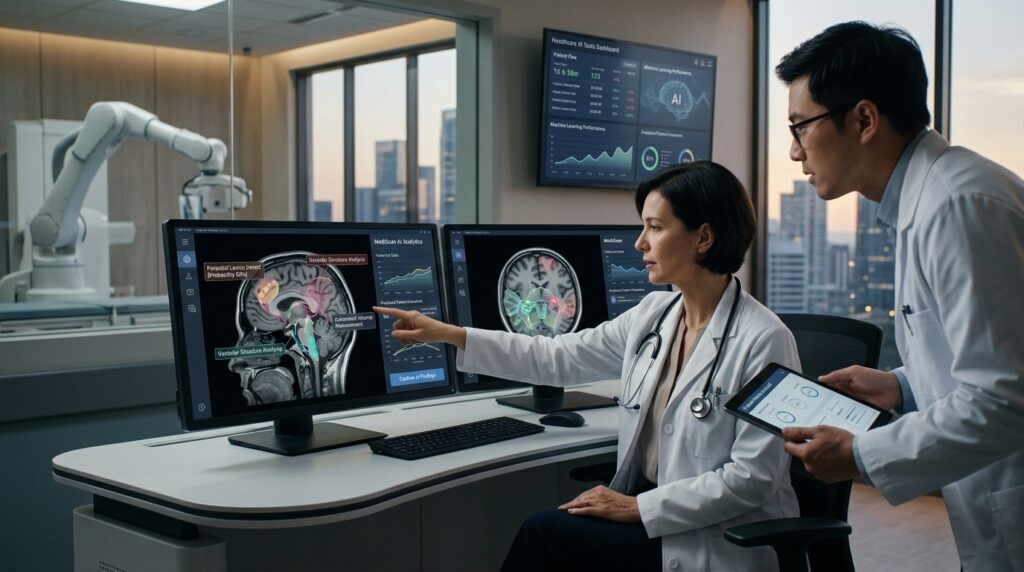
AI tools for healthcare are software platforms and intelligent systems that use artificial intelligence, machine learning, natural language processing, predictive analytics, and computer vision to support medical and administrative tasks. These tools are designed to assist healthcare professionals rather than replace them, helping improve efficiency, accuracy, and decision-making.
Healthcare AI systems can analyze patient data, identify patterns, predict outcomes, automate documentation, support diagnostics, and enhance communication between providers and patients. Unlike traditional software, AI systems continuously learn from new data, allowing them to improve performance over time.
Modern healthcare AI applications include:
- Medical imaging analysis
- Disease detection and diagnosis
- Clinical decision support
- Patient monitoring
- Drug discovery
- Medical documentation
- Virtual health assistants
- Revenue cycle management
- Appointment scheduling
- Predictive analytics
These capabilities make AI one of the most important technologies shaping the future of healthcare.
Why AI Is Important in Healthcare
Healthcare organizations face several ongoing challenges, including increasing patient demand, physician burnout, administrative burdens, rising costs, and workforce shortages. AI offers solutions that can help address many of these issues while improving the quality of care.
One of the biggest advantages of AI is its ability to process and analyze massive amounts of data much faster than humans. This allows healthcare professionals to identify trends, detect abnormalities, and make informed decisions more efficiently.
AI can also reduce administrative workloads. Many healthcare workers spend significant time completing documentation, processing records, and managing appointments. Automation allows staff to focus more on patient care and less on paperwork.
Another important factor is accuracy. AI-powered diagnostic tools can help identify diseases earlier, potentially leading to better treatment outcomes. While AI is not a replacement for medical expertise, it can serve as a valuable support system that improves clinical decision-making.
Current Healthcare Industry Adoption and Market Trends
The healthcare sector is among the fastest-growing adopters of artificial intelligence technology. Hospitals, research institutions, pharmaceutical companies, and healthcare technology providers are investing heavily in AI-powered solutions.
Several key trends are driving adoption:
| Trend | Impact on Healthcare |
|---|---|
| Digital Health Expansion | Increased use of AI-powered platforms |
| Telemedicine Growth | Greater demand for virtual assistance |
| Medical Imaging Innovation | Faster and more accurate diagnostics |
| Healthcare Data Explosion | Need for intelligent data analysis |
| Personalized Medicine | More customized treatment approaches |
| Administrative Automation | Reduced operational costs |
These trends indicate that AI will continue playing a growing role in healthcare delivery and management.
Benefits of Using AI Tools in Healthcare
Healthcare organizations adopt AI because it offers significant benefits across both clinical and operational functions. These benefits often lead to improved patient outcomes, better efficiency, and reduced costs.
One major advantage is faster diagnosis. AI systems can analyze medical images and patient data in seconds, helping healthcare providers identify potential conditions earlier.
Another benefit is improved operational efficiency. Hospitals and clinics can automate repetitive administrative tasks, reducing workloads and allowing staff to focus on patient care.
AI also supports personalized medicine by analyzing patient-specific data to recommend tailored treatment approaches. This can improve treatment effectiveness and patient satisfaction.
In addition, predictive analytics helps healthcare organizations identify high-risk patients, optimize resource allocation, and improve long-term planning.
ChatGPT for Healthcare Communication and Documentation
ChatGPT has become one of the most versatile AI tools available for healthcare organizations. While it is not designed to diagnose patients, it can support healthcare professionals in administrative, educational, and communication tasks.
Healthcare organizations use ChatGPT for creating patient education materials, drafting emails, generating healthcare content, preparing training documents, and assisting with internal communications.
For example, a clinic can use ChatGPT to create easy-to-understand explanations of medical procedures, helping patients better understand their treatment plans.
Key Features
| Feature | Benefit |
|---|---|
| Content Generation | Faster creation of healthcare materials |
| Patient Education | Simplified medical explanations |
| Administrative Support | Reduced documentation workload |
| Training Assistance | Improved staff education resources |
Pros
- Easy to use
- Supports multiple healthcare functions
- Improves communication efficiency
- Reduces content creation time
Cons
- Not suitable for medical diagnosis
- Requires human review
- Must comply with privacy regulations
IBM Watson Health
IBM Watson Health is one of the most recognized AI platforms in healthcare. It uses advanced analytics and machine learning to support clinical decision-making, medical research, and healthcare management.
Watson Health can analyze large datasets and identify patterns that may help healthcare providers make more informed decisions. It has been used in areas such as oncology research, treatment planning, and population health management.
Key Features
- Clinical decision support
- Healthcare analytics
- Medical research assistance
- Data integration
Pros
- Strong analytical capabilities
- Handles large healthcare datasets
- Supports evidence-based decisions
Cons
- Complex implementation
- Higher costs for smaller organizations
Aidoc for Medical Imaging
Aidoc specializes in AI-powered medical imaging analysis. The platform helps radiologists identify abnormalities in scans more quickly and efficiently.
Aidoc uses computer vision technology to analyze imaging studies such as CT scans and X-rays, helping prioritize urgent cases and improve workflow efficiency.
Key Features
- Imaging analysis
- Workflow prioritization
- Radiology support
- Real-time alerts
Pros
- Faster diagnosis support
- Improved radiology workflows
- Reduced workload for specialists
Cons
- Requires integration with imaging systems
- Designed primarily for radiology departments
PathAI for Pathology
PathAI focuses on pathology and disease diagnosis. The platform uses artificial intelligence to assist pathologists in analyzing tissue samples and identifying disease patterns.
PathAI aims to improve diagnostic accuracy and consistency while supporting medical research efforts.
Key Features
- Digital pathology analysis
- Diagnostic support
- Research applications
- Data-driven insights
Pros
- Enhanced diagnostic consistency
- Valuable for research
- Supports pathology workflows
Cons
- Specialized use case
- Requires digital pathology infrastructure
Tempus for Precision Medicine
Tempus uses AI and data analytics to support personalized medicine. The platform helps healthcare providers analyze clinical and molecular data to guide treatment decisions.
Tempus is particularly active in oncology, where personalized treatment plans can significantly impact patient outcomes.
Key Features
- Genomic analysis
- Precision medicine support
- Clinical data integration
- Treatment recommendations
Pros
- Supports personalized care
- Strong data analytics
- Valuable in cancer treatment
Cons
- Requires specialized expertise
- Limited relevance outside certain specialties
Viz.ai for Stroke Care and Patient Management
Viz.ai focuses on improving patient care through AI-powered clinical coordination. The platform is widely known for supporting stroke diagnosis and treatment workflows.
By analyzing imaging data and facilitating communication among healthcare teams, Viz.ai helps accelerate critical treatment decisions.
Key Features
- Stroke detection
- Care coordination
- Imaging analysis
- Team communication
Pros
- Faster emergency response
- Improved care coordination
- Better patient outcomes
Cons
- Specialty-focused platform
- Requires clinical workflow integration
Nuance Dragon Medical One
Nuance Dragon Medical One uses AI-powered speech recognition to help clinicians document patient encounters more efficiently.
Medical documentation consumes a significant portion of healthcare providers’ time. Dragon Medical One reduces administrative burdens by converting speech into structured clinical notes.
Key Features
- Speech recognition
- Clinical documentation
- EHR integration
- Voice commands
Pros
- Saves documentation time
- Reduces physician burnout
- Improves workflow efficiency
Cons
- Requires training for optimal use
- Accuracy may vary based on environment
Zebra Medical Vision
Zebra Medical Vision develops AI algorithms for medical imaging analysis. The platform helps healthcare providers identify potential diseases through automated image interpretation.
Key Features
- Imaging analysis
- Disease detection
- Clinical decision support
- Workflow enhancement
Pros
- Supports radiologists
- Faster image interpretation
- Improved efficiency
Cons
- Requires imaging infrastructure
- Limited to specific clinical applications
Olive AI for Healthcare Operations
Olive AI focuses on automating healthcare administrative processes. The platform helps organizations reduce repetitive tasks and improve operational efficiency.
Key Features
- Workflow automation
- Administrative support
- Revenue cycle management
- Process optimization
Pros
- Reduced administrative workload
- Improved operational efficiency
- Cost savings
Cons
- Requires process integration
- Best suited for larger organizations
Pricing Overview Table
| Tool | Pricing Level |
|---|---|
| ChatGPT | Low to Medium |
| IBM Watson Health | High |
| Aidoc | High |
| PathAI | High |
| Tempus | High |
| Viz.ai | High |
| Dragon Medical One | Medium to High |
| Zebra Medical Vision | High |
| Olive AI | Medium to High |
Comparison Table of Leading Healthcare AI Tools
| Tool | Primary Use | Best For |
|---|---|---|
| ChatGPT | Communication | Healthcare Administration |
| IBM Watson Health | Analytics | Hospitals |
| Aidoc | Imaging Analysis | Radiology |
| PathAI | Pathology | Diagnostic Labs |
| Tempus | Precision Medicine | Oncology |
| Viz.ai | Stroke Care | Emergency Medicine |
| Dragon Medical One | Documentation | Physicians |
| Zebra Medical Vision | Imaging | Radiology Departments |
| Olive AI | Operations | Healthcare Systems |
Real-World Use Cases of AI in Healthcare
A hospital radiology department can use Aidoc to prioritize urgent scans, helping radiologists identify critical cases more quickly. This can improve response times and potentially save lives.
A physician group can implement Dragon Medical One to automate clinical documentation, reducing administrative burdens and allowing doctors to spend more time with patients.
An oncology center can use Tempus to analyze patient-specific data and support personalized treatment planning.
A healthcare system can deploy Olive AI to automate administrative workflows, reducing operational costs and improving efficiency.
Industry-Specific Applications of Healthcare AI
AI applications vary across different healthcare sectors.
Hospitals
Hospitals use AI for diagnostics, workflow management, patient monitoring, and resource optimization.
Clinics
Clinics often adopt AI for scheduling, documentation, and patient communication.
Diagnostic Centers
Imaging and pathology facilities use AI to improve diagnostic accuracy and efficiency.
Pharmaceutical Companies
Drug discovery and clinical research increasingly rely on AI-powered analytics.
Insurance Providers
AI helps detect fraud, automate claims processing, and improve risk assessment.
Step-by-Step Guide to Implementing AI in Healthcare
Healthcare organizations should approach AI adoption strategically.
Step 1: Identify operational or clinical challenges.
Step 2: Define measurable goals.
Step 3: Evaluate available AI solutions.
Step 4: Ensure compliance with regulations.
Step 5: Train staff effectively.
Step 6: Monitor performance and outcomes.
Step 7: Expand AI usage gradually.
This structured approach helps maximize success while minimizing disruption.
Common Mistakes to Avoid
Many organizations attempt to implement AI without clearly defined objectives. This can lead to poor adoption and limited results.
Another common mistake is neglecting staff training. Even the best AI platform will struggle if users do not understand how to use it effectively.
Data quality is another critical factor. AI systems depend on accurate information to produce reliable results.
Organizations should also avoid viewing AI as a replacement for healthcare professionals. The most effective implementations use AI as a support tool that enhances human expertise.
Best Practices for Healthcare AI Adoption
Successful healthcare organizations focus on specific use cases with measurable outcomes. They prioritize data quality, staff education, and regulatory compliance.
Maintaining transparency is also important. Patients and healthcare providers should understand how AI supports decision-making processes.
Regular performance evaluation helps ensure AI systems continue delivering value over time.
ROI and Business Impact of Healthcare AI
AI can deliver substantial returns by improving efficiency, reducing administrative costs, and enhancing patient outcomes.
For example, automated documentation systems can save physicians hours each week. Imaging analysis tools can improve workflow efficiency and reduce delays.
Operational automation can lower administrative expenses while enabling healthcare organizations to allocate resources more effectively.
Although implementation costs can be significant, many organizations achieve long-term benefits through improved productivity and better patient care.
Future Trends in Healthcare AI
The future of healthcare AI is expected to include several major developments.
Predictive analytics will become more sophisticated, helping healthcare providers identify risks before conditions worsen.
Personalized medicine will continue expanding as AI improves genomic analysis and treatment recommendations.
Virtual health assistants are likely to become more common, supporting patient engagement and chronic disease management.
AI-powered diagnostics will become increasingly integrated into routine clinical workflows.
Healthcare organizations may also adopt more comprehensive AI ecosystems that connect diagnostics, operations, patient communication, and analytics into unified platforms.
Expert Recommendations
Organizations new to healthcare AI should begin with solutions that address immediate challenges, such as documentation automation or workflow optimization.
Hospitals seeking clinical improvements may benefit from imaging analysis platforms like Aidoc and Zebra Medical Vision.
Large healthcare systems often gain value from enterprise platforms such as IBM Watson Health and Olive AI.
Regardless of the technology selected, successful implementation requires strong leadership, staff engagement, and ongoing evaluation.
Comprehensive Conclusion
The adoption of AI Tools for Healthcare is transforming medicine by helping organizations improve efficiency, enhance patient care, and make better decisions. From medical imaging and precision medicine to documentation and operational automation, artificial intelligence is becoming an essential component of modern healthcare delivery.
Leading Healthcare AI Tools such as ChatGPT, IBM Watson Health, Aidoc, PathAI, Tempus, Viz.ai, Dragon Medical One, Zebra Medical Vision, and Olive AI demonstrate the wide range of applications available today. These platforms help healthcare providers address clinical challenges, reduce administrative burdens, and improve patient outcomes.
As healthcare continues to evolve, artificial intelligence will play an increasingly important role in shaping the future of medicine. Organizations that strategically adopt AI technologies while maintaining strong clinical oversight are likely to achieve significant improvements in efficiency, quality of care, and long-term sustainability.