
Many creators want to grow on YouTube but struggle with time, skills, and consistency. Recording videos, editing content, writing scripts, and optimizing uploads require effort and patience. This slows growth and often leads to burnout. Competition increases every day, and manual work makes it difficult to keep up. AI tools solve this problem by automating most parts of the process. When you use AI in a structured workflow, you can produce more content, maintain consistency, and improve quality without spending endless hours on each video.
Why YouTube Automation Is Growing Fast
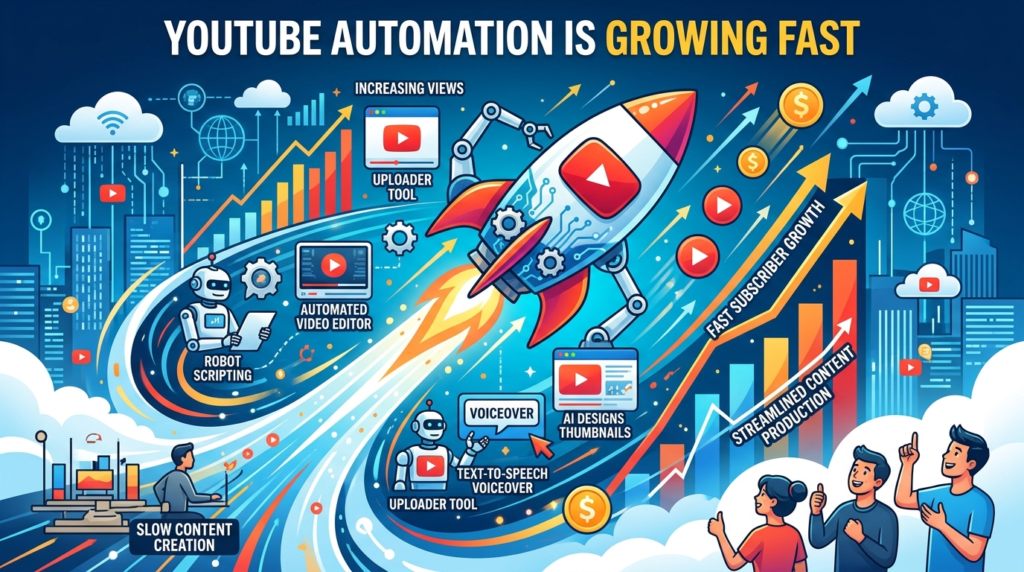
YouTube has become one of the largest content platforms in the world. Millions of videos are uploaded daily, and creators compete for attention. Automation gives an advantage because it increases speed and efficiency. Instead of spending days on one video, creators can produce multiple videos in a short time.
AI tools reduce the need for advanced skills. You do not need professional editing knowledge or voice recording equipment. AI can generate scripts, create voiceovers, and even build videos automatically. This lowers the barrier for beginners and allows experienced creators to scale faster.
Consistency plays a key role in YouTube growth. Channels that upload regularly perform better. AI helps maintain a consistent schedule by reducing workload. You can plan and execute content faster, which improves visibility and engagement.
Another reason for growth is the rise of short-form content. Platforms like YouTube Shorts reward frequent posting. AI tools can convert long videos into multiple short clips. This increases reach and allows creators to target different audiences with the same content.
Complete AI YouTube Automation Workflow
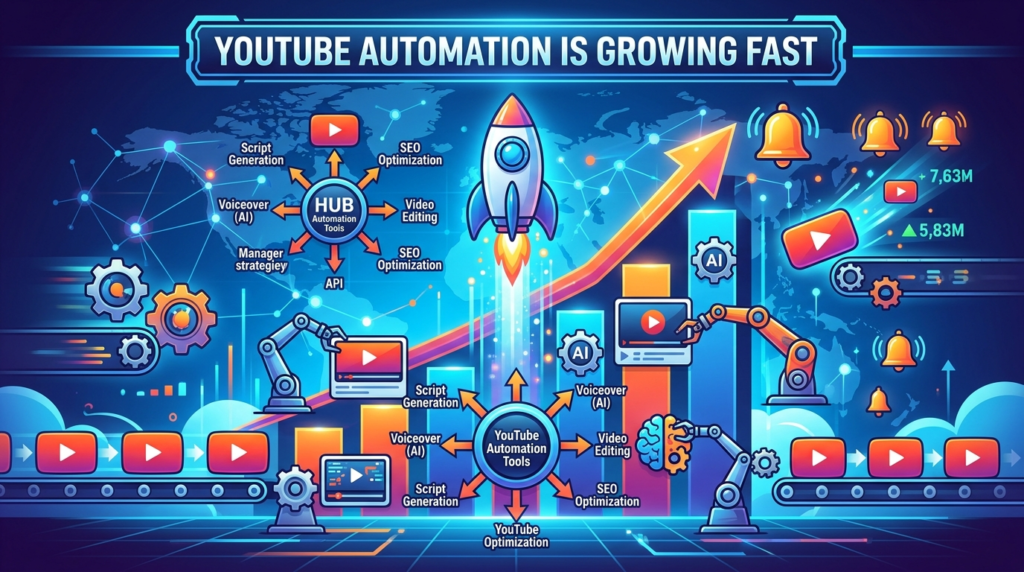
A successful YouTube automation system follows a clear process. AI tools support each stage and remove delays.
Topic research is the starting point. AI tools analyze trends, keywords, and audience interest. They suggest topics that have high demand and engagement potential. This reduces guesswork and increases the chances of creating viral content.
Script writing comes next. AI generates structured scripts based on your topic. These scripts include hooks, main points, and conclusions. You can edit them to match your style. This step saves time and ensures your content stays focused.
Voiceover generation replaces manual recording. AI tools convert text into natural-sounding voiceovers. You can choose different tones and styles. This allows you to create videos without using your own voice.
Video creation turns scripts into visual content. AI tools combine images, clips, and animations to build videos. Some tools automatically match visuals with the script. This creates a complete video without manual editing.
Editing and clipping improve content quality. AI tools cut unnecessary parts, add captions, and highlight key moments. They can also convert long videos into short clips for platforms like YouTube Shorts.
Publishing and optimization complete the process. AI tools suggest titles, tags, and descriptions. They also help schedule uploads. This ensures consistency and improves discoverability.
AI Tools for Each Stage
Different tools serve different purposes. Understanding these categories helps you build an effective system.
Script generation tools create video scripts quickly. They help you organize ideas and maintain structure. This reduces planning time and improves content clarity.
Voice generation tools convert text into audio. They remove the need for recording equipment and editing. These tools allow you to create professional voiceovers easily.
Video creation tools generate visuals based on your script. They combine images, animations, and transitions. This simplifies the video production process.
Editing and clipping tools optimize content. They cut videos, add captions, and create short clips. Tools like OpusClip help turn long videos into multiple short pieces, increasing reach and engagement.
SEO and optimization tools improve visibility. They suggest keywords, titles, and tags. This helps your videos rank higher in search results.
YouTube Automation Workflow Table
| Stage | Purpose | AI Role | Outcome |
|---|---|---|---|
| Topic Research | Find trending ideas | Analyze trends and keywords | High-demand content ideas |
| Script Writing | Create structured content | Generate scripts | Faster production |
| Voiceover | Convert text to audio | Generate voice | No recording required |
| Video Creation | Build visuals | Generate video | Complete content |
| Editing and Clipping | Optimize video | Cut and enhance | Engaging content |
| Publishing | Upload and schedule | Automate posting | Consistent growth |
How to Build a Full AI YouTube Automation System
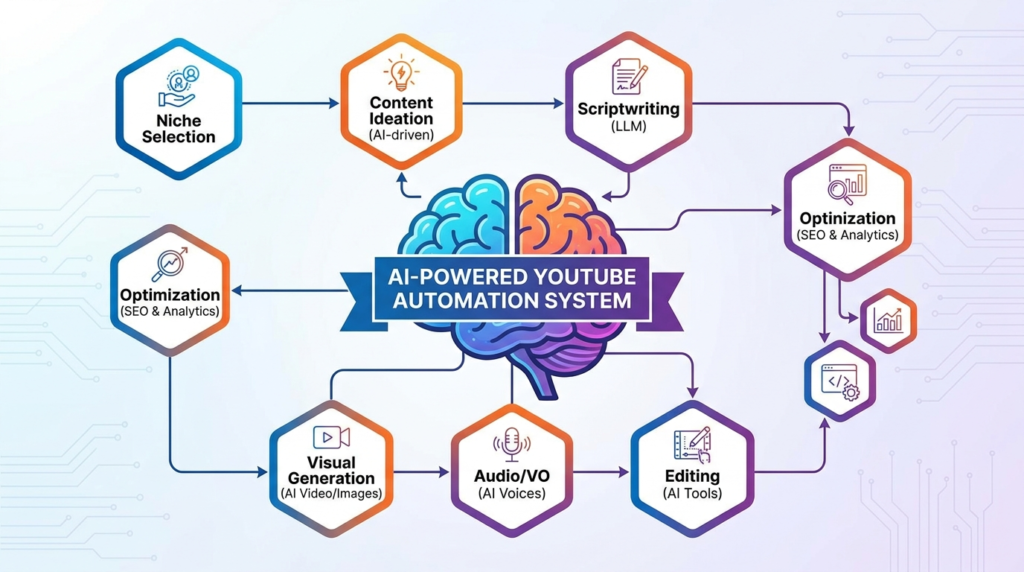
Building a system requires a step-by-step approach. Start with a clear topic. Choose a niche that has consistent demand. This helps you create focused content.
Use AI to generate scripts. Review the script and adjust it to match your audience. This ensures your content stays relevant and engaging.
Convert the script into a voiceover. Select a tone that fits your content style. This step creates a professional audio track without recording.
Generate the video using AI tools. Combine visuals with your script. Ensure the video flows smoothly and matches the message.
Use clipping tools to create short videos. Short-form content increases reach and attracts new viewers. Post these clips across multiple platforms.
Optimize your video before publishing. Use AI tools to generate titles, tags, and descriptions. This improves discoverability.
Schedule your uploads. Consistency builds audience trust and improves performance. Follow a regular posting schedule.
Benefits of AI YouTube Automation
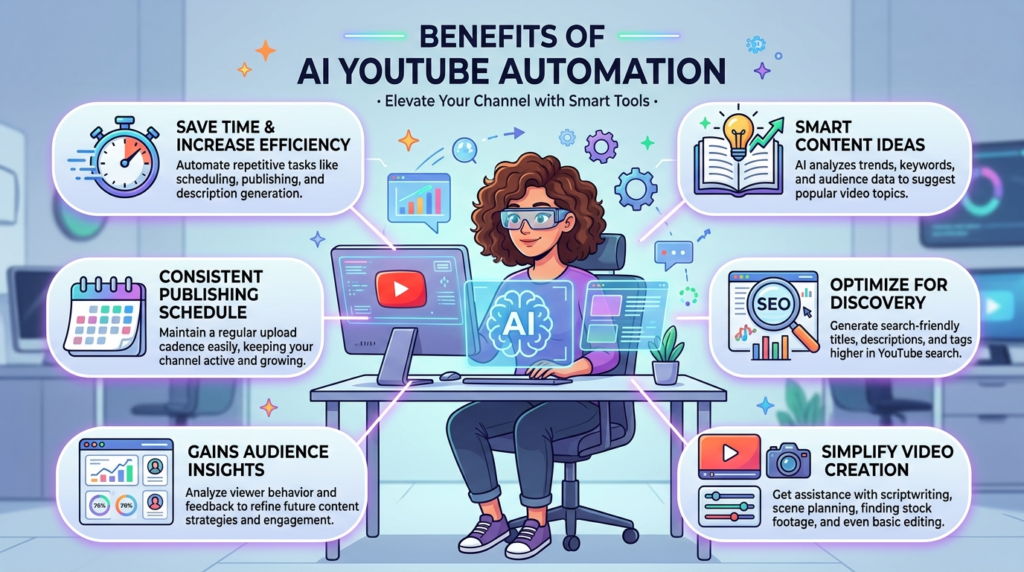
AI automation saves time. You can create videos faster and focus on strategy. This allows you to produce more content without increasing effort.
It reduces costs. You do not need expensive equipment or a large team. AI tools handle most tasks, which lowers expenses.
It improves consistency. Regular uploads increase visibility and engagement. AI helps maintain a steady workflow.
It increases scalability. You can manage multiple channels or topics. Automation allows you to expand without overwhelming yourself.
It enhances creativity. AI tools provide ideas and suggestions. This helps you explore new content formats and styles.
Common Mistakes to Avoid
Many creators misuse AI tools. Avoiding these mistakes improves results. Using AI without editing reduces quality. Always review and refine output. This ensures your content remains unique and engaging.
Ignoring thumbnails reduces click-through rate. Thumbnails play a key role in attracting viewers. Use AI tools or design techniques to create strong visuals.
Posting inconsistently slows growth. Even with AI, you need a schedule. Consistency builds momentum.
Relying on one tool limits results. Use multiple tools for different stages. This improves overall performance.
Skipping analytics prevents improvement. Track performance and adjust your strategy. Data helps you identify what works.
Advanced Strategies for Growth
Once you build a basic system, you can scale your channel. Advanced strategies help you grow faster.
Create multiple content formats. Combine long videos with short clips. This increases reach and engagement.
Focus on niche authority. Choose a specific topic and create content around it. This helps you attract a targeted audience.
Use batch production. Create multiple videos in one session. This saves time and ensures consistency.
Test different styles. Experiment with formats, topics, and presentation. This helps you find what works best.
Repurpose content. Turn one video into multiple pieces. Use clips, posts, and summaries. This maximizes output from a single idea.
Collaborate with other creators. Partnerships expand your reach. This helps you grow faster.
Future of AI in YouTube Automation

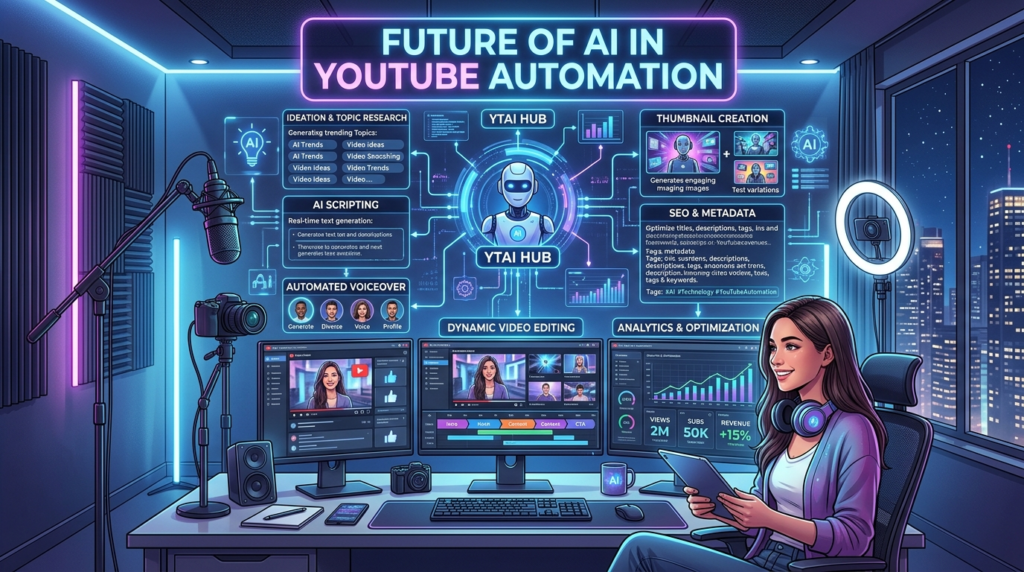
AI technology continues to evolve. Future tools will offer better voice quality, more realistic visuals, and deeper automation. These improvements will make content creation even easier.
Personalization will play a larger role. AI may tailor content based on viewer preferences. This can increase engagement and retention.
Integration between tools will improve. Platforms may combine multiple features into one system. This will simplify workflows.
Automation may extend to analytics and strategy. AI could suggest content ideas based on performance data. This will help creators make better decisions.
Creators who adapt to these changes will stay ahead. Those who rely only on manual methods may struggle to compete.
Conclusion
AI tools have transformed YouTube automation into a practical and scalable approach. They reduce workload, improve efficiency, and allow creators to focus on strategy. When you connect these tools into a structured system, you can produce consistent and high-quality content. Success depends on how you use these tools, not just having access to them. Focus on building a clear workflow, maintain consistency, and use data to improve your process. With the right approach, AI YouTube automation can help you grow faster and build a sustainable content channel.