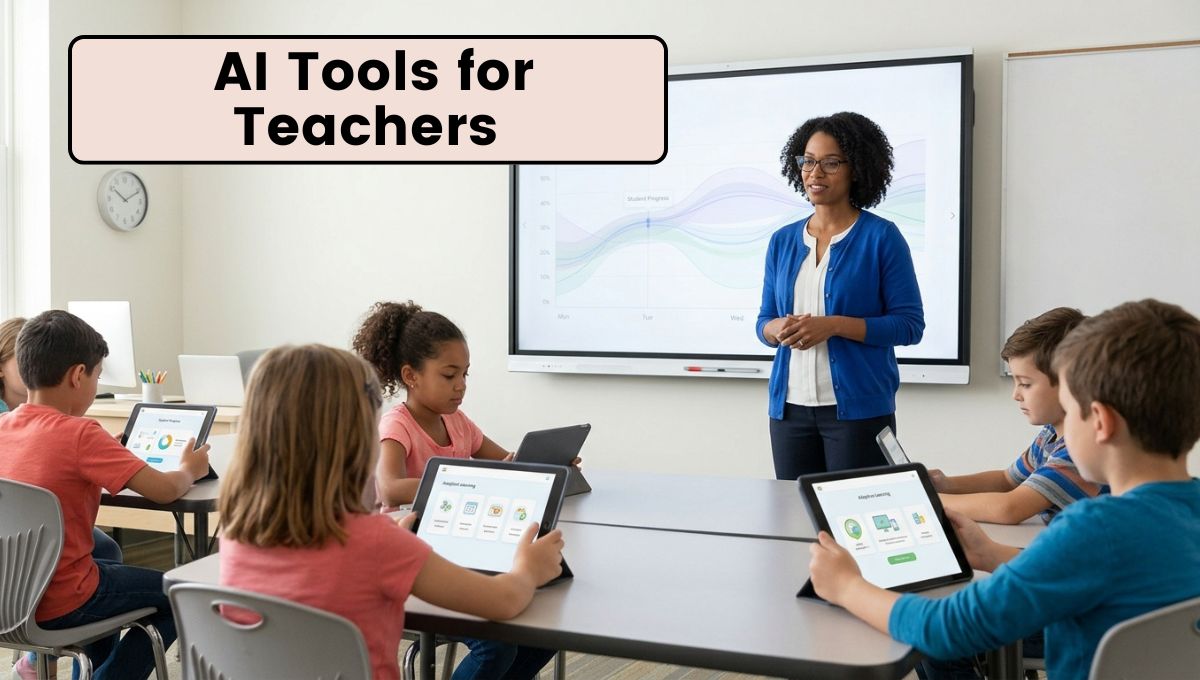
The education sector is undergoing a significant transformation, and artificial intelligence is playing a major role in reshaping how teachers plan lessons, assess students, create educational content, and manage classroom responsibilities. Modern educators face increasing workloads that include lesson planning, grading assignments, preparing study materials, tracking student performance, communicating with parents, and adapting teaching methods to meet diverse learning needs.
To handle these challenges more efficiently, many educators are turning to AI Tools for Teachers. These tools help automate repetitive tasks, provide personalized learning support, generate educational content, and improve classroom management. Rather than replacing teachers, artificial intelligence acts as a powerful assistant that helps educators focus more on teaching and student engagement.
Across schools, colleges, coaching institutes, universities, and online learning platforms, AI is becoming an essential part of the educational ecosystem. Teachers can now create lesson plans in minutes, generate quizzes instantly, personalize learning experiences, and gain valuable insights into student performance through AI-powered analytics.
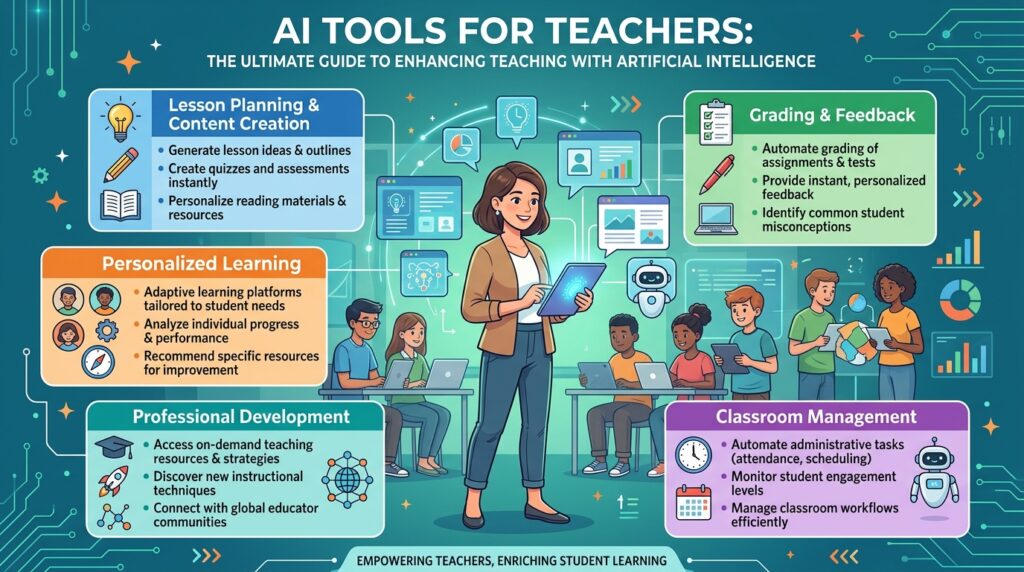
The growing accessibility of AI technology means that educators no longer need advanced technical knowledge to benefit from these tools. Many AI platforms are designed with simplicity in mind, allowing teachers to integrate them into their daily workflows without significant training.
This comprehensive guide explores the best AI Tools for Teachers, their features, benefits, limitations, classroom applications, implementation strategies, industry trends, and future potential.
What Are AI Tools for Teachers?

AI tools for teachers are software applications that use artificial intelligence, machine learning, natural language processing, and automation technologies to support teaching, learning, assessment, and classroom management.
These tools assist educators in creating educational content, evaluating student work, generating lesson plans, analyzing performance data, and providing personalized learning experiences.
Unlike traditional educational software, AI-powered platforms can adapt to user needs, generate original content, and provide intelligent recommendations based on classroom requirements.
Common applications include:
- Lesson planning
- Quiz creation
- Assignment generation
- Grading assistance
- Student performance analysis
- Personalized learning support
- Educational content development
- Classroom communication
- Presentation design
- Research assistance
These capabilities make AI a valuable resource for educators across all academic levels.
Why AI Is Important for Teachers
Teaching is one of the most demanding professions. Educators often spend significant time outside classroom hours preparing materials, grading assignments, and managing administrative responsibilities.
Artificial intelligence helps reduce these workloads by automating repetitive tasks and streamlining educational processes. This allows teachers to devote more time to direct student interaction and instructional quality.
Another major benefit is personalization. Every classroom contains students with different learning abilities, strengths, and challenges. AI can help teachers tailor instruction to meet individual needs more effectively.
Additionally, AI supports data-driven decision-making by providing insights into student performance and learning patterns. These insights can help educators identify struggling students and adjust teaching strategies accordingly.
As educational expectations continue to evolve, AI is becoming an increasingly important tool for enhancing teaching effectiveness and improving learning outcomes.
Current Adoption Trends in Education
The use of artificial intelligence in education has expanded rapidly in recent years. Schools, universities, online learning providers, and educational technology companies are investing heavily in AI-powered solutions.
Several trends are driving this adoption:
| Trend | Impact on Education |
|---|---|
| Digital Learning Expansion | Increased demand for AI teaching tools |
| Hybrid Learning Models | Greater need for automation |
| Personalized Education | More adaptive learning systems |
| Teacher Workload Reduction | Increased use of AI assistants |
| Data-Driven Instruction | Better student performance insights |
| Educational Content Demand | Faster content creation |
These trends indicate that AI will continue to play a larger role in educational environments.
Benefits of Using AI Tools for Teachers
Artificial intelligence offers numerous advantages that can improve both teaching efficiency and student outcomes.
One of the most significant benefits is time savings. Tasks that previously required hours, such as creating quizzes or drafting lesson plans, can now be completed within minutes.
Another major advantage is improved personalization. AI systems can recommend learning resources and activities tailored to individual student needs.
AI also enhances content creation by helping teachers generate worksheets, assessments, presentations, and study guides quickly.
Additional benefits include:
| Benefit | Description |
|---|---|
| Reduced Administrative Work | Automates repetitive tasks |
| Faster Lesson Planning | Generates teaching materials quickly |
| Personalized Learning | Supports diverse student needs |
| Better Student Insights | Analyzes learning performance |
| Improved Engagement | Creates interactive content |
| Enhanced Productivity | Allows teachers to focus on instruction |
These benefits make AI a valuable addition to modern educational practices.
ChatGPT for Lesson Planning and Educational Content
ChatGPT has become one of the most widely used AI tools among educators. Teachers use it to generate lesson plans, create quizzes, explain concepts, draft educational materials, and develop classroom activities.
For example, a teacher can ask ChatGPT to create a week-long lesson plan on climate change, generate discussion questions, and prepare assessment exercises within minutes.
Key Features
| Feature | Benefit |
|---|---|
| Lesson Plan Creation | Saves preparation time |
| Quiz Generation | Creates assessments quickly |
| Educational Content | Produces learning materials |
| Student Explanations | Simplifies complex concepts |
| Classroom Activities | Generates engagement ideas |
Pros
- Easy to use
- Supports multiple subjects
- Available anytime
- Flexible content generation
Cons
- Requires fact-checking
- May generate generic responses if prompts are unclear
Best For
- School teachers
- College lecturers
- Online educators
- Coaching instructors
MagicSchool AI
MagicSchool AI is specifically designed for educators and has become one of the most popular AI platforms in education.
The platform provides tools for lesson planning, assessment creation, student feedback, and classroom communication.
Key Features
- Lesson plan generation
- Rubric creation
- Assignment development
- Student feedback assistance
- Classroom management tools
Pros
- Built specifically for teachers
- Saves significant preparation time
- Easy-to-use interface
Cons
- Some advanced features require paid plans
Best For
- K–12 teachers
- Curriculum developers
- School administrators
Canva for Education
Canva for Education helps teachers create visually engaging educational materials.
The platform uses AI-powered design tools to simplify the creation of presentations, worksheets, infographics, posters, and classroom resources.
Key Features
- Presentation creation
- Educational templates
- AI image generation
- Classroom design tools
Pros
- Professional-quality visuals
- Easy customization
- Extensive template library
Cons
- Advanced design features may require learning
Best For
- Visual learning materials
- Classroom presentations
- Student projects
Khanmigo
Khan Academy offers Khanmigo, an AI-powered educational assistant designed to support both students and teachers.
Teachers can use Khanmigo to create activities, provide personalized support, and guide classroom learning.
Key Features
- AI tutoring support
- Classroom activity generation
- Personalized learning assistance
- Subject explanations
Pros
- Strong educational focus
- Supports student engagement
Cons
- Availability may vary by region
Best For
- Mathematics
- Science
- Individualized instruction
Grammarly for Educators
Grammarly helps teachers improve written communication and educational content.
The platform provides grammar checking, tone suggestions, clarity improvements, and writing assistance.
Key Features
- Grammar correction
- Writing enhancement
- Tone analysis
- Content editing
Pros
- Improves communication quality
- Easy integration
Cons
- Premium features require subscription
Best For
- Educational writing
- Parent communication
- Academic content
Notion AI for Teacher Productivity
Notion AI combines productivity management with AI-powered assistance.
Teachers use Notion AI to organize lesson plans, manage schedules, track assignments, and maintain educational resources.
Key Features
- Note organization
- Task management
- AI summaries
- Project tracking
Pros
- Excellent organization capabilities
- Flexible workspace
Cons
- Learning curve for new users
Best For
- Curriculum planning
- Long-term project management
Quizizz AI
Quizizz helps teachers create engaging assessments and interactive quizzes.
AI capabilities simplify question generation and performance analysis.
Key Features
- Quiz generation
- Performance analytics
- Interactive learning
- Student engagement tools
Pros
- Increases classroom participation
- Easy assessment creation
Cons
- Requires internet access
Best For
- Formative assessments
- Classroom engagement
Curipod
Curipod uses AI to create interactive lessons and classroom activities.
Teachers can generate complete presentations, discussions, and learning experiences with minimal effort.
Key Features
- Interactive lessons
- AI-generated presentations
- Student engagement tools
Pros
- Saves preparation time
- Encourages participation
Cons
- Limited customization compared to manual creation
Best For
- Interactive classrooms
- Modern teaching environments
Education Copilot
Education Copilot helps teachers generate lesson plans, writing prompts, and educational resources quickly.
Key Features
- Lesson planning
- Writing prompts
- Classroom materials
- Assessment generation
Pros
- Teacher-focused design
- Fast content generation
Cons
- Subscription required for full access
Best For
- Daily lesson preparation
Otter.ai for Classroom Notes
Otter.ai provides AI-powered transcription and note-taking capabilities.
Teachers can record lectures and automatically generate searchable transcripts.
Key Features
- Speech-to-text
- Meeting transcription
- Lecture notes
- Collaboration tools
Pros
- Saves note-taking time
- Accurate transcription
Cons
- Accuracy depends on audio quality
Best For
- Lecture recording
- Professional development
Pricing Overview Table
| Tool | Pricing Level |
|---|---|
| ChatGPT | Low to Medium |
| Canva for Education | Free/Low |
| Grammarly | Free/Medium |
| Notion AI | Medium |
| Quizizz | Free/Medium |
| Otter.ai | Free/Medium |
| Curipod | Medium |
| Education Copilot | Medium |
| MagicSchool AI | Free/Medium |
| Khanmigo | Medium |
Comparison Table of Top AI Tools for Teachers
| Tool | Primary Use | Best For |
|---|---|---|
| ChatGPT | Content Creation | All Educators |
| MagicSchool AI | Teaching Assistance | K–12 Teachers |
| Canva | Visual Content | Presentations |
| Khanmigo | AI Tutoring | Student Support |
| Grammarly | Writing | Communication |
| Notion AI | Productivity | Organization |
| Quizizz | Assessments | Engagement |
| Curipod | Interactive Lessons | Modern Classrooms |
| Education Copilot | Lesson Planning | Daily Teaching |
| Otter.ai | Note Taking | Lecture Management |
Real-World Use Cases
A primary school teacher can use MagicSchool AI to generate lesson plans and Canva to create visual teaching materials.
A college professor may use ChatGPT to develop discussion topics, Grammarly to improve course content, and Otter.ai to transcribe lectures.
An online educator can use Curipod to create interactive lessons and Quizizz to assess student understanding.
A coaching institute instructor can combine Notion AI, ChatGPT, and Education Copilot to streamline course preparation.
Industry-Specific Applications
Schools
Teachers use AI for lesson planning, grading, and student engagement.
Colleges and Universities
Professors use AI for research support, content development, and course management.
Coaching Institutes
Instructors use AI to create study materials and practice assessments.
Online Education Platforms
AI powers personalized learning experiences and automated support systems.
Step-by-Step Guide to Implementing AI in Teaching
- Identify repetitive tasks.
- Select one AI tool.
- Learn its core features.
- Test it with a small project.
- Evaluate results.
- Expand usage gradually.
- Share best practices with colleagues.
This approach ensures smooth adoption and minimizes disruption.
Common Mistakes Teachers Should Avoid
Many educators make the mistake of relying entirely on AI-generated content without reviewing it.
Another common issue is using too many tools simultaneously, which can create confusion and inefficiency.
Teachers should also avoid sharing sensitive student information with AI platforms that are not approved by their institutions.
Most importantly, AI should complement teaching rather than replace meaningful human interaction.
Best Practices for Responsible AI Use
Successful educators use AI to enhance productivity while maintaining instructional quality.
Recommended practices include:
- Reviewing AI-generated content
- Verifying factual accuracy
- Personalizing generated materials
- Protecting student privacy
- Combining AI with traditional teaching methods
These strategies help maximize benefits while minimizing risks.
ROI and Educational Impact
The primary return on investment for teachers comes from time savings and improved productivity.
AI can reduce lesson preparation time, streamline assessment creation, and simplify administrative tasks.
By spending less time on routine work, teachers can focus more on student engagement and instructional quality.
Schools may also benefit from improved efficiency and more consistent educational materials.
Future Trends in AI for Education
Artificial intelligence is expected to become even more integrated into teaching and learning.
Future developments may include:
- AI-powered personalized tutoring
- Adaptive learning pathways
- Real-time classroom analytics
- Automated grading systems
- Virtual teaching assistants
- Enhanced multilingual education
These innovations could significantly improve educational accessibility and effectiveness.
Expert Recommendations
Teachers new to AI should begin with versatile tools such as ChatGPT, Canva, and Grammarly.
As they become more comfortable, they can explore specialized education platforms such as MagicSchool AI, Curipod, Quizizz, and Education Copilot.
The key is to adopt AI gradually and focus on solving specific teaching challenges rather than implementing multiple tools at once.
Comprehensive Conclusion
The rise of AI Tools for Teachers is transforming education by helping educators save time, improve productivity, personalize learning, and enhance classroom experiences. Artificial intelligence serves as a powerful assistant that supports lesson planning, assessment creation, content development, communication, and student engagement.
Leading Teacher AI Tools such as ChatGPT, MagicSchool AI, Canva for Education, Khanmigo, Grammarly, Notion AI, Quizizz, Curipod, Education Copilot, and Otter.ai demonstrate the wide range of opportunities available to modern educators. These platforms help teachers focus more on teaching and less on administrative tasks.
As AI technology continues to evolve, educators who embrace these tools thoughtfully and responsibly will be better positioned to meet the needs of today’s learners. By combining human expertise with intelligent technology, teachers can create more engaging, efficient, and effective educational experiences.
1 thought on “AI Tools for Teachers: The Ultimate Guide to Enhancing Teaching with Artificial Intelligence”