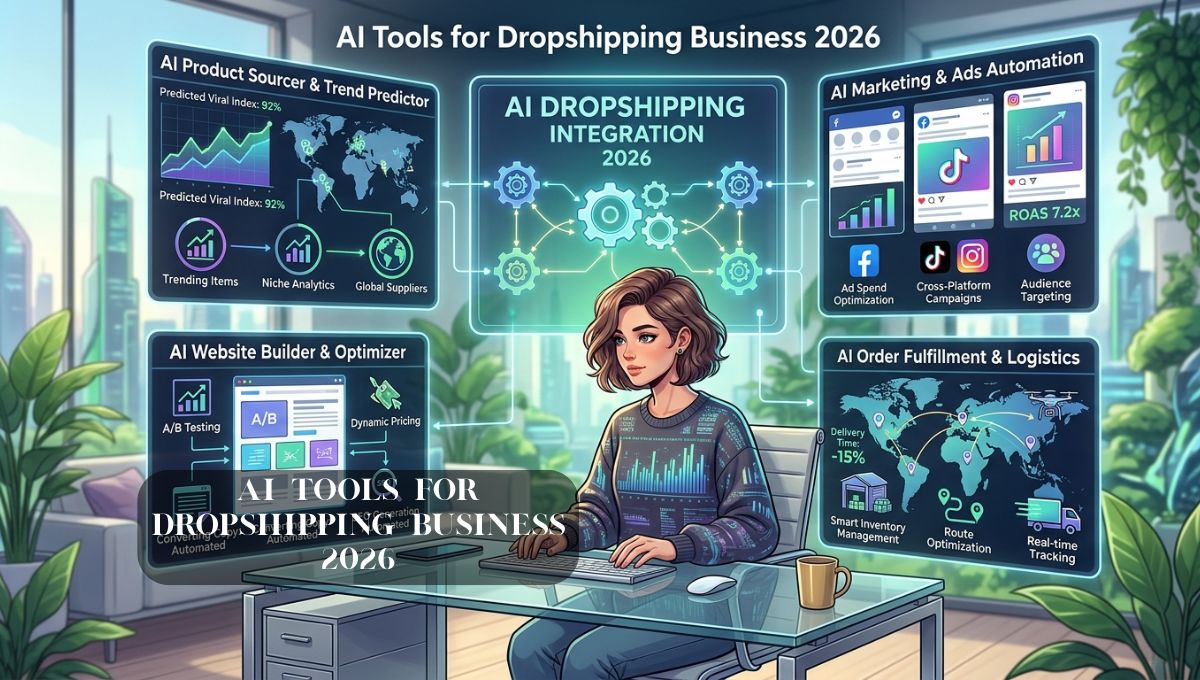
Many dropshipping stores struggle to grow because owners handle everything manually. They spend hours searching for products, writing descriptions, and testing ads without a clear system. This creates slow progress and inconsistent results. Competition keeps rising, and manual work cannot keep up. AI tools solve this problem by speeding up research, improving decisions, and automating repetitive tasks. When you use AI in a structured way, you reduce effort and increase output. This shift allows you to focus on strategy instead of routine work.
Why AI Is Changing Dropshipping
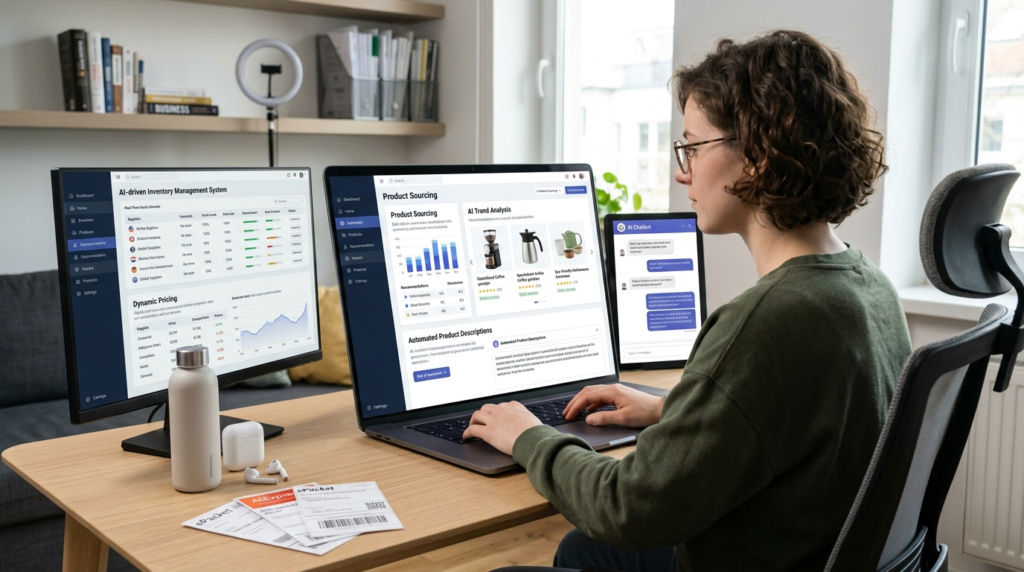
AI has changed how online businesses operate. It replaces guesswork with data-driven decisions. Instead of scrolling through endless products, you can use AI tools to identify trends based on demand signals, engagement metrics, and competitor performance. This saves time and improves accuracy.
AI also reduces operational costs. You no longer need separate people for writing, design, and analysis. A single AI system can generate product descriptions, create visuals, and suggest marketing angles. This lowers the barrier to entry for beginners and increases efficiency for experienced sellers.
Speed has become the biggest advantage. Sellers who use AI can test multiple products in a short time. They can launch campaigns faster and adjust strategies based on real-time feedback. This creates a cycle where faster testing leads to better results. Stores that rely only on manual methods often fail to keep pace with this speed.
Complete AI Dropshipping Workflow
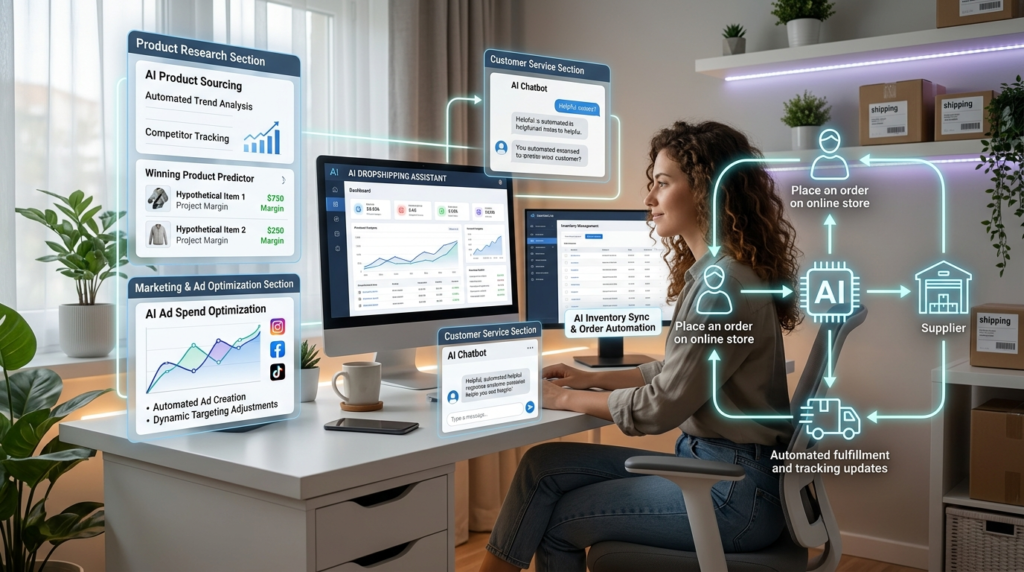
A successful dropshipping business follows a structured workflow. AI tools fit into each stage and remove bottlenecks.
Product research forms the first step. AI tools scan marketplaces, social media platforms, and search trends to identify products with high demand. Instead of guessing, you rely on data to choose products that already show traction.
Store setup comes next. AI helps you design product pages, generate layouts, and create branding elements. You can build a professional-looking store without advanced technical skills. This improves user experience and increases conversion rates.
Content creation becomes faster with AI. You can generate product descriptions, headlines, and email sequences within minutes. AI tools also help you match tone and style with your target audience. This ensures consistency across all communication channels.
Marketing plays a crucial role in scaling. AI tools can generate ad creatives, write ad copy, and suggest targeting strategies. Some tools analyze competitor ads and highlight patterns that work. This allows you to create campaigns that align with proven strategies.
Automation completes the workflow. AI tools manage order processing, track inventory, and respond to customer queries. This reduces manual workload and ensures smooth operations. When all stages connect, your business runs as a system rather than a set of isolated tasks.
Best AI Tools by Category
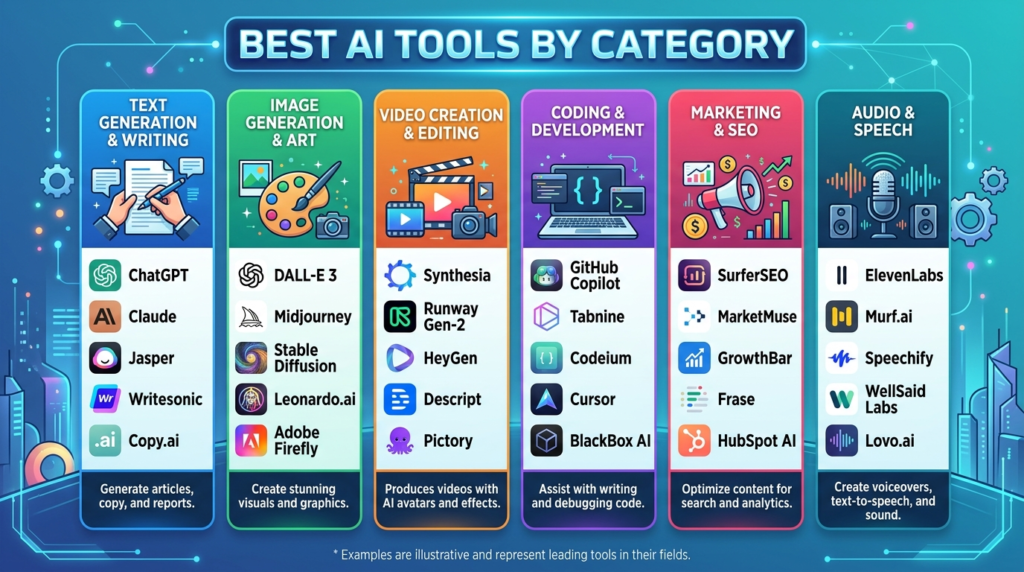
Different AI tools serve different purposes. Understanding these categories helps you build an effective system.
Product research tools focus on identifying winning products. They analyze data from multiple sources, including social platforms and online stores. These tools highlight products with strong engagement and rising demand. This reduces the risk of choosing low-performing items.
Store and design tools help you build visually appealing stores. They generate layouts, select color schemes, and create product page designs. A well-designed store builds trust and encourages customers to complete purchases.
Copywriting tools handle content creation. They generate product descriptions, ad copy, and email campaigns. These tools save time and ensure your messaging stays clear and persuasive. You can edit the output to match your brand voice.
Ad and marketing tools focus on traffic generation. They create ad creatives, suggest headlines, and optimize targeting. Some tools use data from previous campaigns to improve performance. This increases the chances of reaching the right audience.
Automation tools manage backend operations. They process orders, update inventory, and handle customer support. These tools reduce errors and improve efficiency. You can focus on growth instead of routine tasks.
AI Tools Comparison Table
| Category | Purpose | Outcome |
|---|
| Product Research | Identify trending products | Higher chances of selecting winning items |
| Store Design | Build and optimize store layout | Improved user experience and conversions |
| Copywriting | Generate content for products and ads | Faster content creation and consistent messaging |
| Marketing | Create and optimize ad campaigns | Increased traffic and better targeting |
| Automation | Manage operations and customer support | Time savings and smoother workflow |
AI Tool Stack for Different Levels
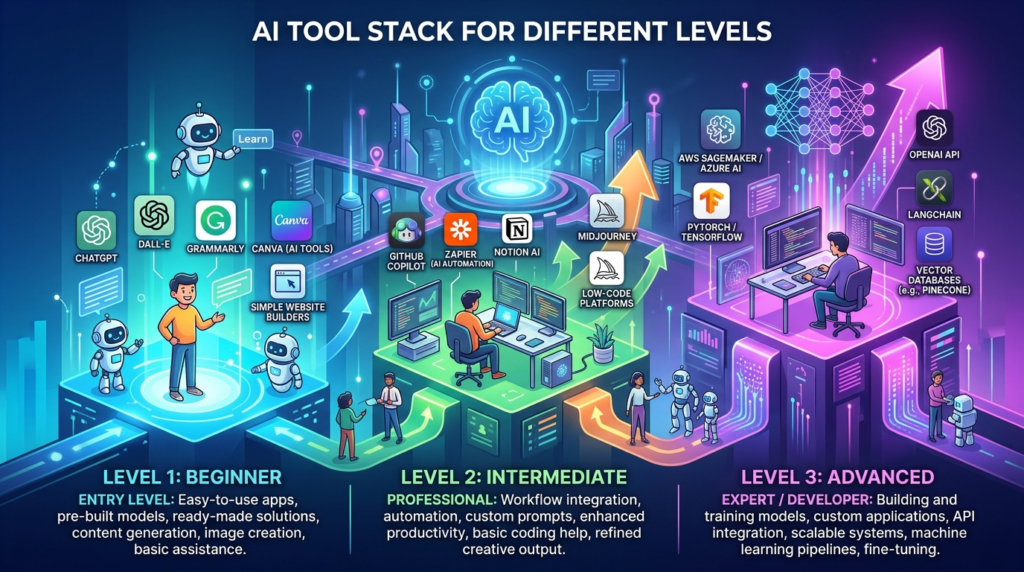
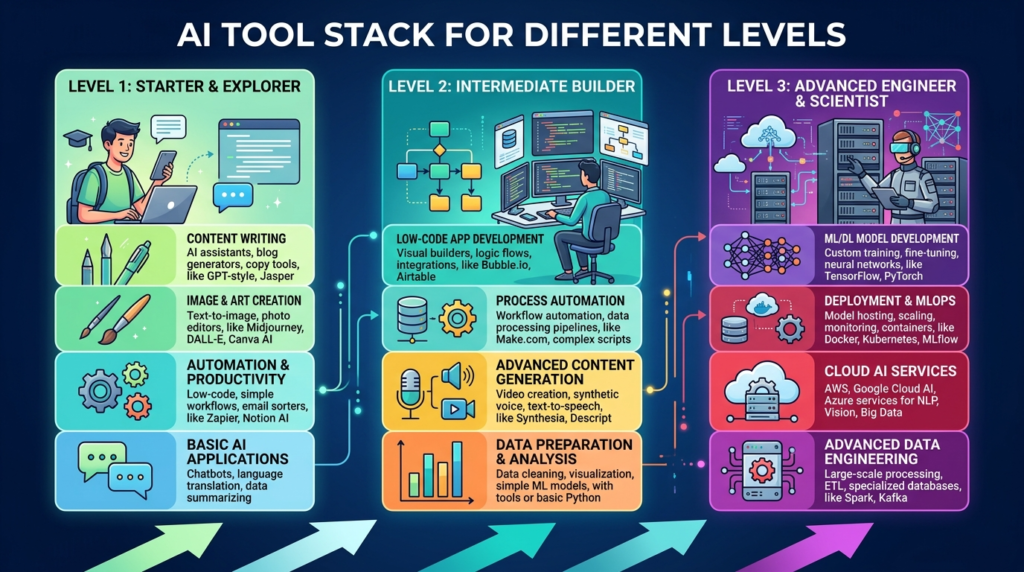
Beginners should focus on simplicity. They can use tools that combine multiple features. This reduces complexity and helps them launch quickly. A basic stack might include one tool for research, one for content creation, and one for automation. This setup allows beginners to understand the workflow without feeling overwhelmed.
Advanced users should build a specialized stack. They can use separate tools for each stage of the process. This approach improves performance and allows deeper optimization. For example, they can use one tool for detailed product analysis, another for high-quality ad creatives, and a separate system for automation. This setup supports scaling and long-term growth.
Choosing the right stack depends on your goals. If you want to test quickly, focus on speed and simplicity. If you want to scale, focus on precision and control.
Unique Strategy: Connecting AI Tools into One System
Many sellers use AI tools individually. This limits their potential. The real advantage comes from connecting tools into a single workflow.
Start with product research. Use AI to identify a product with strong demand signals. Once you select a product, move to store setup. Generate a product page with optimized design and structure.
Next, create content using AI. Generate descriptions, headlines, and supporting text. Edit the output to maintain authenticity. This step ensures your store communicates clearly with customers.
Move to marketing. Use AI to create ad creatives and copy. Launch campaigns across platforms. Monitor performance and gather data.
Finally, automate operations. Set up systems to handle orders and customer queries. This ensures consistency and reduces workload.
This connected workflow removes delays between stages. It also increases testing speed. When you test more products in less time, you improve your chances of finding winners. This approach turns dropshipping into a repeatable process.
Advanced Use Cases of AI in Dropshipping
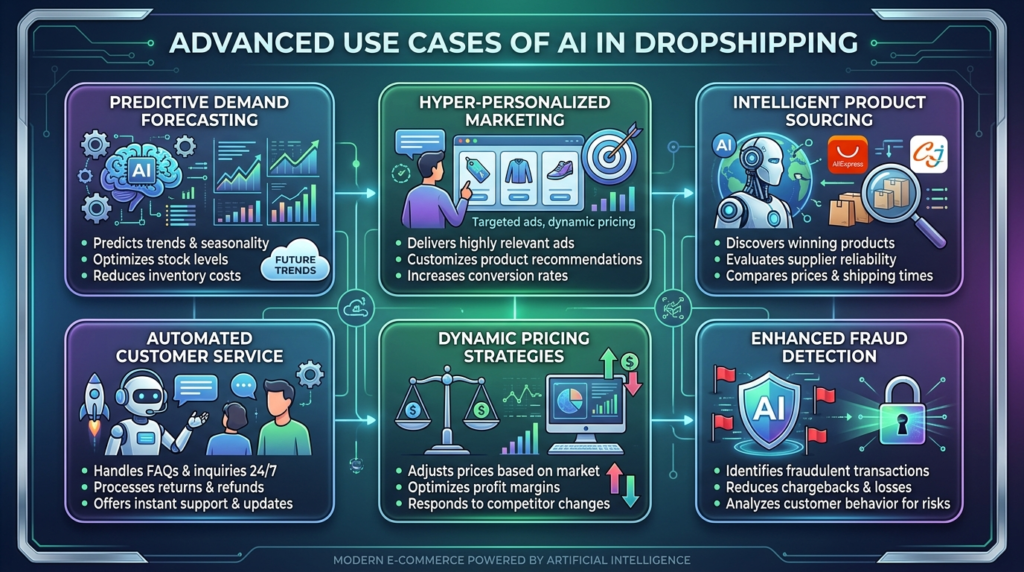
AI offers more than basic automation. You can use it for deeper analysis and optimization.
Predictive analytics helps you forecast demand. AI tools analyze past data and predict future trends. This allows you to prepare inventory and marketing strategies in advance.
Customer behavior analysis provides insights into how users interact with your store. AI tracks clicks, scroll patterns, and purchase behavior. This helps you identify areas that need improvement.
Dynamic pricing uses AI to adjust prices based on demand and competition. This strategy helps you stay competitive while maintaining profit margins.
Personalization improves customer experience. AI can recommend products based on user behavior. This increases engagement and boosts sales.
These advanced use cases create a competitive advantage. They allow you to move beyond basic operations and focus on optimization.
Common Mistakes to Avoid
Many sellers misuse AI tools. This reduces their effectiveness.
Relying on a single tool for all tasks creates limitations. Each tool has strengths and weaknesses. Using multiple tools ensures better results.
Publishing AI-generated content without editing reduces credibility. Customers can detect generic content. Editing improves quality and trust.
Skipping testing leads to poor decisions. AI provides insights, but testing confirms results. Always validate your strategies.
Using too many tools creates confusion. A complex setup slows down execution. Focus on a streamlined system.
Ignoring data limits growth. AI tools provide valuable insights. Use this data to improve your strategies.
Future Trends in AI and Dropshipping
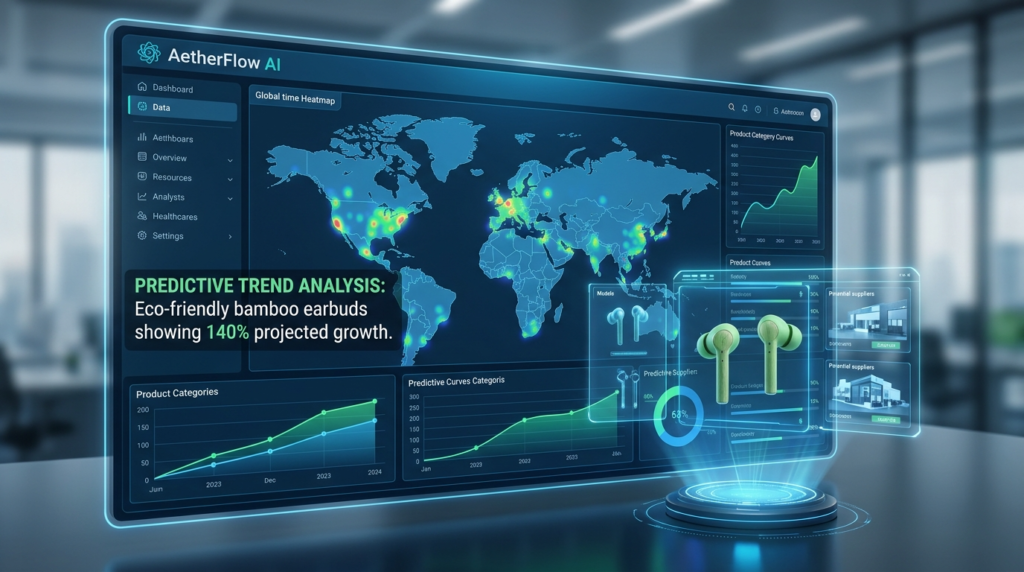
AI will continue to evolve. New tools will offer deeper insights and better automation. Voice commerce and conversational AI may become more common. Customers may interact with stores through chat-based interfaces.
Visual AI will improve product presentation. Tools may generate realistic product images and videos. This will reduce the need for manual design work.
Integration between tools will also improve. Platforms may offer all-in-one solutions that connect research, marketing, and automation. This will simplify workflows.
Sellers who adapt to these trends will stay ahead. Those who ignore them may struggle to compete.
Conclusion
AI has transformed dropshipping into a faster and more efficient business model. It reduces manual work, improves decision-making, and creates a structured workflow. When you connect AI tools into a single system, you increase speed and accuracy. This allows you to test more products and scale your store effectively. Success depends on how you use these tools, not just which tools you choose. Focus on building a clear process, keep your workflow simple, and use AI to support your strategy.