
In 2026, businesses around the world are increasingly turning to AI tools for business productivity to improve efficiency, reduce costs, and streamline everyday operations. The integration of artificial intelligence into workplace systems has moved beyond experimentation and is now a core part of how organizations function. From automating repetitive tasks to generating valuable insights from data, AI is reshaping how teams operate across industries.
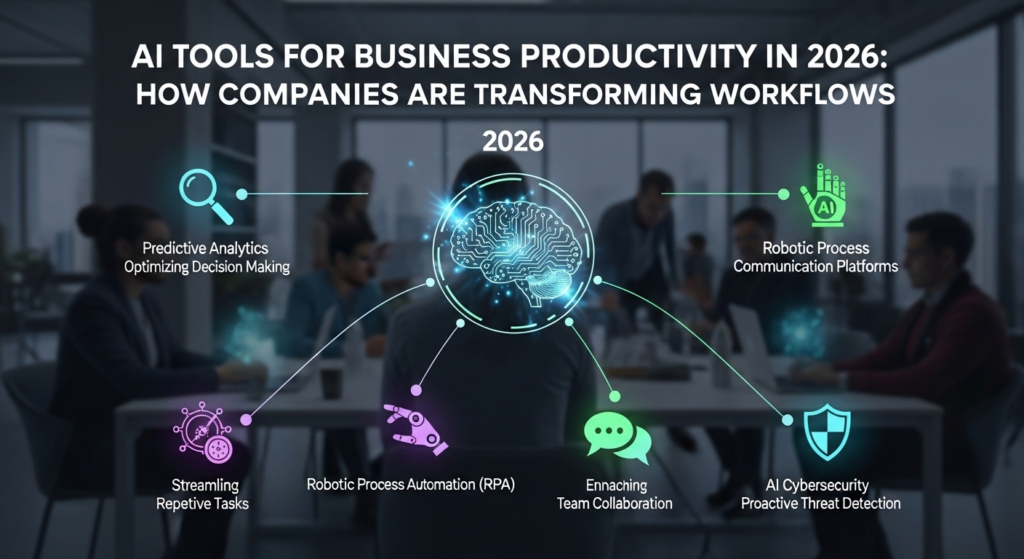
Companies are no longer relying solely on manual processes or traditional software. Instead, they are adopting intelligent systems that can learn, adapt, and deliver faster outcomes. This shift is helping businesses save time, improve accuracy, and focus more on strategic decision-making rather than routine work. As competition grows, the use of AI tools is becoming essential for maintaining productivity and staying relevant in a fast-changing environment.
Rising Demand for AI in Everyday Business Tasks

The demand for business automation tools has increased significantly as organizations look for ways to handle growing workloads without expanding their workforce. AI tools are now being used in daily operations such as managing emails, scheduling meetings, organizing data, and tracking performance.
These tools are designed to reduce the burden of repetitive tasks. For example, AI-powered email assistants can sort messages, highlight important conversations, and even draft replies. Similarly, scheduling tools can automatically coordinate meeting times based on team availability, eliminating the need for manual coordination.
Another important use of AI is in document handling. Businesses use AI to extract information from files, organize documents, and generate reports. This not only saves time but also ensures consistency and reduces human errors. As a result, employees can focus on more meaningful and creative tasks that require human judgment.
Key Categories of AI Tools Used by Businesses in 2026
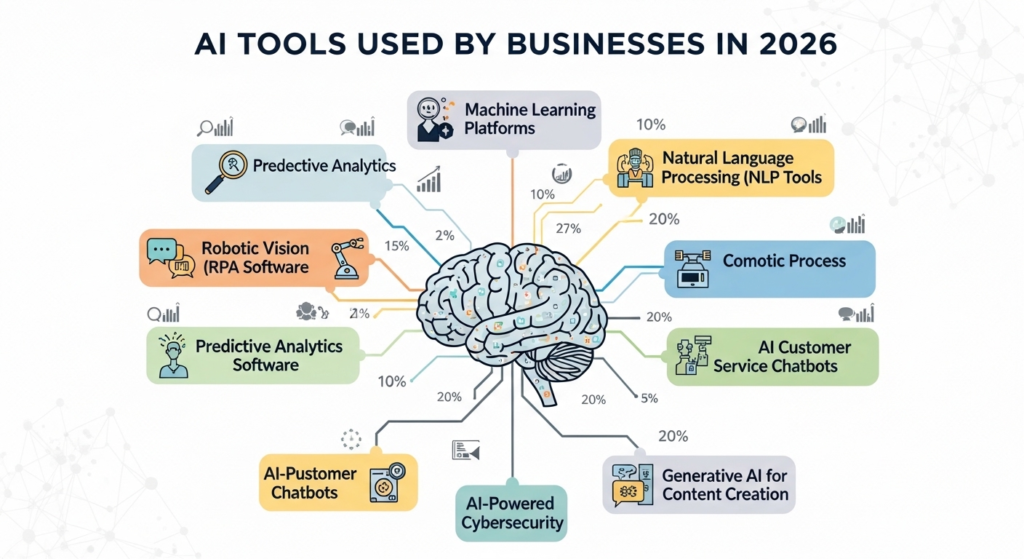
AI tools for business productivity are available in various categories, each designed to address specific operational needs. Understanding these categories helps organizations choose the right solutions for their workflows.
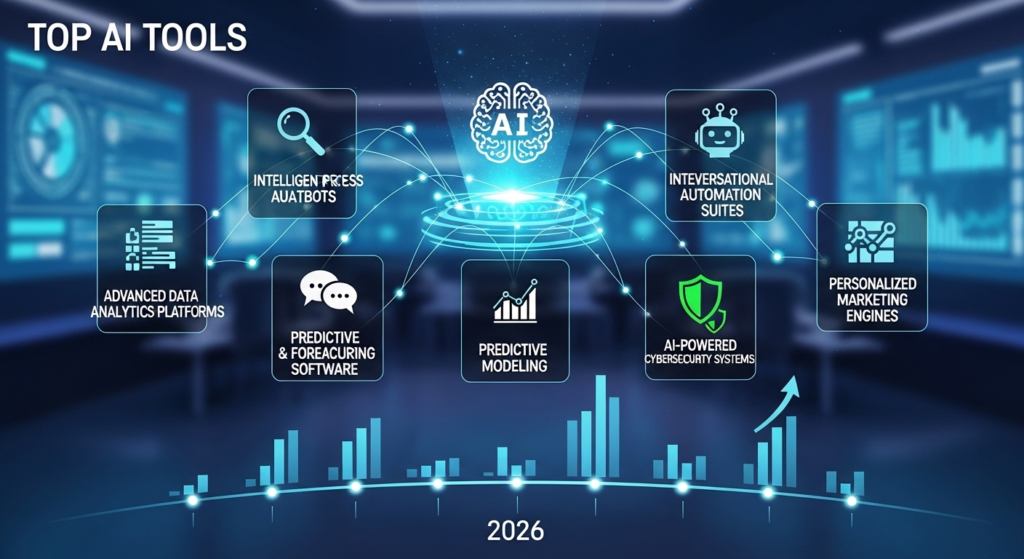
Communication and Collaboration Tools
AI-powered communication tools are transforming how teams interact. These tools can summarize meetings, convert speech into text, and generate quick responses to messages. They help reduce communication gaps and ensure that important information is easily accessible.
For remote and hybrid teams, these tools are especially useful. They allow seamless collaboration across different locations and time zones. By automating routine communication tasks, businesses can improve efficiency and maintain better coordination among team members.
Project Management and Workflow Automation
AI-driven project management tools are helping businesses organize tasks, track progress, and manage deadlines more effectively. These tools can analyze workloads and automatically assign tasks based on priority and team capacity.
They also provide predictive insights, such as identifying potential delays or suggesting adjustments to timelines. This helps teams stay on track and avoid last-minute issues. Workflow automation further reduces manual intervention by handling repetitive processes such as approvals, notifications, and updates.
Customer Support and Service Automation
Customer support is one of the most common areas where AI is widely used. AI chatbots and virtual assistants can handle customer queries instantly, providing accurate responses without human intervention.
These tools are available 24/7, ensuring that customers receive support at any time. They can also handle multiple queries simultaneously, which improves response time and customer satisfaction. For more complex issues, AI systems can route queries to human agents, ensuring a smooth support experience.
Data Analysis and Business Intelligence
AI tools are playing a major role in data analysis and reporting. Businesses generate large amounts of data every day, and AI helps process this information quickly and accurately. These tools can identify patterns, trends, and anomalies that may not be visible through manual analysis.
With AI-powered insights, decision-makers can take informed actions based on real-time data. This is particularly useful in areas such as sales forecasting, financial planning, and customer behavior analysis. By using AI for data analysis, businesses can improve accuracy and make faster decisions.
Marketing and Content Automation
AI is also being used in marketing and content creation. Businesses use AI tools to generate content, analyze audience behavior, and optimize campaigns. These tools can suggest keywords, create social media posts, and even personalize marketing messages based on user preferences.
This helps companies reach their target audience more effectively while saving time and effort. AI-driven marketing tools also provide performance metrics, allowing businesses to measure the success of their campaigns and make necessary adjustments.
Benefits of AI Tools for Business Productivity
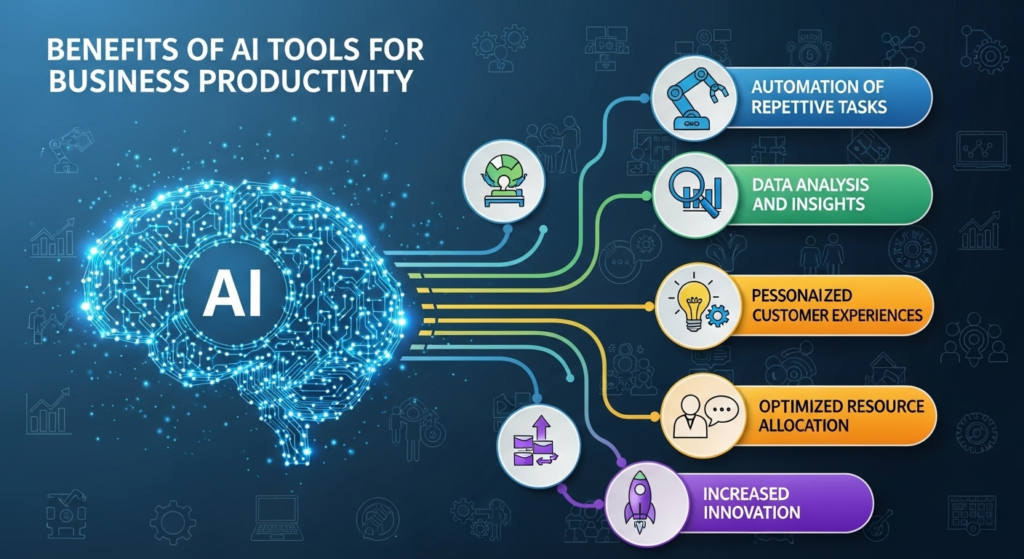
The adoption of AI tools for business productivity offers multiple benefits that directly impact business performance. These advantages are driving the rapid adoption of AI across different sectors.
- Increased Efficiency: AI tools can complete tasks faster than manual processes, reducing time spent on routine work.
- Cost Savings: Automation reduces the need for additional manpower, helping businesses control operational expenses.
- Higher Accuracy: AI minimizes errors, especially in data processing and calculations.
- Better Decision-Making: Real-time insights enable businesses to make informed and timely decisions.
- Improved Customer Experience: Faster response times and personalized interactions enhance customer satisfaction.
- Scalability: Businesses can handle increased workloads without significantly expanding their resources.
These benefits make AI tools a valuable investment for organizations aiming to improve productivity and efficiency.
Comparison of AI Tool Functions Across Business Areas

The table below provides a clear overview of how different AI tools contribute to business productivity and their impact on operations.
| Category | Key Features | Business Impact |
|---|---|---|
| Communication Tools | Message automation, meeting summaries | Improves collaboration and saves time |
| Project Management | Task allocation, deadline prediction | Enhances workflow efficiency |
| Customer Support | Chatbots, instant query resolution | Boosts customer satisfaction |
| Data Analytics | Insights, forecasting, reporting | Enables better decision-making |
| Marketing Tools | Content generation, campaign optimization | Improves marketing performance |
| Workflow Automation | Process automation, notifications | Reduces manual workload |
This structured approach helps businesses understand where AI tools can provide the most value and how they can be integrated into existing systems.
Challenges in Implementing AI Tools

Despite the advantages, businesses face several challenges when adopting AI tools. One major challenge is the learning curve associated with new technologies. Employees need proper training to understand how to use AI tools effectively.
Data security is another important concern. Since AI systems rely heavily on data, businesses must ensure that sensitive information is protected. This requires strong security measures and compliance with data protection regulations.
Integration with existing systems can also be complex. Companies often use multiple software platforms, and ensuring compatibility with AI tools can require technical expertise. Without proper planning, this can lead to disruptions in workflow.
Cost can also be a factor for smaller businesses. While AI tools can save money in the long run, the initial investment and implementation costs may be a barrier for some organizations.
How Businesses Are Overcoming These Challenges
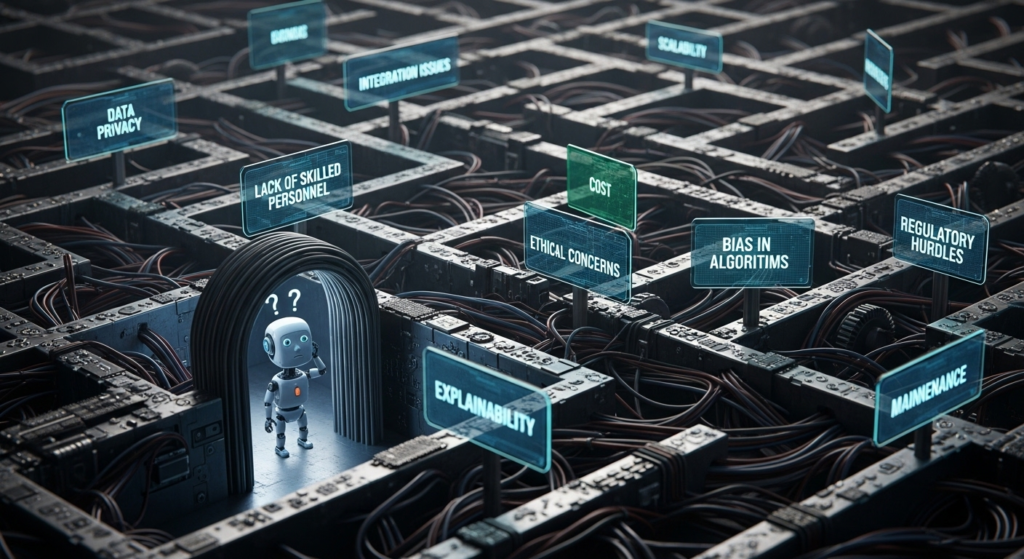
To address these challenges, businesses are taking a structured approach to AI adoption. Many companies are investing in employee training programs to ensure that teams are comfortable using AI tools. This helps improve adoption rates and reduces resistance to change.
Organizations are also choosing AI solutions that are easy to integrate and user-friendly. Cloud-based tools are becoming popular because they offer flexibility and require less infrastructure. These tools can be implemented quickly and scaled as needed.
In terms of data security, businesses are adopting strict policies and using secure platforms to protect sensitive information. Regular audits and compliance checks help ensure that AI systems are used responsibly.
Companies are also starting with small-scale implementation before expanding AI usage across departments. This allows them to test the effectiveness of tools and make improvements before full deployment.
The Role of AI in Shaping Future Workplaces

AI is not just improving productivity; it is also changing the way people work. In 2026, workplaces are becoming more digital and automated, with AI handling routine tasks and employees focusing on strategic roles.
This shift is leading to the creation of new job roles that require skills in AI management, data analysis, and digital operations. At the same time, traditional roles are evolving to include interaction with AI systems.
Businesses are also adopting hybrid work models, where employees work both remotely and in offices. AI tools play a crucial role in supporting this model by enabling seamless communication and collaboration.
As technology continues to advance, the role of AI in workplaces is expected to grow further, making it an integral part of business operations.
Conclusion: Why AI Tools Are Essential for Business Productivity in 2026

In 2026, the use of AI tools for business productivity and business automation tools has become a critical factor in how organizations operate and compete. Businesses are using AI to automate repetitive tasks, improve accuracy, and make better decisions based on real-time data.
The adoption of AI is helping companies save time, reduce costs, and enhance overall efficiency. While challenges such as training, data security, and integration exist, businesses are actively addressing these issues through structured implementation strategies.
The importance of AI tools lies in their ability to transform workflows and enable businesses to focus on growth and innovation. As organizations continue to embrace digital transformation, AI will play an even bigger role in shaping the future of work.
For businesses looking to stay competitive in 2026 and beyond, adopting AI tools is no longer optional. It is a necessary step toward achieving higher productivity and long-term success.