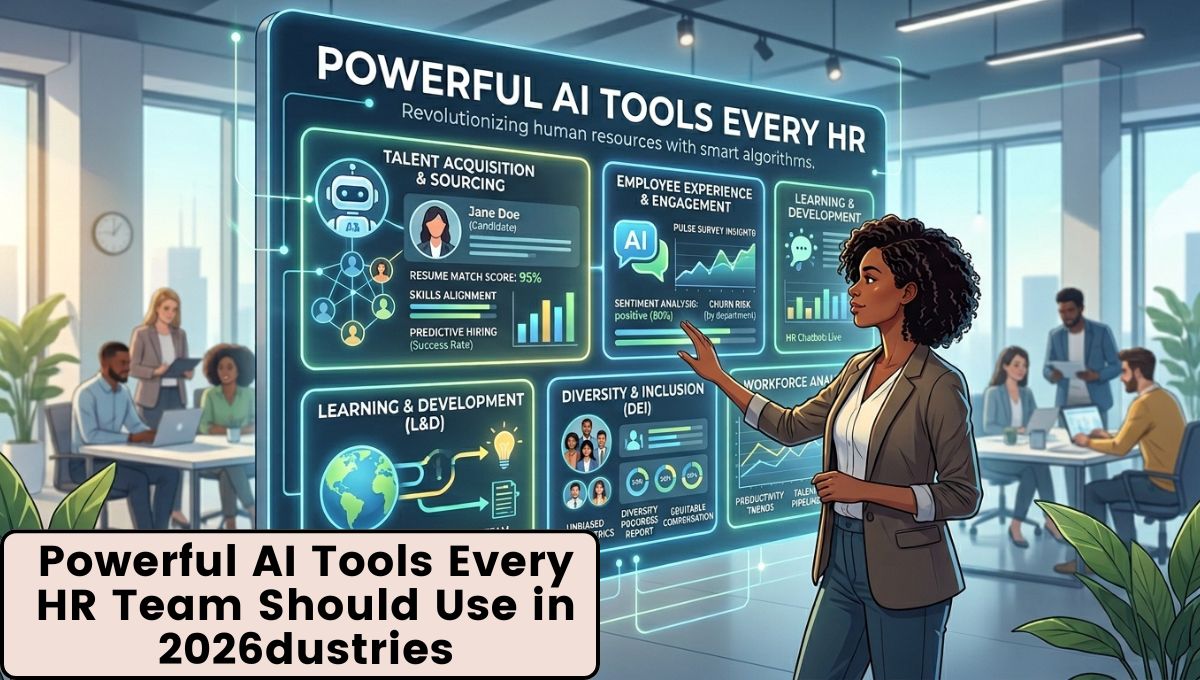
Artificial intelligence is rapidly transforming the way companies recruit, hire, manage, and retain talent. Human Resources (HR) departments have traditionally handled large volumes of administrative work, from reviewing resumes and scheduling interviews to onboarding employees and managing performance evaluations. As organizations grow and competition for talent increases, these processes become more complex and time-consuming.
This is where AI Tools for HR & Hiring are making a significant impact. Artificial intelligence helps HR professionals automate repetitive tasks, improve recruitment efficiency, reduce hiring bias, enhance candidate experiences, and make data-driven decisions. Instead of spending hours manually screening applications or coordinating interviews, HR teams can leverage AI-powered solutions to streamline workflows and focus on strategic talent management.
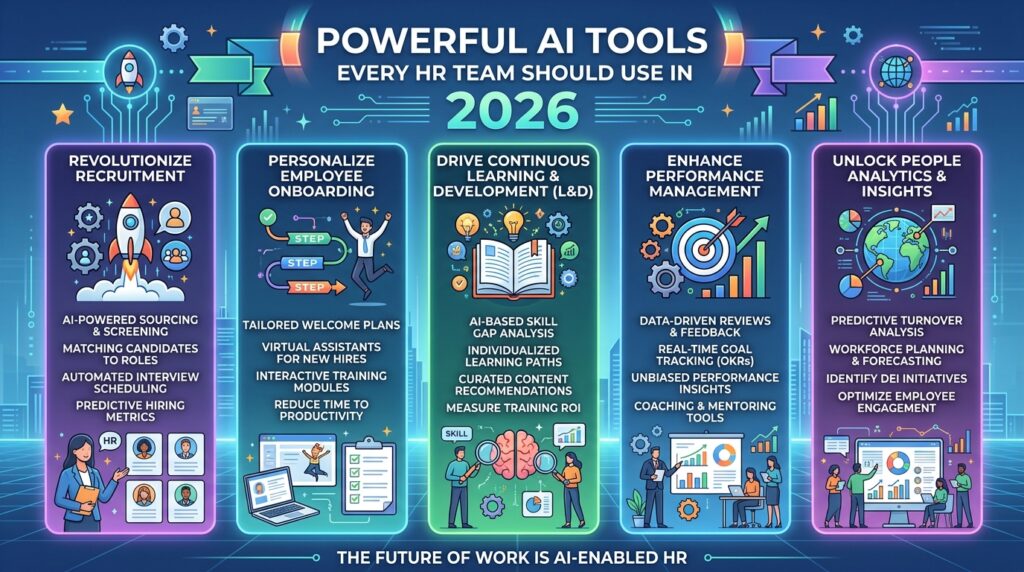
The adoption of AI in human resources is no longer limited to large corporations. Startups, small businesses, recruitment agencies, and enterprise organizations are increasingly investing in AI-driven platforms to improve hiring outcomes and workforce management. Modern AI tools can analyze resumes, identify top candidates, automate communication, predict employee turnover, support onboarding, and provide valuable workforce insights.
As recruitment and talent management continue to evolve, understanding the best AI Tools for HR & Hiring has become essential for organizations seeking to attract and retain top talent in a competitive labor market.
What Are AI Tools for HR & Hiring?
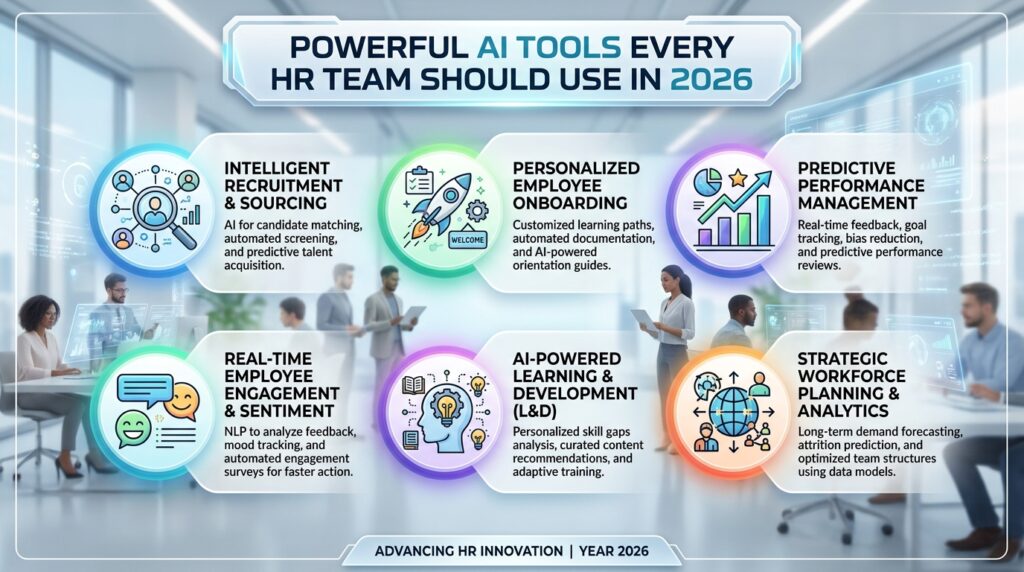
AI tools for HR and hiring are software platforms that use artificial intelligence, machine learning, natural language processing, and predictive analytics to automate and improve human resource functions.
These tools help HR teams manage recruitment, employee engagement, performance evaluation, workforce planning, learning and development, and administrative processes more efficiently.
Unlike traditional HR software that primarily stores information, AI-powered solutions actively analyze data, generate recommendations, identify patterns, and automate decision-making support.
Common applications include:
- Resume screening
- Candidate sourcing
- Interview scheduling
- Talent assessment
- Employee onboarding
- Performance management
- Workforce analytics
- Employee engagement
- Learning and development
- Retention forecasting
These capabilities help organizations improve hiring efficiency while enhancing employee experiences.
Why AI Is Becoming Essential in HR
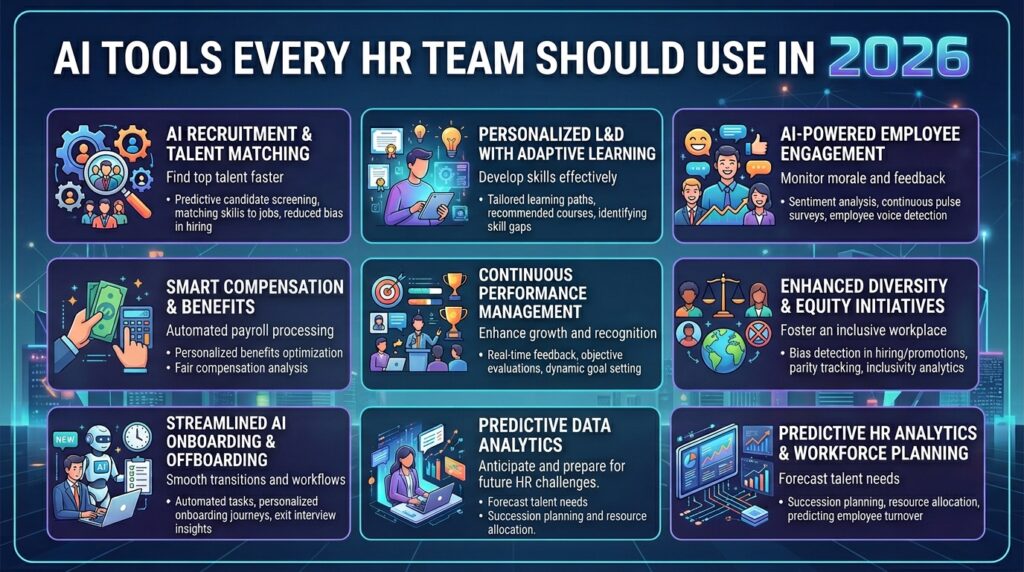
Recruitment has become increasingly challenging due to growing competition for skilled talent and rising application volumes. A single job posting can attract hundreds or even thousands of applicants, making manual screening difficult and time-consuming.
AI helps address this challenge by quickly analyzing applications and identifying candidates who match job requirements. This reduces the workload on recruiters while improving the speed and consistency of hiring decisions.
Another important factor is candidate experience. Job seekers expect timely communication, transparent processes, and efficient hiring experiences. AI-powered chatbots and automation tools help organizations maintain engagement throughout the recruitment process.
Beyond hiring, AI also supports workforce management by providing insights into employee satisfaction, performance trends, and retention risks. These capabilities enable HR leaders to make proactive decisions that improve organizational outcomes.
Current Trends in AI-Powered HR
Artificial intelligence adoption in HR is growing rapidly across industries. Organizations are increasingly using AI to improve recruitment, employee development, and workforce planning.
Several key trends are driving adoption:
| Trend | Impact on HR |
|---|---|
| High Application Volumes | Increased need for automation |
| Remote Hiring Growth | Greater use of digital recruitment tools |
| Skills-Based Hiring | Enhanced talent assessment |
| Employee Experience Focus | Improved engagement tools |
| Workforce Analytics | Better decision-making |
| Automation Demand | Reduced administrative workloads |
These trends indicate that AI will continue to play a growing role in human resource management.
Benefits of Using AI Tools for HR & Hiring
Artificial intelligence offers numerous benefits for HR departments and recruitment teams.
One major advantage is efficiency. AI automates repetitive tasks such as resume screening, interview scheduling, and candidate communication.
Another important benefit is consistency. AI evaluates candidates using predefined criteria, helping reduce variability in the recruitment process.
AI also improves data-driven decision-making. HR leaders can analyze workforce trends and identify opportunities for improvement.
Additional benefits include:
| Benefit | Description |
|---|---|
| Faster Recruitment | Reduces time-to-hire |
| Improved Candidate Matching | Identifies qualified applicants |
| Better Employee Experience | Enhances engagement |
| Reduced Administrative Work | Automates repetitive tasks |
| Workforce Insights | Supports strategic planning |
| Enhanced Productivity | Allows HR to focus on people |
These benefits contribute to stronger hiring outcomes and more efficient HR operations.
ChatGPT for HR and Recruitment
ChatGPT has become a valuable tool for HR professionals due to its versatility and ease of use. HR teams use it to draft job descriptions, create interview questions, develop onboarding materials, write employee communications, and generate policy documentation.
Recruiters can also use ChatGPT to personalize candidate outreach and create recruitment marketing content.
Key Features
| Feature | Benefit |
|---|---|
| Job Description Creation | Faster hiring preparation |
| Candidate Communication | Improved engagement |
| Interview Question Generation | Better assessment planning |
| Onboarding Content | Streamlined employee integration |
| HR Documentation | Reduced administrative effort |
Pros
- Easy to use
- Affordable
- Supports multiple HR functions
- Saves significant time
Cons
- Requires human review
- Not designed for final hiring decisions
Best For
- Recruiters
- HR managers
- Talent acquisition teams
LinkedIn Recruiter AI
LinkedIn Recruiter is one of the most widely used recruitment platforms globally. Its AI-powered capabilities help recruiters identify suitable candidates, improve sourcing strategies, and enhance talent acquisition efforts.
The platform leverages LinkedIn’s extensive professional network to provide intelligent candidate recommendations.
Key Features
- Candidate sourcing
- AI recommendations
- Talent pipelines
- Recruitment analytics
- Employer branding support
Pros
- Access to large talent pools
- Strong candidate matching
- Excellent professional network
Cons
- Premium pricing
- Requires active recruiter engagement
Best For
- Corporate recruiting
- Executive hiring
- Professional roles
HireVue
HireVue combines video interviewing with AI-powered assessments.
The platform helps organizations streamline interview processes and evaluate candidates more efficiently.
Key Features
- Video interviews
- Candidate assessments
- Interview scheduling
- Hiring analytics
Pros
- Faster hiring process
- Improved scheduling efficiency
Cons
- Candidates may prefer human interaction
- Requires careful implementation
Best For
- Large-scale recruitment
- Graduate hiring programs
Paradox
Paradox focuses on conversational AI for recruiting.
Its virtual assistant automates candidate communication, interview scheduling, and engagement activities.
Key Features
- AI chatbot
- Interview scheduling
- Candidate communication
- Recruitment automation
Pros
- Improves response times
- Reduces recruiter workload
Cons
- Limited for highly complex interactions
Best For
- High-volume hiring
Eightfold AI
Eightfold AI provides talent intelligence solutions powered by artificial intelligence.
The platform supports recruiting, workforce planning, employee retention, and career development.
Key Features
- Talent matching
- Internal mobility
- Workforce analytics
- Skills intelligence
Pros
- Comprehensive talent management
- Strong analytics capabilities
Cons
- Enterprise-focused pricing
Best For
- Large organizations
SeekOut
SeekOut helps recruiters discover talent through AI-powered search and sourcing tools.
The platform identifies candidates across multiple professional sources.
Key Features
- Candidate sourcing
- Talent search
- Diversity recruiting
- Workforce insights
Pros
- Strong search functionality
- Supports diversity initiatives
Cons
- Requires recruiter expertise
Best For
- Talent acquisition teams
Workday AI
Workday integrates artificial intelligence into human capital management processes.
Organizations use Workday to manage workforce planning, talent development, compensation, and performance management.
Key Features
- Workforce analytics
- Talent management
- Employee insights
- Planning support
Pros
- Enterprise-grade platform
- Strong reporting capabilities
Cons
- Complex implementation
Best For
- Large enterprises
BambooHR AI Features
BambooHR offers AI-supported HR management solutions designed for growing businesses.
The platform simplifies employee management, onboarding, and workforce administration.
Key Features
- Employee records
- Onboarding workflows
- HR reporting
- Workforce management
Pros
- User-friendly
- Suitable for SMBs
Cons
- Limited compared to enterprise platforms
Best For
- Small and medium businesses
Zoho Recruit
Zoho Recruit combines applicant tracking and recruitment automation.
The platform helps organizations manage candidate pipelines efficiently.
Key Features
- Applicant tracking
- Recruitment workflows
- Candidate communication
- Hiring analytics
Pros
- Affordable
- Flexible customization
Cons
- Advanced features require higher-tier plans
Best For
- Recruitment agencies
- Growing businesses
Greenhouse
Greenhouse is a recruitment platform designed to support structured hiring and candidate evaluation.
The platform incorporates automation and analytics to improve recruitment outcomes.
Key Features
- Applicant tracking
- Structured interviews
- Recruitment analytics
- Hiring workflows
Pros
- Strong hiring processes
- Excellent reporting
Cons
- May require training
Best For
- Mid-sized organizations
Pricing Overview Table
| Tool | Pricing Level |
|---|---|
| ChatGPT | Low to Medium |
| Zoho Recruit | Medium |
| BambooHR | Medium |
| Greenhouse | Medium to High |
| LinkedIn Recruiter | High |
| HireVue | High |
| Paradox | High |
| SeekOut | High |
| Eightfold AI | Enterprise |
| Workday | Enterprise |
Comparison Table of Top AI Tools for HR & Hiring
| Tool | Primary Use | Best For |
|---|---|---|
| ChatGPT | HR Content & Communication | All HR Teams |
| LinkedIn Recruiter | Talent Sourcing | Recruiters |
| HireVue | Video Interviews | Large Hiring Programs |
| Paradox | Candidate Engagement | High-Volume Hiring |
| Eightfold AI | Talent Intelligence | Enterprises |
| SeekOut | Candidate Discovery | Talent Acquisition |
| Workday | Workforce Management | Large Organizations |
| BambooHR | HR Operations | SMBs |
| Zoho Recruit | Applicant Tracking | Agencies |
| Greenhouse | Structured Hiring | Mid-Sized Firms |
Real-World Use Cases
A startup can use ChatGPT to create job descriptions, Zoho Recruit to manage applicants, and LinkedIn Recruiter to source candidates.
A multinational company can deploy Eightfold AI and Workday to improve workforce planning and internal mobility.
A retail organization hiring hundreds of employees can use Paradox to automate candidate communication and interview scheduling.
A recruitment agency can use SeekOut and Greenhouse to identify talent and manage hiring pipelines more efficiently.
Industry-Specific Applications
Technology
Technology companies use AI to source technical talent and assess specialized skills.
Healthcare
Healthcare organizations leverage AI to recruit nurses, physicians, and healthcare administrators.
Finance
Financial institutions use AI to improve compliance and executive hiring processes.
Retail
Retail businesses use AI for high-volume recruitment and workforce scheduling.
Education
Educational institutions use AI for faculty recruitment and workforce planning.
Step-by-Step Guide to Implementing AI in HR
- Identify recruitment challenges.
- Define measurable goals.
- Select appropriate AI tools.
- Train HR teams.
- Integrate systems carefully.
- Monitor outcomes.
- Optimize processes continuously.
Following this approach improves implementation success.
Common Mistakes to Avoid
Many organizations adopt AI without clear objectives, leading to poor results.
Another common mistake is relying entirely on automation without human oversight. Recruitment decisions should always involve professional judgment.
Organizations should also ensure compliance with privacy regulations and avoid introducing bias through poorly designed algorithms.
Best Practices for Responsible AI Use
Successful HR teams use AI as a support system rather than a replacement for human expertise.
Recommended practices include:
- Maintain human oversight
- Regularly audit AI systems
- Protect candidate privacy
- Ensure transparency
- Continuously monitor outcomes
These practices help maximize benefits while minimizing risks.
ROI and Business Impact
The return on investment from AI often comes through reduced hiring costs, faster recruitment cycles, improved candidate experiences, and stronger employee retention.
Organizations can save significant time by automating administrative tasks while improving the quality of hiring decisions.
Better workforce planning and retention forecasting also contribute to long-term organizational success.
Future Trends in AI for HR & Hiring
Several developments are expected to shape the future of HR technology:
- Predictive workforce planning
- Personalized employee experiences
- Advanced skills intelligence
- AI-powered career development
- Automated internal mobility
- Enhanced recruitment analytics
These innovations will further transform how organizations attract, develop, and retain talent.
Expert Recommendations
Organizations new to HR automation should start with practical solutions such as ChatGPT, BambooHR, Zoho Recruit, and LinkedIn Recruiter.
Larger enterprises may benefit from advanced platforms such as Workday, Eightfold AI, and SeekOut.
The key is to align AI adoption with specific business objectives and maintain a balance between automation and human decision-making.
Comprehensive Conclusion
The adoption of AI Tools for HR & Hiring is transforming talent acquisition and workforce management across industries. Artificial intelligence helps organizations streamline recruitment, improve candidate experiences, enhance workforce planning, and reduce administrative workloads.
Leading HR AI Tools such as ChatGPT, LinkedIn Recruiter, HireVue, Paradox, Eightfold AI, SeekOut, Workday, BambooHR, Zoho Recruit, and Greenhouse provide powerful capabilities that support hiring, employee engagement, and organizational growth. These platforms help HR teams operate more efficiently while making more informed decisions.
As the workplace continues to evolve, organizations that embrace AI thoughtfully and responsibly will be better positioned to attract top talent, retain employees, and build stronger, more agile workforces.