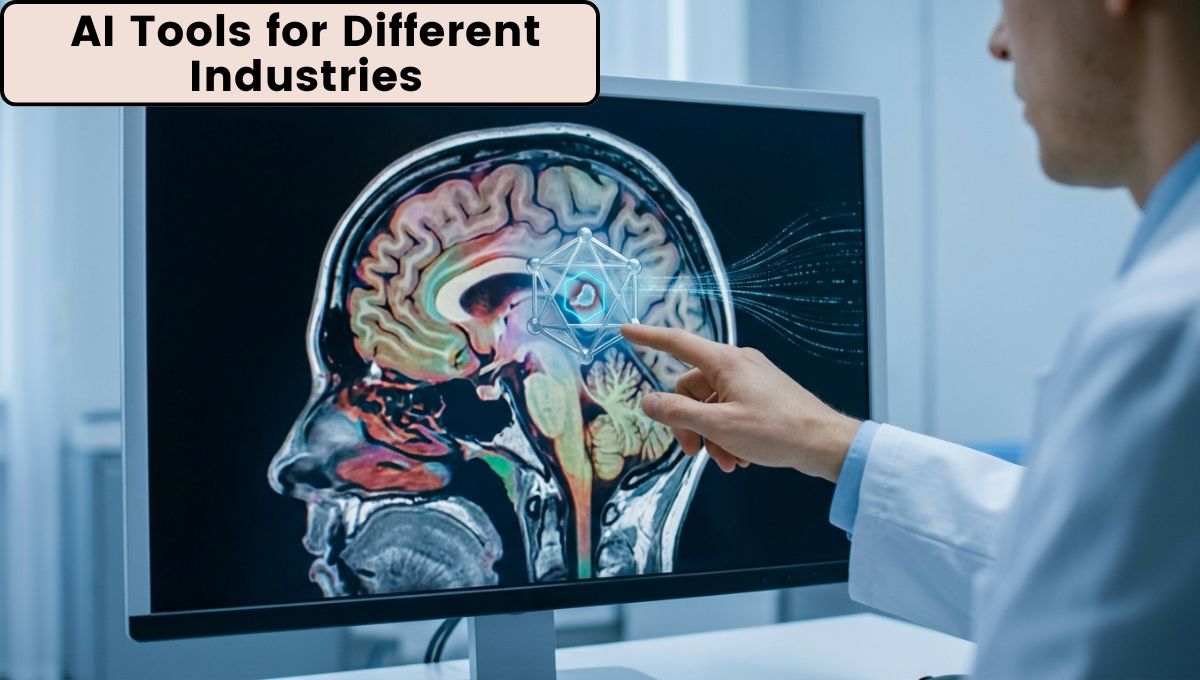
Artificial intelligence has become one of the most influential technologies across the global economy. Organizations of all sizes are adopting AI-powered solutions to improve efficiency, automate routine tasks, enhance decision-making, and deliver better customer experiences. What was once considered an emerging technology is now a practical business tool used in industries ranging from healthcare and education to finance, retail, manufacturing, and marketing.
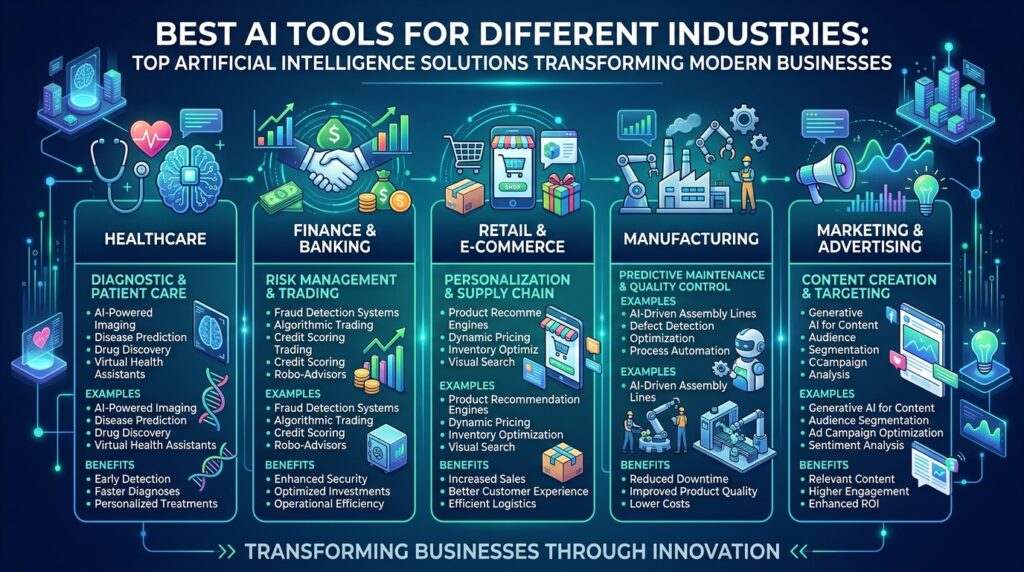
The demand for the Best AI Tools for Different Industries continues to grow as businesses seek innovative ways to stay competitive. AI tools can analyze large volumes of data, generate content, automate workflows, improve customer support, optimize operations, and provide valuable insights that help organizations make informed decisions.
Different industries have unique requirements, and AI platforms are increasingly being designed to address specific sector needs. While some tools serve multiple industries, others focus on specialized applications such as medical analysis, financial forecasting, customer service automation, content creation, or manufacturing optimization.
Understanding the most effective AI tools for different industries can help organizations identify solutions that align with their goals and operational requirements.
Why AI Is Becoming Essential Across Industries
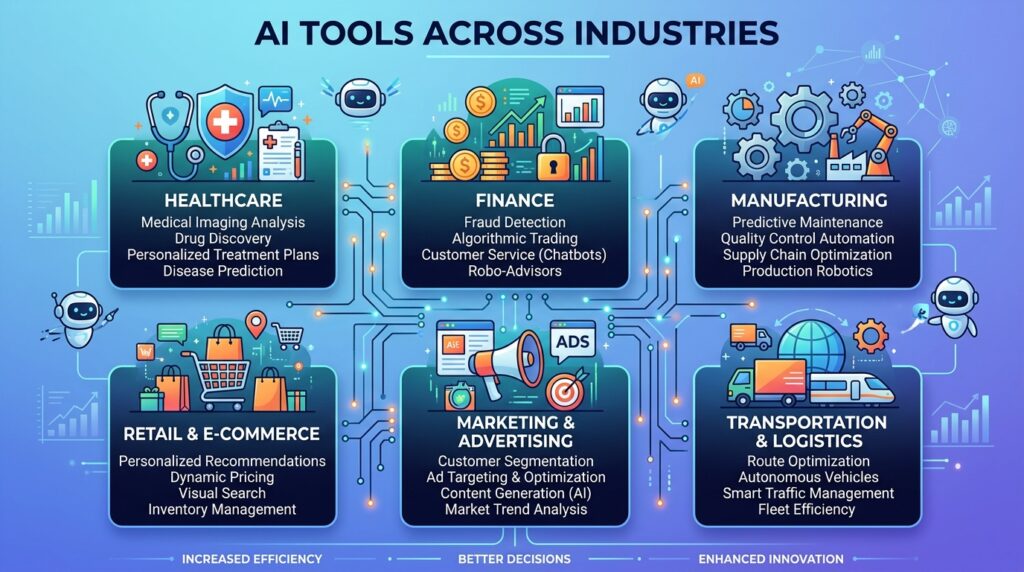
Businesses face increasing pressure to improve productivity, reduce costs, and meet growing customer expectations. AI technology helps address these challenges by automating repetitive processes and providing data-driven insights.
Modern AI solutions can:
- Analyze complex datasets.
- Automate customer interactions.
- Generate content and reports.
- Predict trends and outcomes.
- Improve workflow efficiency.
- Enhance decision-making processes.
- Support research and development.
- Optimize operational performance.
As AI capabilities continue to expand, organizations across various industries are integrating these technologies into their daily operations.
Key Benefits of Industry-Specific AI Tools
AI adoption offers numerous advantages when tools are tailored to the unique needs of a specific industry.
Some major benefits include:
| Benefit | Description |
|---|---|
| Increased Efficiency | Automates repetitive and time-consuming tasks |
| Improved Accuracy | Reduces human errors in data processing |
| Better Decision-Making | Provides actionable insights from large datasets |
| Cost Savings | Optimizes resource allocation and operations |
| Enhanced Customer Experience | Delivers faster and more personalized services |
| Scalability | Supports business growth without proportional increases in workload |
These benefits explain why AI adoption continues to accelerate across multiple sectors.
Best AI Tools for Content Creation and Marketing
Content marketing remains one of the most active areas of AI adoption. Businesses, publishers, agencies, and creators use AI tools to generate content, optimize campaigns, and improve audience engagement.
Popular tools include:
- ChatGPT for content creation, brainstorming, and writing assistance.
- Jasper AI for marketing copy and content generation.
- Copy.ai for social media content, blogs, and promotional material.
- Canva for AI-powered design and visual content creation.
- Surfer SEO for content optimization and search engine visibility.
These platforms help marketers create high-quality content while reducing production time.
Best AI Tools for Healthcare
Healthcare organizations use AI to improve diagnostics, patient management, medical research, and operational efficiency.
Commonly used AI solutions include:
- IBM Watson Health for healthcare data analysis.
- PathAI for pathology and disease diagnosis support.
- Aidoc for medical imaging analysis.
- Tempus for precision medicine and clinical insights.
- Viz.ai for AI-assisted patient care coordination.
These tools help healthcare professionals process information more efficiently and support clinical decision-making.
Best AI Tools for Education
Educational institutions and learners are increasingly using AI-powered platforms to improve teaching, learning, and administrative processes.
Popular education-focused AI tools include:
- ChatGPT for tutoring, explanations, and study assistance.
- Khanmigo for personalized learning support.
- Quizlet AI for study materials and flashcards.
- Gradescope for automated grading and assessment.
- Duolingo Max for AI-powered language learning.
These solutions help educators save time while offering students more personalized learning experiences.
Best AI Tools for Finance and Banking
Financial institutions use AI to manage risk, detect fraud, analyze investments, and improve customer services.
Some leading AI tools in finance include:
- AlphaSense for market intelligence and research.
- Kensho for financial analytics.
- Zest AI for credit risk assessment.
- Feedzai for fraud detection and prevention.
- Kasisto for AI-powered banking assistants.
These platforms help financial organizations improve efficiency, compliance, and customer service.
Best AI Tools for E-Commerce
Online retailers use AI to personalize shopping experiences, manage inventory, and improve customer engagement.
Widely used tools include:
- Shopify Magic for AI-assisted e-commerce operations.
- Klaviyo AI for marketing automation.
- Nosto for personalized product recommendations.
- Dynamic Yield for customer experience optimization.
- Prisync for competitor pricing analysis.
These tools help retailers improve conversion rates and customer satisfaction.
Best AI Tools for Customer Support
Customer service teams increasingly rely on AI solutions to provide faster and more efficient support.
Leading platforms include:
- Zendesk AI for automated support workflows.
- Intercom for AI-powered customer messaging.
- Freshdesk AI for support automation.
- Drift for conversational marketing and customer engagement.
- Tidio for AI chatbots and live chat support.
These solutions help businesses improve response times and customer satisfaction levels.
Best AI Tools for Human Resources
Human resources departments use AI to streamline recruitment, employee management, and talent development.
Popular HR-focused AI platforms include:
- HireVue for recruitment and candidate assessments.
- Eightfold AI for talent intelligence.
- Paradox for recruitment automation.
- Textio for job description optimization.
- Workday AI for workforce management.
These tools assist HR professionals in making recruitment and talent management more efficient.
Best AI Tools for Manufacturing
Manufacturing companies use AI to optimize production processes, improve quality control, and reduce operational costs.
Common AI solutions include:
- Siemens Industrial AI for manufacturing automation.
- IBM Maximo for predictive maintenance.
- SparkCognition for operational intelligence.
- Uptake for asset performance management.
- Landing AI for visual inspection and quality control.
These technologies help manufacturers improve efficiency and reduce downtime.
Best AI Tools for Graphic Design and Creative Work
Creative professionals increasingly use AI-powered design tools to accelerate production and generate visual content.
Popular options include:
- Canva for graphic design and branding.
- Adobe Express for AI-enhanced design creation.
- Midjourney for image generation.
- DALL·E for AI-created visuals.
- Fotor for image editing and creative design.
These tools help designers and marketers create content more efficiently.
Comparing AI Tools Across Industries
| Industry | Common AI Applications | Popular Tools |
|---|---|---|
| Marketing | Content creation, SEO, campaigns | ChatGPT, Jasper, Canva |
| Healthcare | Diagnostics, research, imaging | IBM Watson Health, PathAI |
| Education | Learning support, assessments | ChatGPT, Khanmigo |
| Finance | Fraud detection, analytics | AlphaSense, Feedzai |
| E-Commerce | Personalization, automation | Shopify Magic, Nosto |
| Customer Support | Chatbots, ticket management | Zendesk AI, Intercom |
| Human Resources | Recruitment, talent management | HireVue, Eightfold AI |
| Manufacturing | Automation, maintenance | Siemens Industrial AI, IBM Maximo |
| Design | Image generation, branding | Canva, Midjourney, DALL·E |
This comparison highlights how AI tools are addressing industry-specific challenges while improving operational efficiency.
Factors to Consider When Choosing an AI Tool
Organizations should evaluate several factors before adopting an AI solution.
Important considerations include:
- Industry-specific functionality.
- Integration with existing systems.
- Ease of implementation.
- Security and compliance requirements.
- Scalability.
- Pricing structure.
- Customer support and training resources.
Careful evaluation helps ensure that AI investments align with business objectives.
Challenges of AI Adoption Across Industries
Despite its many advantages, AI adoption also presents challenges that organizations must address.
Common concerns include:
- Data privacy and security.
- Implementation costs.
- Employee training requirements.
- Integration complexity.
- Regulatory compliance.
- Dependence on data quality.
Businesses should develop clear strategies to manage these challenges while maximizing the benefits of AI technologies.
The Future of Industry-Specific AI Solutions
Artificial intelligence is expected to become even more specialized as industries continue to adopt advanced technologies. Future AI platforms may offer deeper automation, improved predictive capabilities, enhanced personalization, and stronger integration with business operations.
Organizations are likely to see increased use of AI for decision-making, customer interactions, workflow optimization, and innovation. As technology evolves, industry-specific AI solutions will continue to play a central role in digital transformation efforts worldwide.
Conclusion
The demand for the Best AI Tools for Different Industries continues to rise as organizations seek ways to improve productivity, efficiency, and customer experiences. AI technology is no longer limited to technology companies; it is now a valuable resource across healthcare, education, finance, e-commerce, customer support, human resources, manufacturing, marketing, and creative industries.
Tools such as ChatGPT, Canva, Jasper, IBM Watson Health, Shopify Magic, Zendesk AI, HireVue, Midjourney, and many others demonstrate how artificial intelligence can address unique industry challenges while supporting business growth. By selecting the right solutions and integrating them effectively, organizations can unlock new opportunities and remain competitive in an increasingly digital world.
As AI capabilities continue to advance, businesses across every sector are likely to discover even more innovative ways to leverage these powerful technologies for long-term success.