Artificial Intelligence has completely changed the way people create digital images. From social media creators and bloggers to graphic designers and businesses, AI image generators are now being used everywhere to create professional visuals in minutes. These tools can turn simple text prompts into realistic photos, digital paintings, marketing graphics, anime art, and even cinematic scenes without requiring advanced design skills.
The growing competition in the AI industry has also improved the quality of AI-generated images significantly. Some tools focus on ultra-realistic visuals, while others are better for artistic creativity, branding, or fast content generation. As more creators search for the best AI tools, choosing the right platform has become an important decision for productivity, quality, and pricing.
This comparison looks at the most popular and powerful AI image generators available today. It explains their features, strengths, pricing, and ideal use cases so readers can understand which platform may suit their needs best.
Why AI Image Generators Are Becoming So Popular
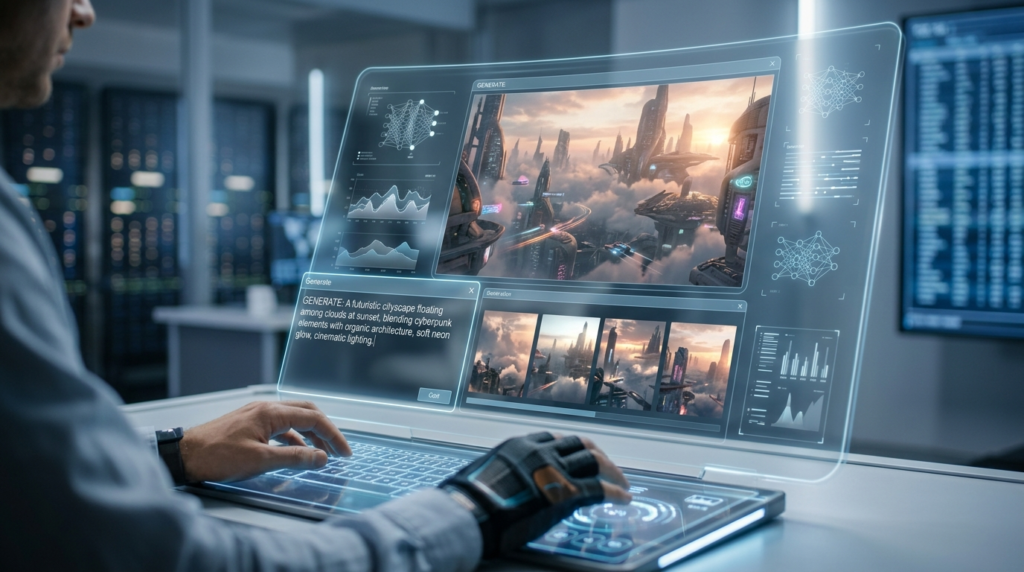
The demand for visual content has increased rapidly across websites, YouTube, Instagram, online advertising, and e-commerce platforms. Businesses and creators need high-quality graphics regularly, but traditional design work often takes time and money. This is where AI image generators are helping users create visuals instantly using simple text instructions.
These tools are now capable of generating realistic portraits, fantasy artwork, product images, logos, backgrounds, posters, and social media creatives within seconds. Many platforms also include editing tools, image expansion, background removal, and style transfer features, making them useful for both beginners and professionals.
Another major reason for their popularity is accessibility. Earlier, advanced image creation required professional software knowledge. Today, users can create visually impressive images simply by describing what they want in plain language.
Top AI Image Generators Compared
The AI image generation market is filled with different tools offering unique strengths. Some focus on realism, while others are better for artistic designs and creative experimentation.
| AI Image Generator | Best For | Key Strength | Free Version | Ideal Users |
|---|---|---|---|---|
| Midjourney | Artistic visuals | Cinematic image quality | No | Designers, artists |
| DALL·E | Realistic images | Natural prompt understanding | Limited | General creators |
| Adobe Firefly | Commercial content | Safe commercial usage | Yes | Businesses, marketers |
| Stable Diffusion | Customization | Open-source flexibility | Yes | Developers, advanced users |
| Canva AI | Social media graphics | Easy editing tools | Yes | Beginners, creators |
| Leonardo AI | Game and concept art | Detailed creative control | Yes | Digital artists |
| Ideogram | Typography images | Strong text rendering | Yes | Branding creators |
Midjourney Remains a Favorite for Artistic Quality
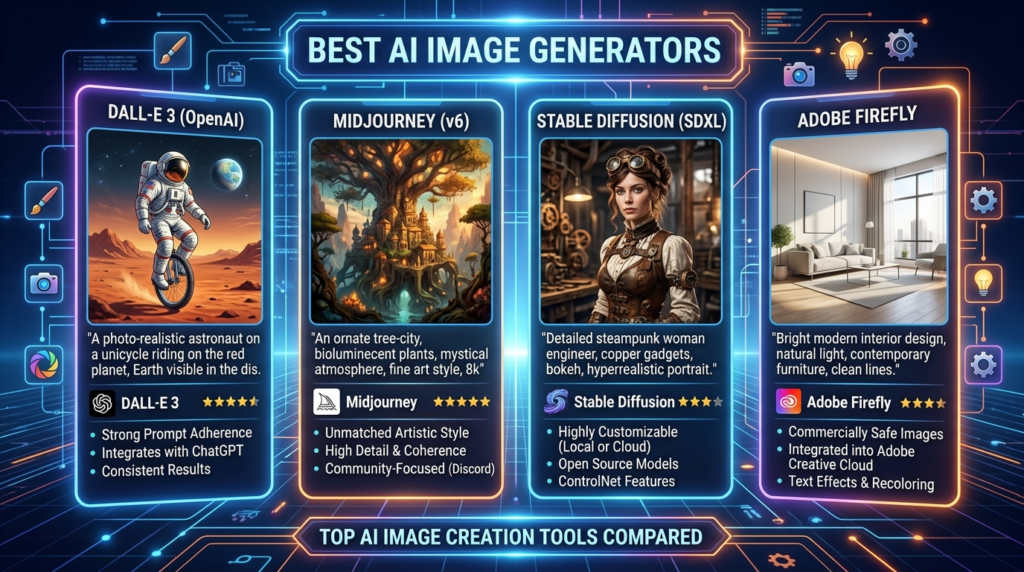
Among all AI image generators, Midjourney continues to be highly popular for its cinematic and artistic image quality. The platform is widely used by digital artists, creative agencies, and social media creators because of its ability to produce visually dramatic images with rich lighting and detailed textures.
Midjourney performs especially well in fantasy art, sci-fi environments, fashion concepts, and stylized portraits. The tool often creates images that look polished and professional even with simple prompts. However, it may not always provide perfect realism compared to some competitors.
One limitation for beginners is that Midjourney traditionally operates through Discord, which can feel slightly technical for first-time users. Despite this, many professionals still consider it one of the strongest platforms for artistic image generation.
DALL·E Focuses on Simplicity and Realism
DALL·E, developed by OpenAI, has become one of the most recognized names in AI image generation. The tool is known for understanding natural language prompts extremely well. Users can describe scenes in everyday language and receive highly accurate visual outputs.
One of DALL·E’s biggest strengths is realistic image generation. It performs well for blog images, product visuals, advertisements, and concept illustrations. The platform also offers editing capabilities where users can modify selected parts of an image using text instructions.
The interface is beginner-friendly, making it useful for users who want fast results without learning advanced settings. For content creators and businesses looking for reliable AI-generated visuals, DALL·E remains a strong option.
Adobe Firefly Targets Commercial and Business Users
Adobe Firefly has gained attention because of its focus on commercially safe AI-generated content. Since Adobe already dominates the creative software market, Firefly integrates smoothly with applications like Photoshop and Illustrator.
Many businesses prefer Firefly because Adobe trains the system using licensed and safe content sources. This reduces concerns around copyright and commercial usage. The platform is particularly useful for marketing banners, advertisements, presentations, and branding visuals.
Another major advantage is ease of editing. Users can quickly add or remove objects, generate backgrounds, and expand images directly within Adobe’s ecosystem. For companies already using Adobe products, Firefly provides a convenient workflow.
Stable Diffusion Offers Maximum Flexibility
Stable Diffusion stands out because it is open-source and highly customizable. Unlike many cloud-based AI generators, Stable Diffusion allows developers and advanced users to run the model locally on their own systems.
This flexibility has created a large community around the platform. Users can install custom models, train specialized styles, and fine-tune outputs for unique projects. It is widely used for anime art, realistic photography, product rendering, and experimental creative work.
However, Stable Diffusion may require more technical knowledge compared to beginner-focused platforms. Users often need to adjust settings and prompts carefully to achieve the best results. Despite the learning curve, its freedom and customization options make it extremely popular among experienced creators.
Canva AI Simplifies Image Creation for Beginners
Canva AI is designed for users who want quick and simple visual creation without complicated workflows. Since Canva is already widely used for social media graphics and presentations, its AI image generation tools fit naturally into the platform.
Users can create Instagram posts, thumbnails, posters, banners, and marketing creatives with minimal effort. Canva AI focuses more on convenience and ease of use rather than highly advanced artistic outputs.
For beginners, small businesses, students, and influencers, Canva AI provides an affordable and accessible option. The built-in templates and drag-and-drop editing tools also help users combine AI-generated images with text and design elements quickly.
Leonardo AI Is Popular Among Digital Artists
Leonardo AI has become increasingly popular for gaming visuals, character concepts, and creative illustrations. The platform offers more control over style consistency, image variations, and artistic direction.
Game designers and concept artists often use Leonardo AI to create fantasy worlds, futuristic characters, and detailed environments. The system also supports model training and advanced customization options for professional users.
One of its strongest advantages is the balance between ease of use and creative control. Beginners can generate images quickly, while advanced users can experiment with deeper settings for refined outputs.
Ideogram Improves AI Text Rendering
One common weakness of many AI image generators has been poor text rendering inside images. AI-generated posters, logos, and banners often contain distorted or unreadable words. Ideogram has gained attention because it performs much better in handling typography within generated visuals.
This makes it useful for branding, poster design, advertisements, and social media creatives where readable text matters. Users creating marketing content often prefer Ideogram for combining visuals with titles, slogans, and design elements in a cleaner way.
Although it may not always match the artistic quality of Midjourney or the realism of DALL·E, its typography strengths give it a unique position in the AI image market.
Important Factors to Consider Before Choosing an AI Image Generator
Different users have different creative needs, so choosing the right tool depends on several factors. Some users prioritize image quality, while others focus on speed, editing tools, pricing, or commercial usage rights.
Here are some important things users should consider before selecting a platform:
- Image realism and visual quality
- Ease of use for beginners
- Pricing and subscription plans
- Commercial usage permissions
- Editing and customization features
- Speed of image generation
- Community support and updates
Users working on professional projects may require commercially safe content, while hobby creators may simply want artistic experimentation. Understanding these needs can help users select the best platform for their workflow.
AI Image Generation Continues to Grow Rapidly
The AI image generation industry is evolving very quickly. New models and features are being introduced regularly, improving realism, speed, and creative flexibility. Many companies are also integrating AI image tools directly into social media apps, design platforms, and productivity software.
As competition increases, users can expect better image quality, more affordable pricing, and advanced editing capabilities in the future. AI-generated visuals are already becoming a major part of digital marketing, entertainment, e-commerce, and online publishing.
While each platform has different strengths, the overall trend shows that AI image creation is becoming easier, faster, and more accessible for everyone.
Conclusion
The growing popularity of AI image generators shows how quickly digital creativity is changing. Tools like Midjourney, DALL·E, Adobe Firefly, Stable Diffusion, Canva AI, Leonardo AI, and Ideogram each offer unique advantages for different types of users.
Some platforms are better for cinematic artwork, while others focus on realism, typography, customization, or business-friendly content creation. Choosing the right tool depends on individual needs, budget, and creative goals.
As AI technology continues to improve, these tools are expected to play an even larger role in content creation, branding, marketing, and digital art. For creators, businesses, and designers, understanding the strengths of different AI image generators can help them make smarter choices in a rapidly growing industry.