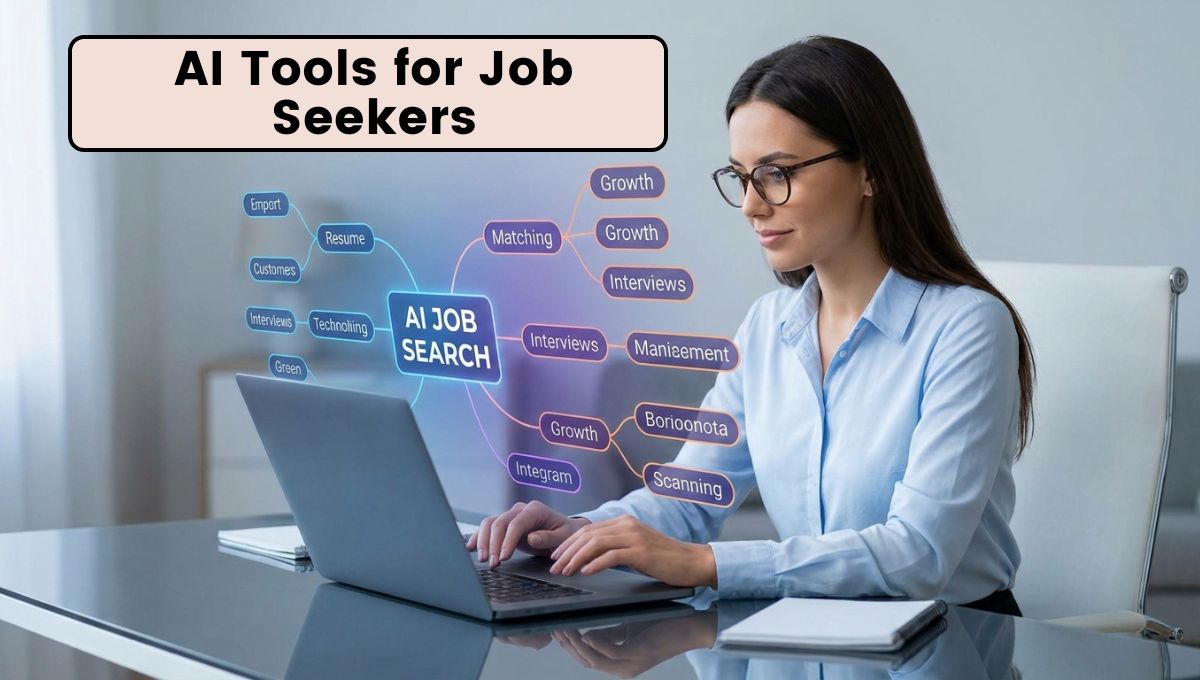
Finding a job has become more competitive than ever before. Whether you are a fresh graduate, an experienced professional, a career changer, or someone returning to the workforce after a break, the modern hiring process can be challenging. Employers receive hundreds or even thousands of applications for a single role, making it difficult for candidates to stand out. At the same time, job seekers must create strong resumes, optimize LinkedIn profiles, prepare for interviews, write personalized cover letters, and continuously search for relevant opportunities.
This is where AI Tools for Job Seekers are transforming the employment landscape. Artificial intelligence is helping candidates streamline the job search process, improve application quality, prepare for interviews, identify suitable opportunities, and increase their chances of securing employment. What previously required days of manual effort can now often be completed in hours with the help of AI-powered platforms.
The growing adoption of AI in recruitment has created a unique situation. Employers are using artificial intelligence to screen resumes, analyze applications, and shortlist candidates. As a result, job seekers are also using AI tools to optimize their applications and better align with employer expectations. This shift has created a new era in career development where understanding AI is becoming almost as important as understanding traditional job search techniques.
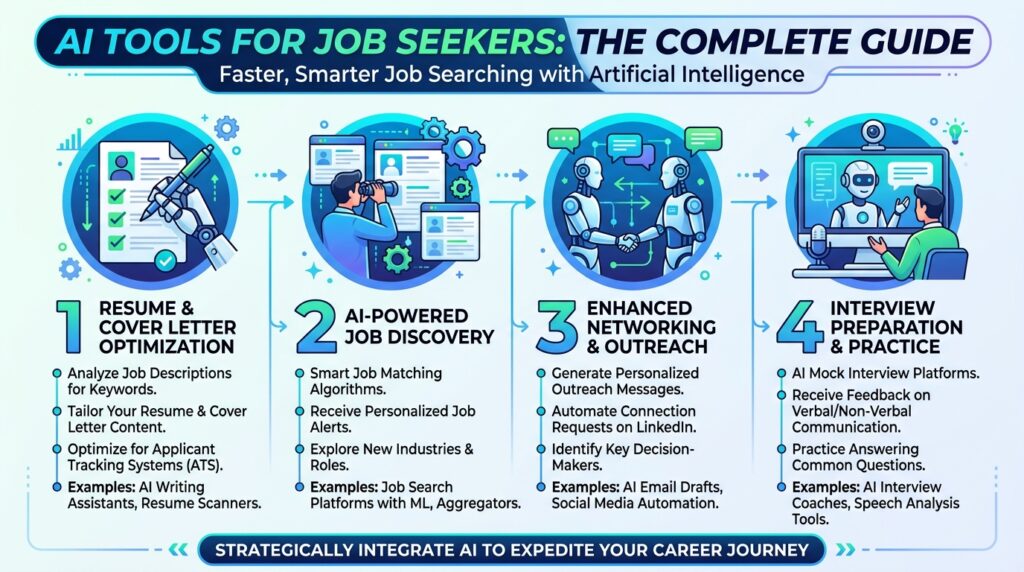
This comprehensive guide explores the best AI Tools for Job Seekers, their features, advantages, limitations, practical applications, implementation strategies, market trends, and future developments.
What Are AI Tools for Job Seekers?
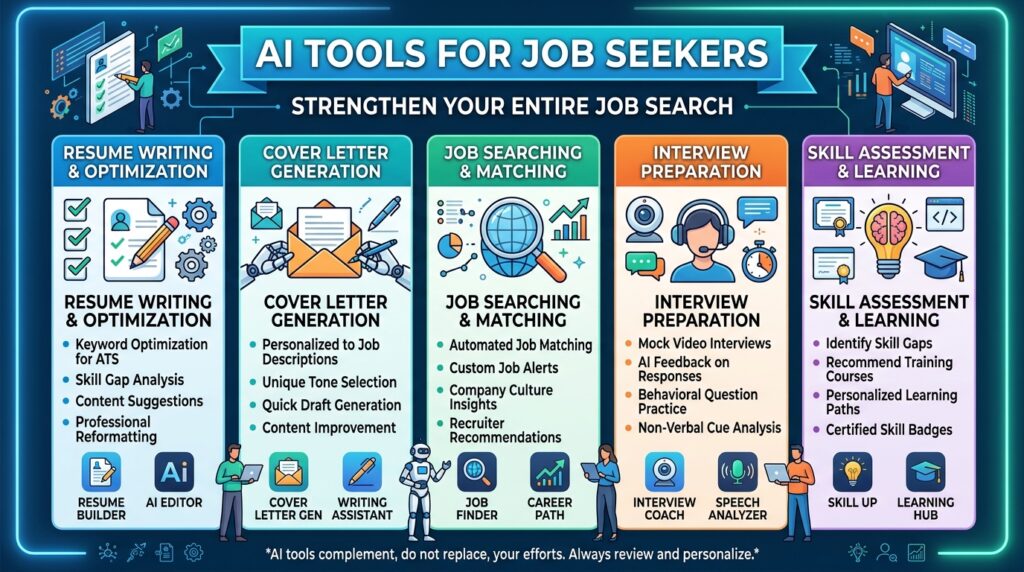
AI tools for job seekers are software platforms that use artificial intelligence, machine learning, natural language processing, and predictive analytics to help individuals find jobs, prepare applications, improve resumes, enhance professional profiles, and succeed in interviews.
These tools can automate repetitive tasks, analyze job descriptions, suggest improvements, identify skills gaps, generate professional content, and provide personalized recommendations.
Unlike traditional career websites, AI-powered tools offer intelligent insights and adaptive support that help job seekers make better decisions throughout their employment journey.
Common applications include:
- Resume optimization
- Cover letter generation
- LinkedIn profile enhancement
- Interview preparation
- Job matching
- Career planning
- Skills assessment
- Networking assistance
- Application tracking
- Salary research
These capabilities make AI an increasingly valuable resource for job seekers across all industries.
Why AI Is Becoming Important for Job Seekers
The hiring process has changed dramatically over the past decade. Many organizations now use Applicant Tracking Systems (ATS) and AI-powered recruitment software to screen applications before human recruiters review them.
This means that a highly qualified candidate may never reach a hiring manager if their resume is not properly optimized. AI tools help job seekers understand how recruitment systems evaluate applications and improve their chances of passing initial screening processes.
Another major factor is efficiency. Job seekers often spend countless hours tailoring resumes, writing cover letters, researching companies, and preparing for interviews. AI can significantly reduce this workload by automating many of these tasks.
AI also helps candidates identify opportunities that align with their skills, experience, and career goals. Instead of manually searching through hundreds of listings, job seekers can receive personalized recommendations based on their profiles and preferences.
As hiring becomes increasingly data-driven, AI tools are becoming essential for candidates who want to compete effectively in modern job markets.
Current Industry Adoption and Job Market Trends

Artificial intelligence is now influencing both sides of the hiring process. Employers use AI to evaluate candidates, while applicants use AI to improve their applications.
Several trends are driving adoption:
| Trend | Impact on Job Seekers |
|---|---|
| ATS-Based Recruitment | Greater need for resume optimization |
| Remote Work Growth | Increased competition for positions |
| Skills-Based Hiring | More emphasis on competencies |
| LinkedIn Recruitment | Stronger focus on professional branding |
| AI-Powered Hiring | Need for AI-friendly applications |
| Digital Interviews | Increased demand for interview preparation |
These trends suggest that AI will continue playing a significant role in career development and recruitment.
Benefits of Using AI Tools for Job Seekers
One of the biggest advantages of AI is efficiency. Job seekers can create tailored resumes and cover letters much faster than they could manually.
Another major benefit is personalization. AI tools analyze job descriptions and recommend specific improvements that align with employer requirements.
AI also helps improve confidence during interviews by providing realistic practice sessions and feedback.
Additional benefits include:
| Benefit | Description |
|---|---|
| Faster Applications | Reduces time spent on job submissions |
| Better Resume Quality | Improves ATS compatibility |
| Enhanced Interview Skills | Provides practice opportunities |
| Personalized Job Matching | Identifies relevant positions |
| Career Guidance | Supports long-term planning |
| Increased Confidence | Helps candidates prepare effectively |
These advantages make AI a valuable companion throughout the job search process.
ChatGPT for Career Development and Job Applications
ChatGPT has become one of the most widely used AI tools among job seekers. It can assist with resume writing, cover letter creation, interview preparation, LinkedIn optimization, networking messages, and career planning.
For example, a candidate applying for a marketing position can provide their experience and a job description to ChatGPT, which can then suggest tailored resume improvements and generate a customized cover letter.
Key Features
| Feature | Benefit |
|---|---|
| Resume Assistance | Improves content quality |
| Cover Letter Creation | Saves time |
| Interview Preparation | Generates practice questions |
| LinkedIn Support | Enhances professional branding |
| Career Advice | Helps with planning |
Pros
- Easy to use
- Versatile applications
- Affordable
- Supports multiple career stages
Cons
- Requires fact-checking
- Generated content should be personalized
Best For
- Graduates
- Professionals
- Career changers
- Freelancers
Resume Worded
Resume Worded specializes in resume and LinkedIn profile optimization.
The platform analyzes resumes and provides detailed feedback on formatting, keyword usage, impact statements, and ATS compatibility.
Key Features
- Resume scoring
- LinkedIn analysis
- ATS optimization
- Action-oriented suggestions
Pros
- Detailed resume feedback
- ATS-focused recommendations
- Easy implementation
Cons
- Advanced features require payment
Best For
- Resume improvement
- LinkedIn optimization
Teal
Teal provides a comprehensive career management platform that helps job seekers organize applications, optimize resumes, and track opportunities.
The platform acts as a centralized hub for managing the entire job search process.
Key Features
- Job tracking
- Resume customization
- Career planning
- Application management
Pros
- Excellent organization tools
- Streamlines applications
Cons
- Requires consistent use for maximum benefit
Best For
- Active job seekers
- Long-term career management
Jobscan
Jobscan focuses on helping resumes pass Applicant Tracking Systems.
The platform compares resumes against job descriptions and identifies missing keywords and optimization opportunities.
Key Features
- ATS analysis
- Keyword matching
- Resume optimization
- Application scoring
Pros
- Improves ATS performance
- Easy-to-understand recommendations
Cons
- Focuses primarily on ATS optimization
Best For
- Corporate job applications
- Competitive roles
LinkedIn AI Features
LinkedIn increasingly incorporates AI-powered features that assist users with profile optimization, networking, and job searching.
LinkedIn remains one of the most important platforms for professional visibility.
Key Features
- Profile recommendations
- Job matching
- Networking suggestions
- Skill insights
Pros
- Largest professional network
- Direct recruiter access
Cons
- Requires active engagement
Best For
- Professional networking
- Executive roles
- Corporate careers
Interview Warmup by Google
Interview Warmup helps candidates prepare for interviews by simulating interview scenarios and providing feedback.
The platform analyzes responses and highlights areas for improvement.
Key Features
- Mock interviews
- Response analysis
- Confidence building
- Communication improvement
Pros
- Free to use
- Excellent practice tool
Cons
- Limited compared to live coaching
Best For
- Interview preparation
- Fresh graduates
Kickresume
Kickresume combines AI-powered writing assistance with professional resume design templates.
The platform helps candidates create visually appealing and ATS-friendly resumes.
Key Features
- Resume templates
- AI writing assistance
- Cover letter generation
- Career content support
Pros
- Professional designs
- Easy customization
Cons
- Premium templates require subscription
Best For
- Creative professionals
- Entry-level applicants
Grammarly for Professional Communication
Grammarly helps job seekers improve resumes, cover letters, emails, and professional communication.
Strong writing skills often make a positive impression on recruiters and hiring managers.
Key Features
- Grammar checking
- Tone analysis
- Clarity improvements
- Professional writing support
Pros
- Improves communication quality
- Easy integration
Cons
- Premium features require payment
Best For
- Cover letters
- Networking messages
- Professional emails
Careerflow
Careerflow provides AI-powered career management and job search optimization tools.
The platform focuses on helping candidates improve visibility and track progress.
Key Features
- Resume optimization
- LinkedIn review
- Job tracking
- Career analytics
Pros
- Comprehensive career support
- Data-driven insights
Cons
- Learning curve for beginners
Best For
- Serious job seekers
- Career transitions
Huntr
Huntr helps candidates organize job applications, track progress, and manage networking activities.
Key Features
- Application tracking
- Contact management
- Resume organization
- Career planning
Pros
- Excellent organization
- Improved productivity
Cons
- Primarily focused on tracking rather than content creation
Best For
- High-volume job searches
Pricing Overview Table
| Tool | Pricing Level |
|---|---|
| ChatGPT | Low to Medium |
| Grammarly | Free to Medium |
| Free to Medium | |
| Interview Warmup | Free |
| Jobscan | Medium |
| Resume Worded | Medium |
| Teal | Medium |
| Kickresume | Medium |
| Careerflow | Medium |
| Huntr | Low to Medium |
Comparison Table of Top AI Tools for Job Seekers
| Tool | Primary Use | Best For |
|---|---|---|
| ChatGPT | Career Assistance | All Job Seekers |
| Resume Worded | Resume Optimization | ATS Preparation |
| Teal | Job Management | Application Tracking |
| Jobscan | ATS Analysis | Resume Matching |
| Networking | Professional Branding | |
| Interview Warmup | Interview Practice | Confidence Building |
| Kickresume | Resume Design | Professional Applications |
| Grammarly | Writing | Communication |
| Careerflow | Career Growth | Long-Term Planning |
| Huntr | Organization | Job Search Tracking |
Real-World Use Cases
A recent graduate can use ChatGPT to draft resumes, Jobscan to optimize them for ATS systems, and Interview Warmup to practice interview responses.
An experienced professional transitioning into a new industry can use LinkedIn AI features, Resume Worded, and Careerflow to improve visibility and tailor applications.
A freelancer seeking full-time employment can use Teal and Huntr to organize applications and monitor progress.
A senior executive can use LinkedIn, ChatGPT, and Grammarly to strengthen networking efforts and executive branding.
Industry-Specific Applications
Technology
Developers use AI tools to optimize technical resumes and prepare for coding interviews.
Marketing
Marketers use AI for portfolio development and personal branding.
Finance
Financial professionals use AI to tailor resumes for highly competitive positions.
Healthcare
Healthcare candidates use AI to highlight certifications and specialized experience.
Education
Teachers and academic professionals use AI to improve application materials and professional profiles.
Step-by-Step Guide to Using AI for Job Searching
- Create a master resume.
- Use AI to tailor it for each application.
- Optimize keywords using ATS tools.
- Improve LinkedIn profiles.
- Generate personalized cover letters.
- Practice interviews with AI assistants.
- Track applications systematically.
- Review and refine strategies regularly.
This structured process helps maximize results.
Common Mistakes Job Seekers Should Avoid
Many candidates rely entirely on AI-generated resumes without personalizing them.
Another common mistake is keyword stuffing, which can make applications appear unnatural.
Candidates should also avoid submitting identical resumes to every employer.
Ignoring networking opportunities is another frequent error. AI can support networking efforts, but genuine human connections remain important.
Finally, applicants should always verify AI-generated information before submitting materials.
Best Practices for Responsible AI Use
Successful job seekers use AI as a support tool rather than a replacement for effort and strategy.
Recommended practices include:
- Personalize all AI-generated content
- Verify information accuracy
- Maintain authentic communication
- Combine AI with networking
- Continuously update skills
These practices help maximize effectiveness while preserving authenticity.
ROI and Career Impact
The biggest return on investment from AI comes from time savings and improved application quality.
AI helps candidates submit more targeted applications, prepare more effectively for interviews, and identify opportunities faster.
Improved ATS compatibility can significantly increase interview invitations.
Better preparation often leads to stronger interview performance and improved hiring outcomes.
Future Trends in AI for Career Development
Artificial intelligence is expected to become even more integrated into recruitment and career planning.
Future developments may include:
- Personalized career coaching
- Advanced skills gap analysis
- AI-powered salary negotiation support
- Automated networking recommendations
- Predictive career planning
- Virtual interview coaching
These innovations could reshape how individuals approach career development.
Expert Recommendations
Job seekers new to AI should begin with versatile tools such as ChatGPT, LinkedIn, Grammarly, and Jobscan.
As they become more comfortable, they can explore specialized platforms such as Resume Worded, Teal, Careerflow, and Huntr.
The key is to focus on improving application quality rather than simply increasing application volume.
Comprehensive Conclusion
The rise of AI Tools for Job Seekers is transforming the way people search for employment, prepare applications, and develop their careers. Artificial intelligence helps candidates optimize resumes, strengthen professional profiles, prepare for interviews, identify opportunities, and manage applications more efficiently.
Leading Job Search AI Tools such as ChatGPT, Resume Worded, Teal, Jobscan, LinkedIn, Interview Warmup, Kickresume, Grammarly, Careerflow, and Huntr offer valuable support throughout the job search journey. These platforms help candidates save time, improve application quality, and increase their chances of securing interviews.
As recruitment continues to evolve, job seekers who combine AI-powered tools with strong networking, continuous learning, and authentic communication will be better positioned for success. Artificial intelligence is not replacing the job search process—it is enhancing it, providing candidates with powerful resources to navigate an increasingly competitive employment market.