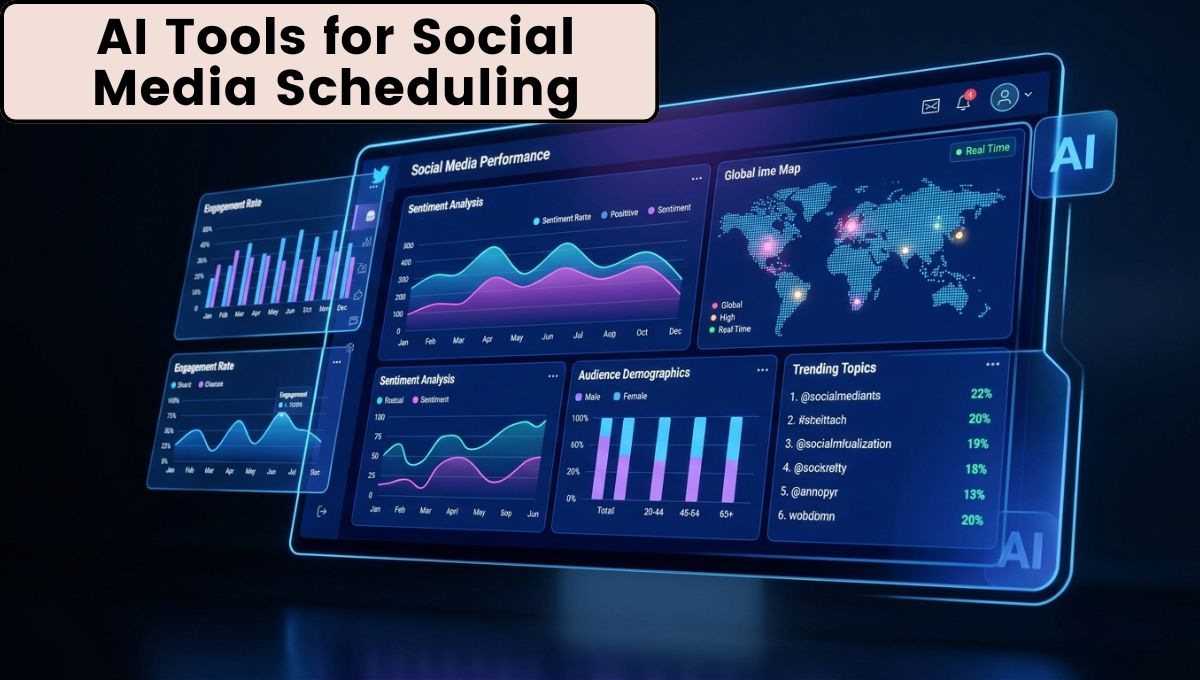
Social media has become an essential part of digital marketing for businesses, brands, creators, influencers, and organizations. Maintaining a consistent presence across multiple platforms requires planning, content creation, audience engagement, performance tracking, and timely posting. Managing all these tasks manually can be time-consuming, especially for teams handling several social media accounts simultaneously.
This is where AI Tools for Social Media Scheduling are making a significant impact. These tools help users automate posting schedules, identify the best times to publish content, analyze audience behavior, and manage multiple social media platforms from a single dashboard. By combining artificial intelligence with scheduling capabilities, businesses can save time while improving their overall social media strategy.
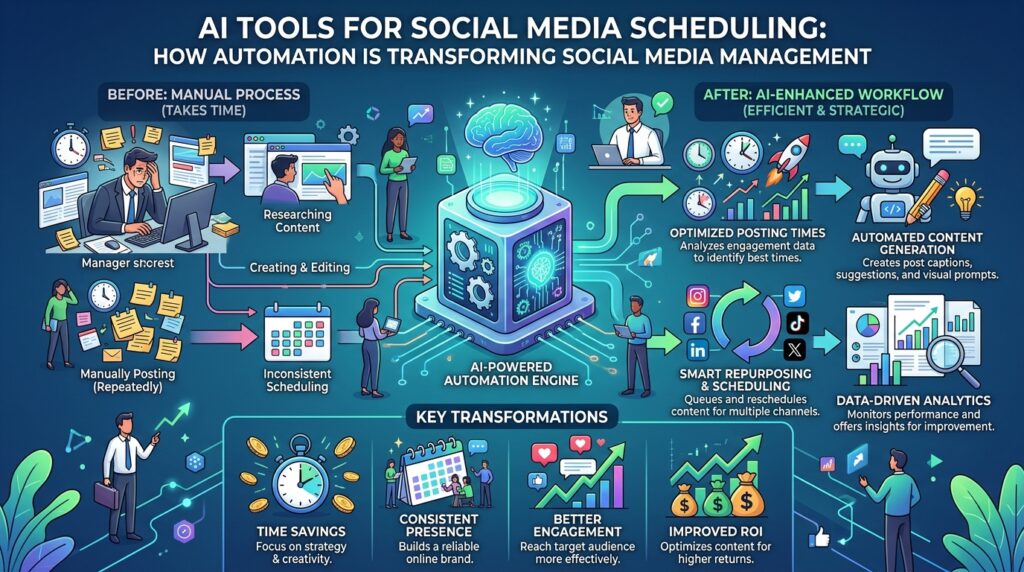
As social media platforms continue to evolve, AI-powered scheduling tools are becoming increasingly popular. They enable users to plan content calendars, automate routine tasks, and ensure that content reaches audiences at the most effective times. Whether someone manages a personal brand, a small business, or a large enterprise, AI-driven scheduling platforms can simplify daily social media operations.
Understanding Social Media Scheduling
Social media scheduling refers to the process of planning and publishing content automatically at predetermined times. Instead of manually posting updates throughout the day, users can create content in advance and schedule it for future publication.
Scheduling allows organizations to maintain a consistent posting routine without needing to be online constantly. This is particularly useful for businesses operating across different time zones or targeting global audiences.
A typical social media scheduling process includes:
- Creating content in advance.
- Selecting publishing dates and times.
- Organizing posts within a content calendar.
- Monitoring engagement after publication.
- Adjusting future schedules based on performance data.
AI enhances this process by analyzing user behavior and recommending optimal publishing strategies.
Why AI Is Becoming Important in Social Media Scheduling
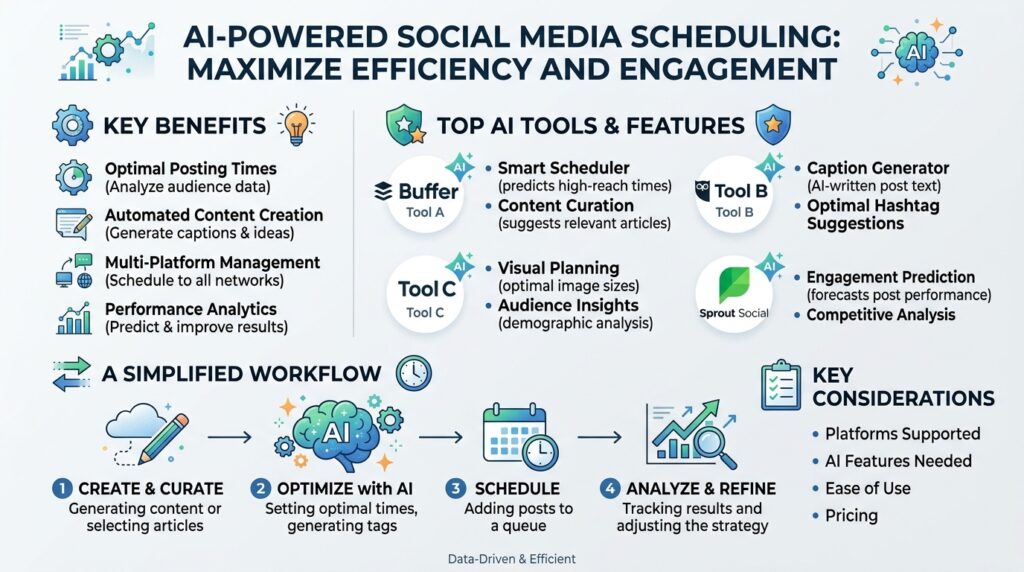
Traditional scheduling tools mainly focused on publishing content at specific times. Modern AI-powered platforms go beyond simple scheduling by using data analysis and machine learning to improve decision-making.
Artificial intelligence can help users:
- Predict the best posting times.
- Analyze audience engagement patterns.
- Generate post captions.
- Suggest hashtags.
- Identify content trends.
- Recommend content improvements.
- Optimize posting frequency.
- Monitor campaign performance.
These capabilities allow marketers to make more informed decisions while reducing manual effort.
Benefits of Using AI Tools for Social Media Scheduling
Businesses and content creators are increasingly adopting AI-powered scheduling solutions because of their efficiency and scalability.
Some of the key benefits include:
| Benefit | Description |
|---|---|
| Time Savings | Automates repetitive posting tasks |
| Better Consistency | Maintains a regular publishing schedule |
| Improved Engagement | Identifies optimal posting times |
| Centralized Management | Controls multiple platforms from one dashboard |
| Data-Driven Decisions | Uses analytics to improve performance |
| Increased Productivity | Allows teams to focus on strategy and content creation |
These advantages help organizations manage social media activities more effectively while maintaining audience engagement.
Hootsuite
Hootsuite is one of the most widely recognized social media management platforms. It offers scheduling, monitoring, analytics, and content planning tools designed for businesses of all sizes.
The platform incorporates AI features that help users determine the best times to publish content based on audience activity. Hootsuite also provides content recommendations and performance insights that can help improve social media strategies.
Users can manage multiple accounts across different social networks from a single dashboard, making it easier to coordinate campaigns and maintain consistency.
Buffer
Buffer is a popular scheduling platform known for its user-friendly interface and straightforward content management features. It enables users to plan, schedule, and publish posts across multiple social media platforms.
Buffer has integrated AI capabilities that assist with content generation, caption creation, and posting recommendations. The platform also provides analytics that help users understand how their content performs over time.
Many small businesses and individual creators choose Buffer because of its simplicity and ease of use.
Sprout Social
Sprout Social offers advanced social media management tools combined with AI-powered insights. The platform is widely used by organizations that require detailed reporting and audience analysis.
Its AI features help identify engagement trends, recommend posting schedules, and analyze audience behavior. Sprout Social also supports collaboration among team members, making it suitable for larger marketing departments.
The platform’s reporting tools help businesses track campaign effectiveness and optimize future content strategies.
Later
Later focuses heavily on visual content scheduling, particularly for image-based platforms. The platform allows users to organize content calendars and automate publishing schedules.
AI-powered features help users determine when their audience is most active. Later also offers tools for content planning and performance tracking, helping brands maintain a consistent visual presence online.
It is commonly used by influencers, creators, and businesses that rely heavily on visual marketing.
SocialBee
SocialBee combines scheduling automation with AI-assisted content creation. Users can organize content into categories and automate recurring posting schedules.
The platform’s AI features help generate social media captions, content ideas, and publishing recommendations. This can reduce the time spent creating posts while ensuring a steady flow of content.
SocialBee is particularly useful for businesses seeking a balance between automation and content management.
Metricool
Metricool is an all-in-one social media management platform that includes scheduling, analytics, advertising monitoring, and content planning tools.
AI-driven insights help users identify high-performing content and optimize publishing schedules. The platform supports multiple social networks and provides detailed reports on audience engagement and campaign performance.
Its unified dashboard makes it easier to manage various aspects of digital marketing from a single location.
Loomly
Loomly is designed to simplify content planning and scheduling. The platform offers AI-based suggestions for post creation, optimization, and scheduling.
Users can collaborate with team members, review content before publication, and manage approval workflows efficiently. Loomly also provides post-performance insights that help refine future content strategies.
The platform is widely used by agencies and businesses managing multiple social media campaigns.
CoSchedule
CoSchedule combines content marketing management with social media scheduling. The platform enables users to organize marketing activities within a centralized calendar.
AI-powered tools help optimize posting schedules, improve content planning, and streamline campaign management. CoSchedule is particularly useful for teams managing blogs, email campaigns, and social media content together.
Its integrated approach helps maintain consistency across various marketing channels.
Key Features to Look for in AI Social Media Scheduling Tools
Choosing the right scheduling platform depends on business goals, team size, and content requirements. Several important features should be considered before making a decision.
| Feature | Importance |
|---|---|
| AI Posting Recommendations | Helps identify optimal publishing times |
| Multi-Platform Support | Allows management of multiple networks |
| Content Calendar | Improves content planning and organization |
| Analytics Dashboard | Tracks engagement and performance |
| Team Collaboration | Supports workflow management |
| AI Content Assistance | Generates captions and content ideas |
| Reporting Tools | Measures campaign success |
Evaluating these features can help businesses select a platform that aligns with their marketing objectives.
Best Practices for Using AI Scheduling Tools
While AI can automate many aspects of social media management, successful strategies still require human oversight. Organizations should use AI as a support tool rather than relying on automation alone.
Some recommended practices include:
- Review scheduled content before publishing.
- Monitor audience feedback regularly.
- Update content calendars based on current trends.
- Analyze performance reports frequently.
- Adjust posting schedules as audience behavior changes.
- Maintain brand voice consistency across platforms.
Combining AI capabilities with human creativity often produces the best results.
Common Challenges of AI-Based Scheduling
Although AI scheduling tools provide many benefits, they are not without limitations. Businesses should understand potential challenges before implementing these solutions.
Some common issues include:
- Overreliance on automation.
- Generic AI-generated captions.
- Limited understanding of real-time events.
- Platform-specific content requirements.
- Need for human review and quality control.
Regular monitoring can help organizations avoid these challenges while maximizing the value of AI-powered scheduling tools.
The Future of AI in Social Media Scheduling
Artificial intelligence is expected to play an increasingly important role in social media management. Future developments may include more advanced audience targeting, predictive content recommendations, real-time campaign adjustments, and deeper personalization capabilities.
AI systems are likely to become better at understanding audience preferences, identifying emerging trends, and recommending strategies tailored to specific business goals. These advancements could further simplify social media management while improving overall performance.
As competition on social platforms continues to grow, businesses may increasingly rely on AI tools to maintain efficiency and remain competitive in the digital landscape.
Conclusion
The growth of AI Tools for Social Media Scheduling is changing how businesses, marketers, and creators manage their online presence. These platforms go beyond simple scheduling by offering intelligent recommendations, audience insights, content suggestions, and performance analytics.
Tools such as Hootsuite, Buffer, Sprout Social, Later, SocialBee, Metricool, Loomly, and CoSchedule help users automate repetitive tasks while improving content delivery and engagement. By combining scheduling automation with data-driven insights, these solutions enable organizations to maintain consistent social media activity more efficiently.
As artificial intelligence continues to evolve, social media scheduling tools are expected to become even more sophisticated. Businesses that effectively integrate these technologies into their marketing strategies can improve productivity, optimize audience engagement, and strengthen their digital presence across multiple platforms.