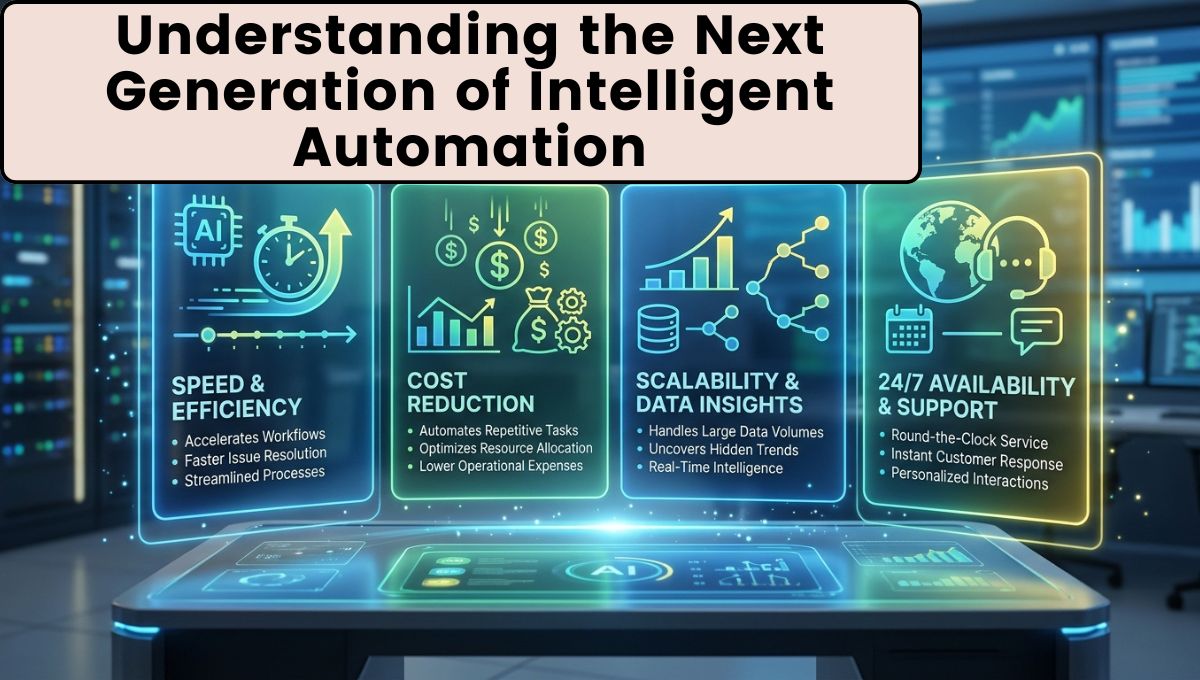
Artificial intelligence has evolved rapidly over the past few years, changing the way people work, communicate, and solve everyday problems. While AI chatbots and automation tools have become common, a new and more advanced technology is gaining attention—AI agents. These intelligent systems can perform tasks, make decisions, interact with software, and work toward specific goals with minimal human involvement. As businesses continue to adopt digital technologies, AI agents are becoming an important part of improving productivity and streamlining operations.
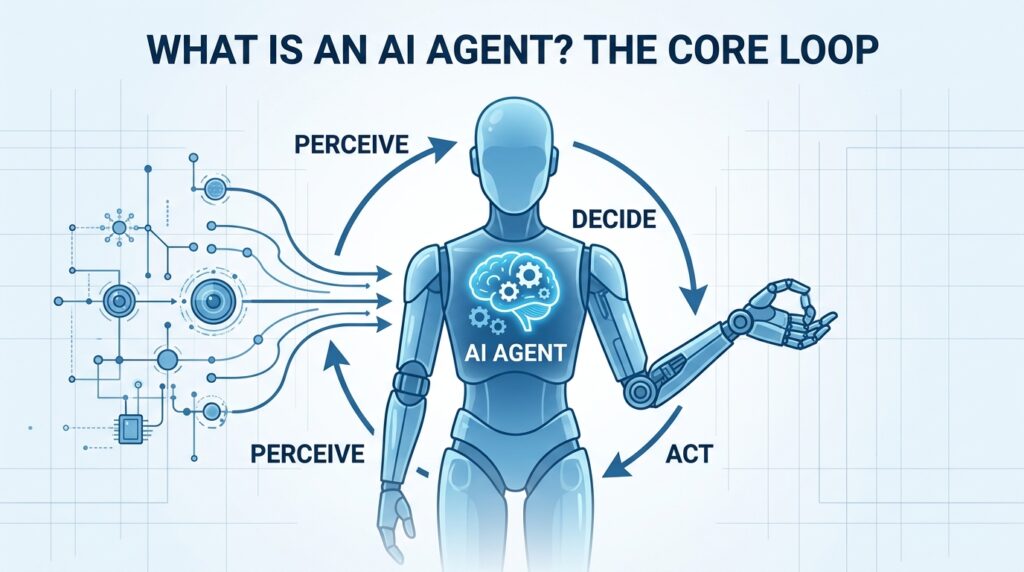
Unlike traditional software that follows fixed instructions, AI agents are designed to understand information, analyze situations, and take appropriate actions based on the goals they are given. They can complete complex workflows by combining reasoning, planning, and learning capabilities. From managing business processes to assisting customers and supporting employees, AI Agents are helping organizations work more efficiently while reducing repetitive manual tasks.
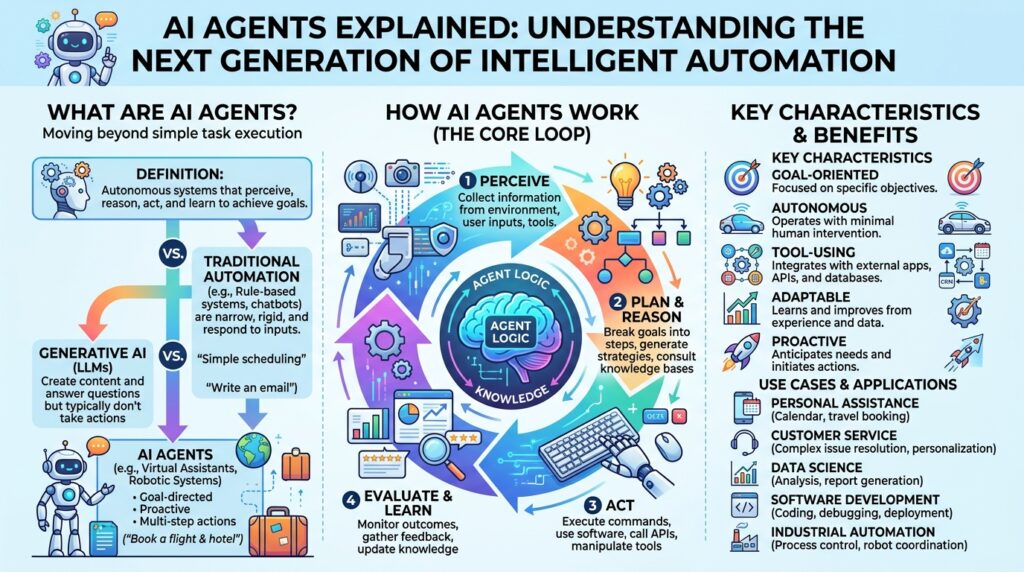
As artificial intelligence continues to develop, AI agents are expected to become even more capable, making them valuable tools for businesses, educational institutions, healthcare providers, financial organizations, and many other industries.
What Are AI Agents?
AI Agents are intelligent software systems that can observe their environment, understand information, make decisions, and perform actions to achieve a specific objective. They use technologies such as machine learning, natural language processing, reasoning models, and data analysis to complete tasks with little or no constant human supervision.
An AI agent is different from a simple chatbot or automation tool. While a chatbot mainly responds to user questions, an AI agent can plan multiple steps, gather information from different sources, make decisions, and complete an entire workflow. Instead of only answering questions, it can actively perform actions such as scheduling meetings, generating reports, organizing files, monitoring systems, or communicating with other software applications.
These capabilities allow AI agents to handle both simple and complex tasks, making them useful across many industries.
How AI Agents Work
An AI agent follows a structured process to complete its assigned task. It first receives a goal or instruction from the user or another system. It then collects relevant information, analyzes available data, decides the best course of action, performs the required steps, and evaluates the outcome before moving to the next task.
This process often includes:
- Understanding the user’s objective.
- Collecting relevant information or data.
- Planning the sequence of actions.
- Executing tasks using connected tools or software.
- Monitoring results.
- Adjusting actions if conditions change.
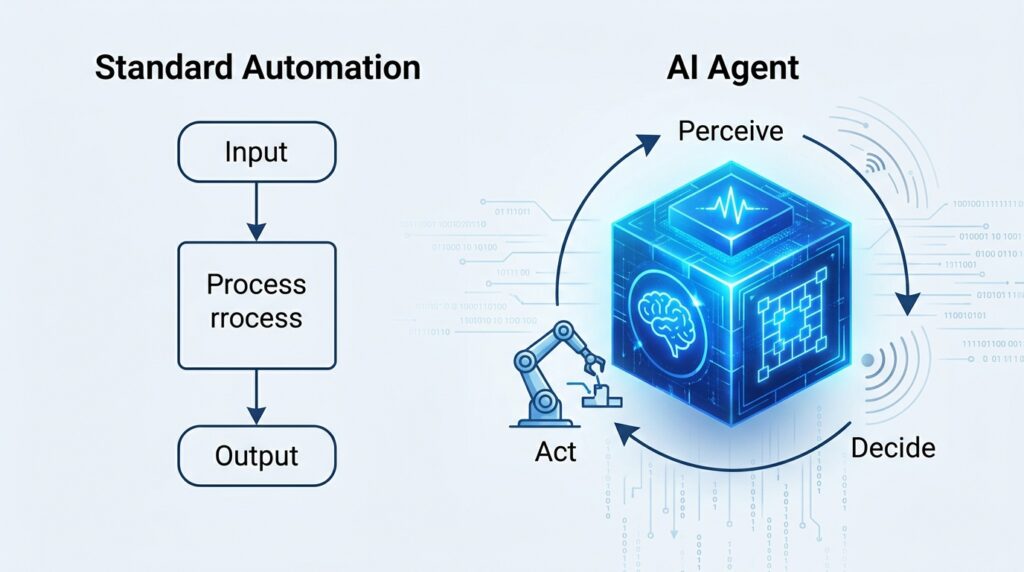
Unlike traditional software automation, AI agents can respond to unexpected situations by selecting different approaches based on the information available.
Key Features of AI Agents
AI agents include several capabilities that make them more flexible than conventional automation systems. These features allow them to perform a wide variety of tasks across different business environments.
Some of the most important features include:
- Goal-oriented task execution.
- Natural language understanding.
- Multi-step planning and reasoning.
- Decision-making based on available information.
- Continuous monitoring of progress.
- Integration with multiple applications.
- Ability to automate repetitive workflows.
- Learning from feedback and previous interactions.
- Real-time response to changing conditions.
- Improved productivity through intelligent assistance.
These features help organizations automate work that would otherwise require significant human involvement.
Types of AI Agents
AI agents can be classified into different categories depending on how they make decisions and perform tasks.
| Type of AI Agent | Description |
|---|---|
| Simple Reflex Agent | Responds to specific conditions using predefined rules. |
| Model-Based Agent | Maintains an internal understanding of its environment before making decisions. |
| Goal-Based Agent | Focuses on achieving specific objectives through planned actions. |
| Utility-Based Agent | Chooses actions that provide the best possible outcome among several options. |
| Learning Agent | Improves its performance over time by learning from experience and feedback. |
Each type serves different purposes depending on the complexity of the task and the environment in which it operates.
Benefits of Using AI Agents
Organizations across different industries are adopting AI agents because they offer numerous operational benefits. They reduce manual workloads, improve efficiency, and enable employees to focus on higher-value activities.
Some major benefits include:
| Benefit | Description |
|---|---|
| Higher Productivity | Automates repetitive and time-consuming work. |
| Faster Decision-Making | Processes information quickly to support business operations. |
| Improved Accuracy | Reduces human errors in routine activities. |
| Continuous Availability | Operates throughout the day without interruption. |
| Cost Efficiency | Helps lower operational costs through automation. |
| Better Customer Experience | Provides faster support and personalized interactions. |
| Workflow Automation | Connects multiple business systems into a single automated process. |
| Scalability | Handles increasing workloads without major infrastructure changes. |
These advantages make AI agents valuable tools for businesses looking to improve operational performance.
Common Applications of AI Agents
AI agents are being used in many industries to automate tasks and improve decision-making. Their flexibility allows organizations to apply them in various operational areas.
Customer service teams use AI agents to answer questions, resolve common issues, and manage support requests. Sales departments use them to qualify leads, organize customer information, and schedule follow-ups. Marketing professionals rely on AI agents to analyze campaign performance, generate content ideas, and automate communication.
Healthcare providers use AI agents to assist with appointment scheduling, patient record management, and administrative documentation. Financial institutions apply AI agents to monitor transactions, detect unusual activities, and organize financial reports.
Human resource departments benefit from AI agents by automating resume screening, interview scheduling, employee onboarding, and internal communication. Educational institutions use them to support students, organize learning materials, and manage administrative tasks.
AI Agents vs Traditional Automation
Traditional automation software follows fixed rules created by developers. It performs the same sequence of actions every time without understanding changing situations. While this approach works well for simple repetitive tasks, it becomes less effective when unexpected conditions arise.
AI agents, on the other hand, can analyze information, understand user intent, and adapt their actions based on new inputs. They can complete multi-step tasks, work with different software systems, and make informed decisions while working toward a defined objective.
| Feature | Traditional Automation | AI Agents |
|---|---|---|
| Decision Making | Rule-based | Intelligent and adaptive |
| Learning Ability | No | Yes |
| Natural Language Understanding | Limited | Advanced |
| Multi-Step Planning | Limited | Strong |
| Adaptability | Low | High |
| Workflow Complexity | Simple | Simple to highly complex |
This flexibility makes AI agents suitable for a broader range of business applications.
Challenges in Implementing AI Agents
Although AI agents offer many advantages, organizations should carefully plan their implementation. Businesses need reliable data, secure systems, and proper governance to ensure successful deployment.
Some AI agents require integration with existing business software, which may involve technical planning and testing. Employee training is also important so that staff understand how to collaborate effectively with AI systems.
Organizations should establish clear policies regarding data privacy, cybersecurity, transparency, and responsible AI use. Human oversight remains important, especially when AI agents support sensitive business processes or customer interactions.
Best Practices for Using AI Agents
Businesses can achieve better results by following a structured approach when adopting AI agents. The first step is identifying repetitive workflows that consume significant employee time. Organizations should begin with smaller automation projects before expanding to more complex business operations.
Successful implementation also involves regular monitoring, employee training, secure data management, and continuous performance evaluation. AI agents should be updated periodically to improve accuracy, adapt to changing business needs, and maintain reliable performance.
Choosing AI solutions that integrate smoothly with existing software helps reduce implementation challenges and increases long-term efficiency.
The Future of AI Agents
The future of AI agents looks promising as artificial intelligence technologies continue to improve. Future AI agents are expected to become more capable of understanding complex instructions, working independently across multiple applications, and collaborating with human teams more effectively.
Advances in machine learning, reasoning models, and natural language understanding will likely make AI agents even more accurate and efficient. Businesses may increasingly rely on them to automate routine operations, support strategic decision-making, and improve customer experiences.
As organizations continue their digital transformation, AI agents are expected to become an essential part of everyday business operations, helping employees focus on creativity, innovation, and higher-value responsibilities.
Conclusion
AI Agents represent an important advancement in artificial intelligence by combining automation, reasoning, and decision-making into intelligent software systems. Unlike traditional automation tools, these agents can understand goals, plan multiple steps, adapt to changing situations, and complete complex workflows with minimal supervision. Their growing use across industries highlights their ability to improve productivity, reduce repetitive work, and support more efficient business operations.
As AI technology continues to evolve, organizations are likely to adopt Intelligent Automation on a larger scale to enhance efficiency and improve customer experiences. Successful implementation depends on careful planning, secure data management, employee training, and responsible AI practices. By working alongside human expertise, AI agents have the potential to transform the way businesses and individuals manage everyday tasks in the digital age.