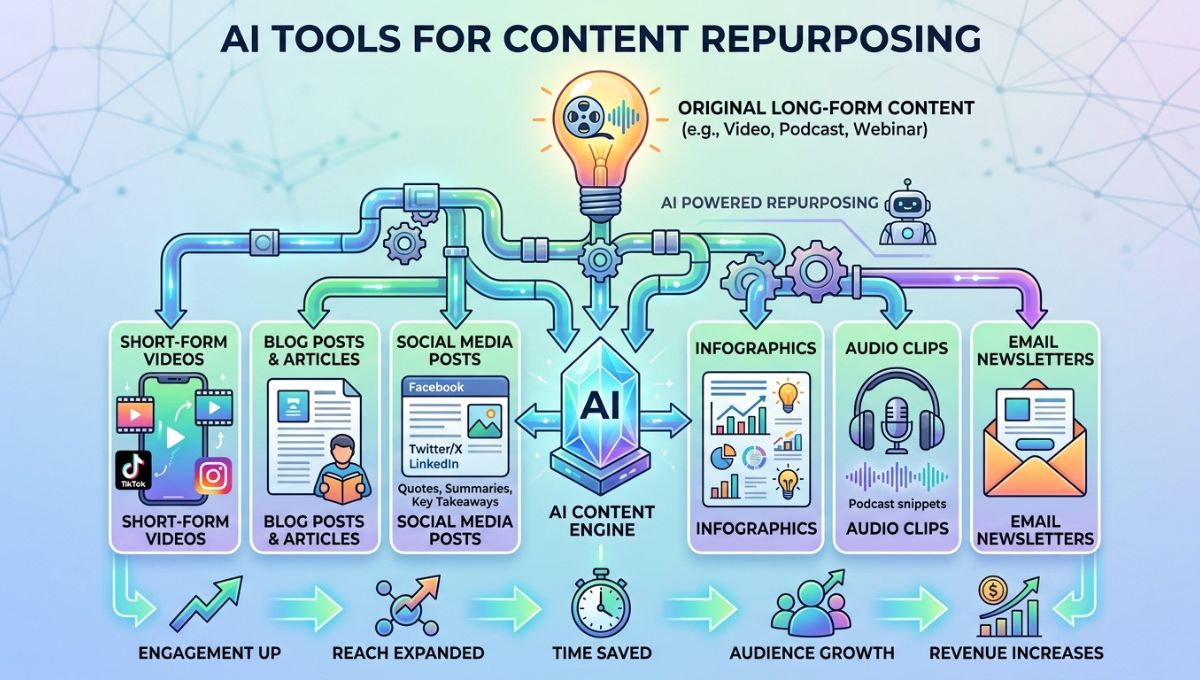
Creating content regularly can be a challenging task for businesses, creators, marketers, educators, and publishers. Producing blog posts, social media updates, videos, newsletters, podcasts, and other forms of content often requires significant time and effort. This is where AI Tools for Content Repurposing are becoming increasingly valuable.
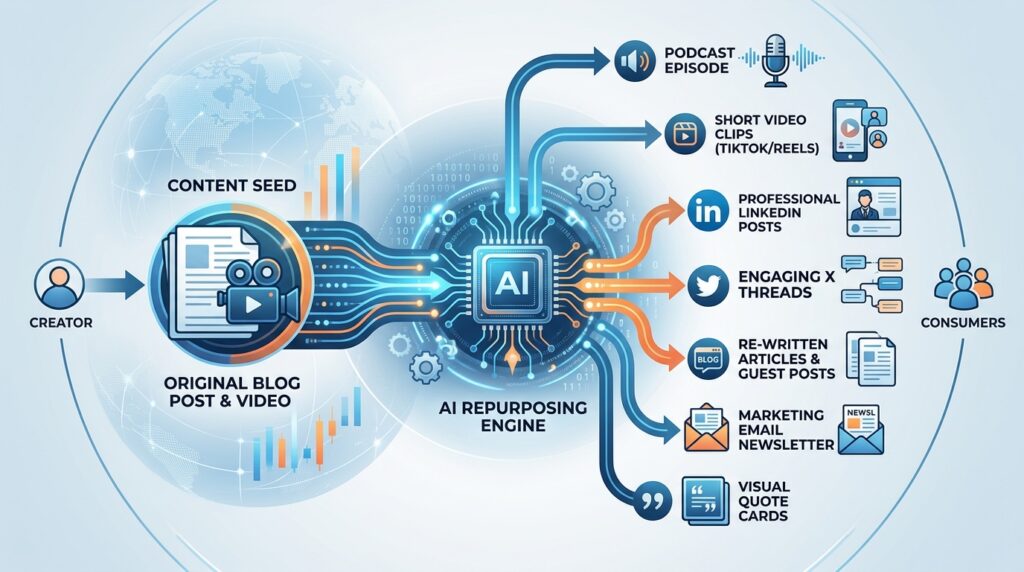
Content repurposing is the process of taking existing content and transforming it into different formats for various platforms. Instead of creating new content from scratch every time, creators can reuse and adapt their existing material to reach wider audiences. Modern AI-powered tools make this process faster, more efficient, and more accessible than ever before.
As artificial intelligence continues to evolve, many platforms now offer features that can convert articles into social media posts, transform videos into blog content, generate summaries, create newsletters, and even extract key insights from long-form content. These capabilities help businesses maximize the value of every piece of content they produce.
What Is Content Repurposing?
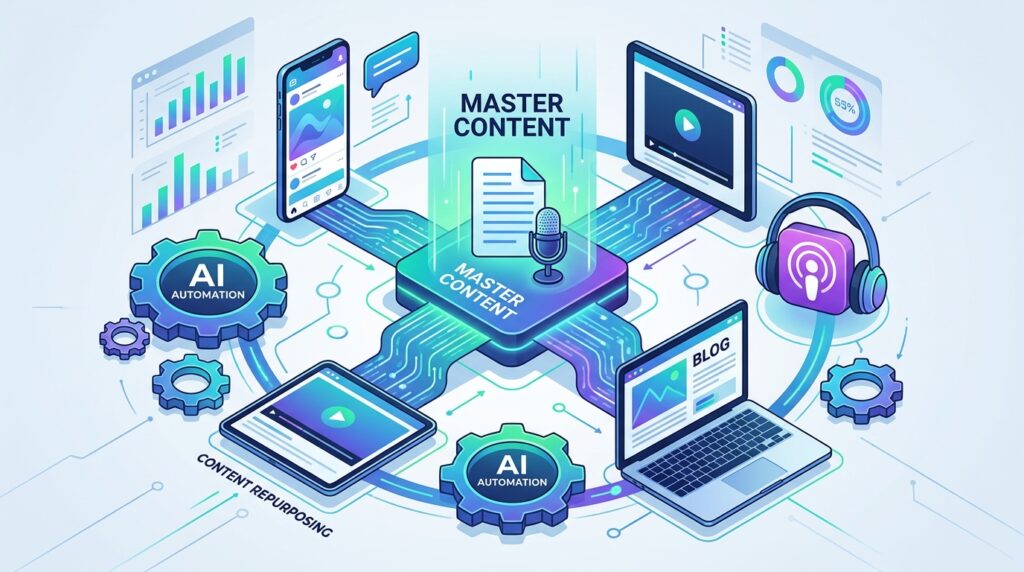
Content repurposing refers to the practice of reusing existing content in new formats without changing its core message. A single blog post can become multiple social media posts, a podcast episode, an email newsletter, a video script, an infographic, or a series of short-form videos.
The goal is to extend the lifespan of content while reaching audiences who prefer different content formats. Rather than creating entirely new material, creators can adapt what they already have and distribute it across multiple channels.
For example:
- A blog article can become LinkedIn posts.
- A webinar can become a YouTube video.
- A podcast can become a written article.
- A long video can be transformed into short clips.
- A research report can become social media content.
This approach improves content efficiency and helps organizations maintain a consistent online presence.
Why AI Is Changing Content Repurposing
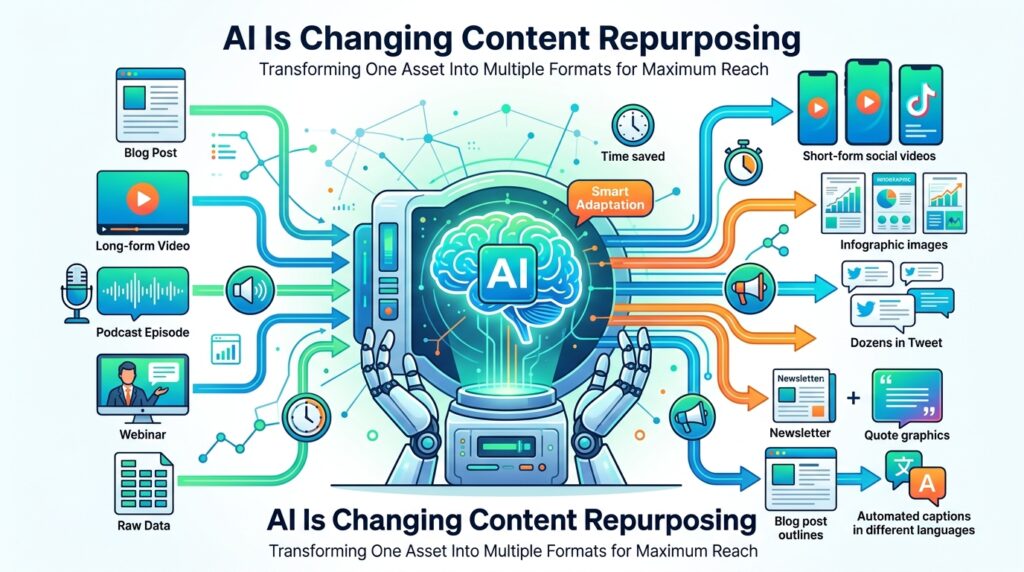
Traditional content repurposing often required manual work, including editing, rewriting, formatting, and designing content for different platforms. AI tools now automate many of these tasks.
Modern AI systems can:
- Summarize long articles.
- Generate social media captions.
- Create video highlights.
- Convert speech into text.
- Rewrite content for different audiences.
- Extract key quotes and insights.
- Generate newsletters and email campaigns.
- Create presentation outlines.
As a result, content teams can save time while increasing content output.
Benefits of Using AI Tools for Content Repurposing
Organizations and creators use AI repurposing tools for several reasons. These platforms help improve productivity while reducing repetitive tasks.
Some major benefits include:
| Benefit | Description |
|---|---|
| Time Savings | Reduces manual editing and rewriting work |
| Increased Reach | Allows content distribution across multiple platforms |
| Better Consistency | Maintains a unified message across channels |
| Higher Content Output | Generates multiple content pieces from one source |
| Improved Engagement | Helps target audiences with preferred formats |
| Cost Efficiency | Reduces the need for extensive manual production |
These advantages make AI-powered repurposing tools useful for both individuals and businesses.
Jasper
Jasper is one of the most widely used AI content platforms. It helps users create and repurpose content for blogs, social media, email campaigns, and marketing materials.
The platform offers templates that can transform long-form content into shorter formats suitable for different channels. Users can take a blog article and generate social media posts, summaries, headlines, and promotional copy.
Jasper is particularly useful for marketing teams that need consistent messaging across various digital platforms. Its AI capabilities help maintain tone and style while adapting content for different purposes.
Copy.ai
Copy.ai is designed to help businesses create marketing content quickly. The platform includes tools for rewriting, summarizing, and repurposing existing material.
Users can upload content and generate multiple variations for different platforms. The tool can produce social media updates, email content, product descriptions, and promotional text based on a single source.
Because of its user-friendly interface, Copy.ai is often used by small businesses, startups, and independent creators looking to streamline content workflows.
ChatGPT
ChatGPT has become one of the most versatile tools for content repurposing. Users can provide existing content and request different formats based on their needs.
For example, a long article can be converted into:
- LinkedIn posts
- X (Twitter) threads
- Facebook updates
- Email newsletters
- Video scripts
- Podcast outlines
- Executive summaries
The flexibility of ChatGPT allows creators to customize outputs according to specific audiences and platforms. It can also adjust tone, style, and content length based on user instructions.
Descript
Descript is a powerful platform focused on audio and video content. It combines transcription, editing, and AI-powered content generation.
Creators can upload podcast episodes, interviews, webinars, or videos and automatically generate transcripts. These transcripts can then be converted into articles, social posts, summaries, and newsletters.
Descript is especially useful for podcasters and video creators who want to expand the reach of their content without extensive manual work.
Opus Clip
Opus Clip specializes in transforming long-form videos into short-form clips suitable for platforms such as YouTube Shorts, Instagram Reels, and TikTok.
The platform uses AI to identify key moments, engaging highlights, and important segments within videos. It automatically creates shorter clips that are optimized for social media audiences.
This capability helps creators maximize the value of webinars, interviews, podcasts, and educational videos by generating multiple pieces of content from a single recording.
Synthesia
Synthesia enables users to create AI-generated videos from text-based content. Instead of recording new videos, users can convert scripts, blog posts, and presentations into professional-looking video content.
The platform supports multiple languages and AI avatars, making it useful for businesses that want to repurpose written content into video format.
This approach can help organizations expand their content strategy without requiring extensive video production resources.
Canva Magic Studio
Canva has integrated AI features through Magic Studio, allowing users to repurpose content into visual formats.
Creators can transform written content into:
- Infographics
- Social media graphics
- Presentations
- Marketing materials
- Visual summaries
The platform combines design tools with AI capabilities, making it easier for non-designers to create professional visual content from existing material.
Lately.ai
Lately.ai focuses on turning long-form content into social media posts. The platform analyzes blogs, podcasts, videos, and other content to generate platform-specific updates.
Businesses often use Lately.ai to maintain consistent social media activity without manually creating dozens of posts. The AI identifies key messages and transforms them into shorter, engaging content pieces.
This feature is particularly valuable for brands managing multiple social media accounts.
Repurpose.io
Repurpose.io is specifically built for automated content distribution and repurposing. The platform connects various content channels and automatically adapts content for different platforms.
For example, a podcast can be transformed into videos, while videos can be distributed across multiple social media channels. The automation reduces repetitive work and helps creators maintain a broader online presence.
The platform is often used by content creators who publish across multiple digital platforms simultaneously.
How to Choose the Right AI Content Repurposing Tool
Selecting the right tool depends on content goals, budget, and preferred formats.
Consider the following factors before choosing a platform:
| Factor | Why It Matters |
|---|---|
| Content Type | Some tools focus on text, while others specialize in audio or video |
| Ease of Use | User-friendly platforms reduce training time |
| Automation Features | More automation can improve efficiency |
| Integration Options | Compatibility with existing workflows is important |
| Pricing | Costs vary significantly between platforms |
| Output Quality | Content quality should match brand standards |
Evaluating these factors helps users find solutions that align with their specific requirements.
Common Content Repurposing Strategies
Using AI tools effectively requires a clear content strategy. Many successful creators follow a structured approach to maximize output.
A typical workflow may include:
- Create a detailed blog post.
- Generate social media content from the article.
- Produce an email newsletter summary.
- Create a video script.
- Design graphics based on key points.
- Develop short-form video content.
- Generate quotes and promotional snippets.
This method allows one piece of content to support multiple marketing channels.
Challenges of AI-Powered Content Repurposing
Although AI tools offer significant benefits, users should still review generated content carefully.
Some common challenges include:
- Occasional factual inaccuracies.
- Generic language in some outputs.
- Brand voice inconsistencies.
- Need for human editing and verification.
- Platform-specific formatting adjustments.
Human oversight remains important to ensure quality, accuracy, and relevance.
The Growing Future of AI Content Repurposing
The capabilities of AI-driven content tools continue to improve. New developments are making it easier to convert content across text, audio, video, and visual formats with minimal effort.
As businesses increasingly focus on content marketing, AI repurposing platforms are expected to play a larger role in digital strategies. These tools help organizations scale content production while maintaining efficiency and consistency.
The future may bring even more advanced features, including deeper audience personalization, real-time content adaptation, multilingual repurposing, and automated distribution across multiple platforms.
Conclusion
The rise of AI Tools for Content Repurposing is transforming how businesses, marketers, and creators manage their content strategies. Instead of producing new material for every platform, users can maximize the value of existing content by converting it into multiple formats.
Platforms such as ChatGPT, Jasper, Copy.ai, Descript, Opus Clip, Synthesia, Canva Magic Studio, Lately.ai, and Repurpose.io provide various ways to automate and simplify the repurposing process. Whether the goal is creating social media content, transforming videos into articles, or generating visual assets, these tools help improve productivity and content reach.
As AI technology continues to advance, content repurposing is becoming faster, more accessible, and more effective. Organizations that leverage these tools can extend the lifespan of their content, reach wider audiences, and maintain a stronger digital presence across multiple platforms.