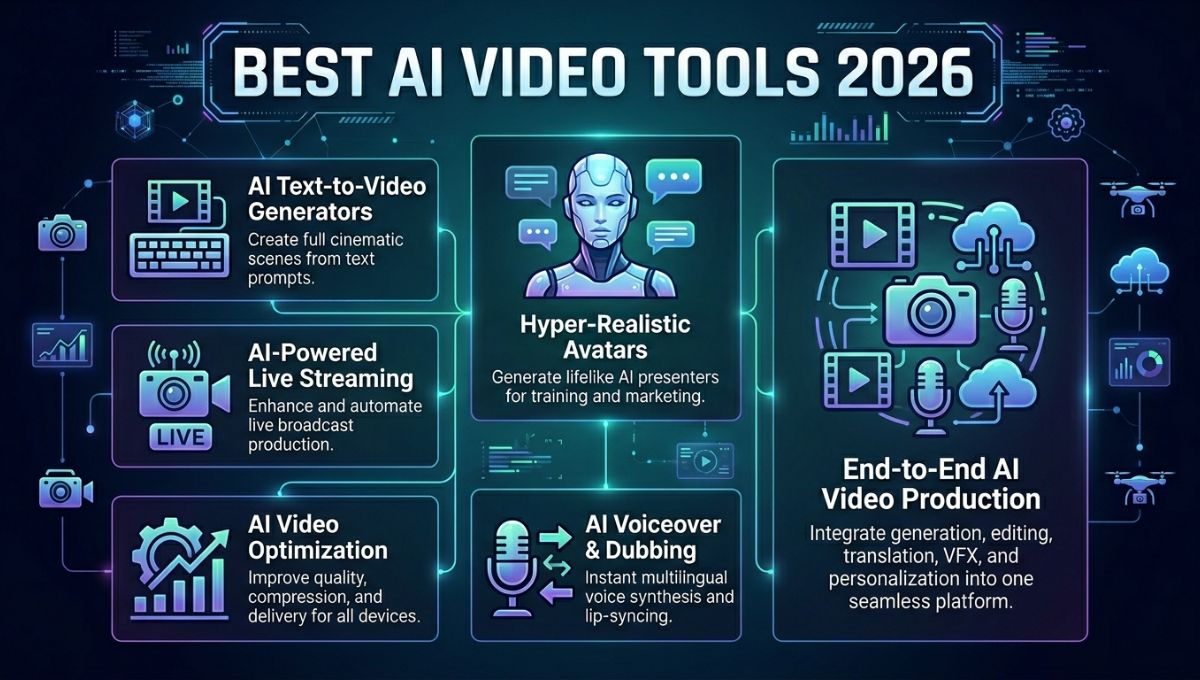
Artificial Intelligence is transforming the video creation industry at an incredible speed. What once required professional cameras, editing software, production teams, and long hours of work can now be done using AI-powered tools within minutes. From YouTube creators and marketers to filmmakers and businesses, AI video platforms are helping users generate videos faster, cheaper, and more efficiently.
The rise of AI video tools has also changed the way people produce content for social media, advertising, online education, and entertainment. Some tools focus on cinematic video generation, while others specialize in AI avatars, marketing videos, automatic editing, subtitles, and realistic animations. As competition in the AI market grows, choosing the right platform has become increasingly important for creators and businesses.
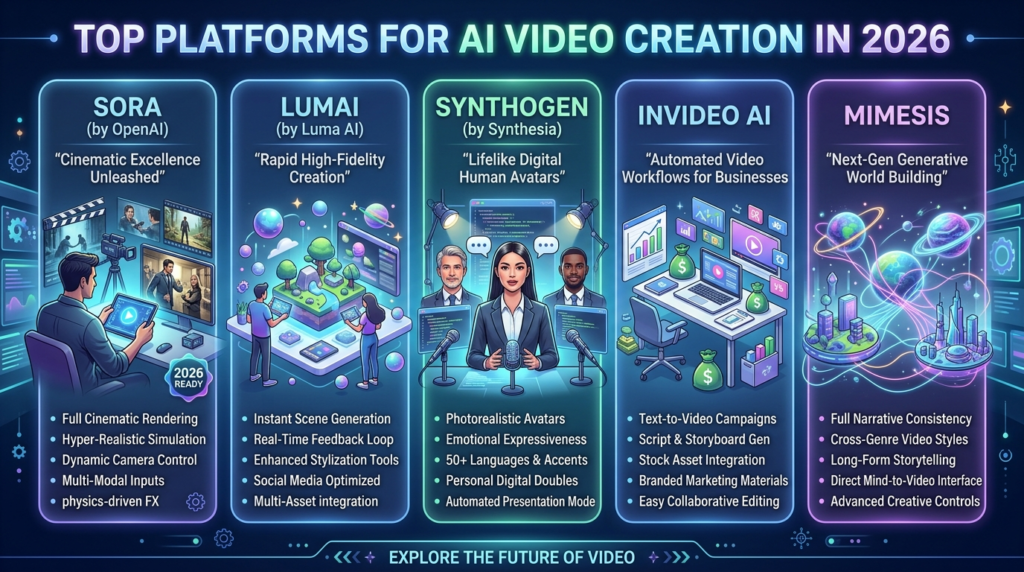
This comparison explains the most popular and powerful AI video generators and editing tools available in 2026, including their strengths, features, pricing models, and ideal use cases. Recent industry reviews and testing reports show that tools like Runway, Sora, Kling AI, HeyGen, and Synthesia are currently among the leading platforms in the AI video market.
Why AI Video Tools Are Growing So Quickly
Video content dominates almost every major online platform today. Businesses need promotional videos, influencers need short-form content, educators need training materials, and brands require advertisements for multiple platforms. Traditional video production often takes time, technical knowledge, and expensive software.
This is where AI video tools are becoming extremely useful. These platforms can generate videos from text prompts, create AI avatars, automate editing, produce subtitles, and even generate realistic cinematic scenes. Many tools now support image-to-video generation, voice cloning, multilingual dubbing, and automatic script creation.
Industry reports suggest the AI video generation market is expanding rapidly as more creators and companies adopt automated content workflows.
Top AI Video Tools Compared
| AI Video Tool | Best For | Main Strength | Free Version | Ideal Users |
|---|---|---|---|---|
| Runway | Cinematic AI videos | High-quality motion generation | Limited | Filmmakers, creators |
| Sora | Realistic text-to-video | Advanced scene realism | Paid access | Professional creators |
| HeyGen | AI avatar videos | Realistic talking avatars | Limited | Businesses, marketers |
| Synthesia | Training videos | Corporate AI presenters | Limited | Companies, educators |
| Kling AI | Realistic motion | Strong physics and movement | Yes | Video creators |
| Pika Labs | Short social clips | Fast creative generation | Yes | Social media creators |
| InVideo AI | Marketing videos | Easy automated workflows | Yes | Beginners, marketers |
| Descript | AI editing | Text-based video editing | Yes | Podcasters, editors |
Runway Is One of the Strongest Creative AI Video Platforms
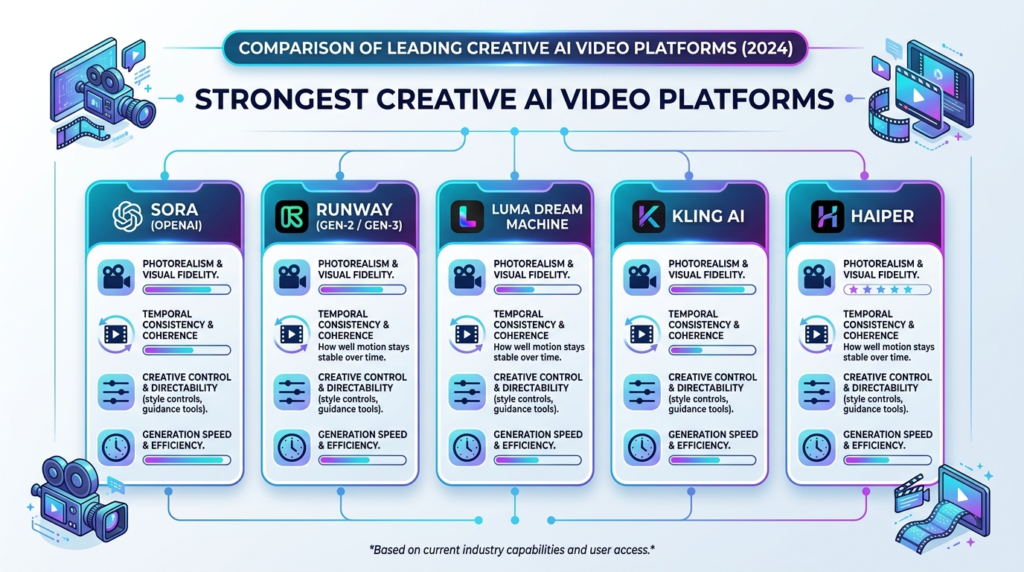
Runway remains one of the most recognized names in AI video generation. The platform is widely used by filmmakers, content creators, and creative professionals because of its advanced video models and editing capabilities. Recent reviews highlight Runway’s Gen-3 and Gen-4 models for producing smooth motion, cinematic visuals, and realistic camera movement.
One major advantage of Runway is its balance between quality and usability. Users can create videos from text prompts, animate still images, edit existing footage, and apply motion effects directly inside the platform. The built-in editing tools also make it easier for creators to refine AI-generated clips without switching software.
Runway is especially useful for short films, advertisements, music videos, and YouTube content. However, advanced features may require paid plans, and longer video consistency can still sometimes be challenging.
Sora Focuses on Cinematic Video Generation

Sora, developed by OpenAI, has become one of the most talked-about AI video models because of its highly realistic video generation capabilities. Many creators consider it one of the strongest platforms for cinematic scenes, realistic movement, and detailed environments.
Sora is designed for generating videos directly from text prompts while maintaining better scene consistency compared to many earlier AI models. Users can create realistic landscapes, animated scenes, and cinematic sequences using natural language descriptions.
Although the technology has impressed creators, access remains more limited compared to some other AI video tools. Reports suggest that Sora works particularly well for professional-quality content and creative storytelling.
HeyGen Dominates the AI Avatar Video Market
HeyGen has become extremely popular for AI avatar videos and business communication. The platform allows users to create talking AI presenters in multiple languages without using cameras or recording equipment.
Businesses use HeyGen for product explainers, presentations, online courses, training videos, and marketing campaigns. Reviews in 2026 continue to praise the platform for realistic lip-sync quality and multilingual support.
One of HeyGen’s biggest advantages is speed. Users can create professional-looking spokesperson videos simply by typing a script. The tool also supports voice cloning and avatar customization, making it useful for companies creating large volumes of video content.
For businesses focused on communication and training videos rather than cinematic filmmaking, HeyGen remains one of the strongest options.
Synthesia Is Popular for Corporate and Training Content
Synthesia is another major platform focused on AI presenters and educational content. It is widely used by businesses, HR departments, and online learning platforms for creating training videos without traditional production setups.
Reports from creators and online communities highlight Synthesia’s large library of AI avatars and language support. The platform is especially useful for onboarding videos, employee training, tutorials, and internal communication.
Users can quickly convert written scripts into professional presenter-style videos. Since the platform is designed mainly for business communication, it may not offer the same cinematic creativity as tools like Runway or Sora. However, for corporate workflows, it remains highly effective.
Kling AI Gains Attention for Realistic Motion
Kling AI has rapidly gained popularity because of its realistic movement and physics handling. Many creators describe Kling as one of the strongest tools for generating footage that feels more natural and film-like.
The platform performs well in cinematic sequences, environmental shots, and realistic motion generation. Users often compare Kling directly with Sora and Runway because of its high-quality visual output.
Recent industry discussions also mention that Kling offers strong value for creators looking for realistic prompt-to-video generation without extremely high pricing.
Pika Labs Focuses on Fast Social Media Videos
Pika Labs is designed more for fast, creative content generation rather than long-form cinematic projects. The tool is widely used by TikTok creators, Instagram users, and short-form video creators.
The platform allows users to quickly generate animated clips, transitions, stylized visuals, and creative effects using simple prompts. Community reviews often highlight its speed and ease of use.
Pika works particularly well for viral-style social media content where creators need short, visually engaging videos quickly. However, it may not always provide the advanced scene consistency required for longer storytelling projects.
InVideo AI Simplifies Marketing Video Creation
InVideo AI focuses on automated video workflows for beginners and marketers. The platform can generate videos using scripts, prompts, stock footage, AI voiceovers, and templates.
One major advantage is ease of use. Beginners can create YouTube videos, advertisements, explainer content, and social media clips without professional editing experience. Industry comparisons also mention its strong template-based system and productivity-focused features.
For users looking for speed and simplicity rather than advanced filmmaking controls, InVideo AI provides a practical solution.
Descript Changes Video Editing With AI
Unlike many AI video generators, Descript focuses heavily on editing and workflow automation. The platform allows users to edit videos and podcasts by editing text transcripts instead of traditional timelines.
Creators can remove filler words, generate subtitles, clone voices, and make quick edits using AI-powered tools. This makes Descript especially useful for podcasters, interview creators, educators, and YouTubers.
The platform is not mainly designed for cinematic AI generation, but it significantly simplifies editing workflows for content creators who regularly produce spoken-content videos.
Important Features to Consider Before Choosing an AI Video Tool
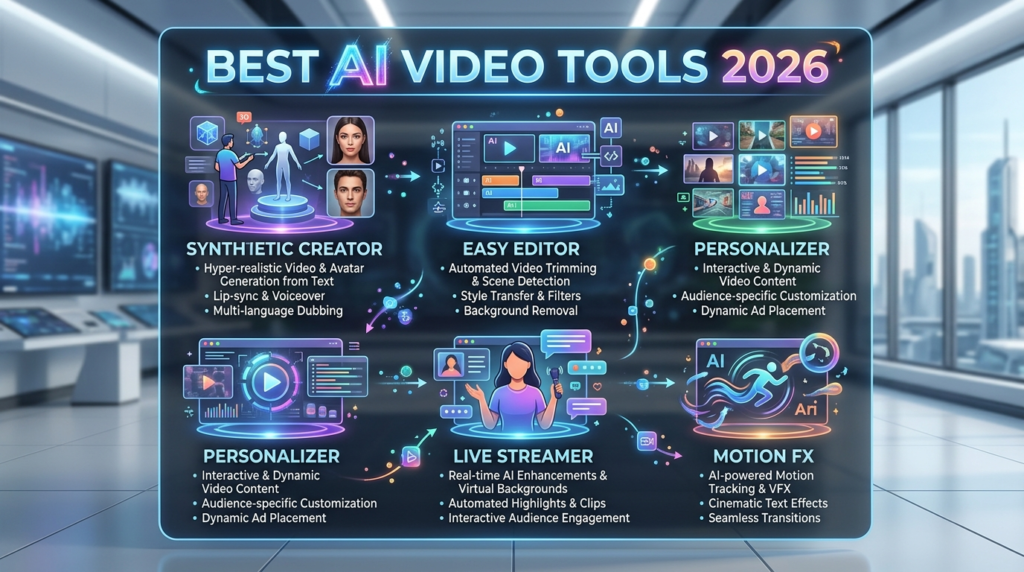
Different AI video platforms serve different types of users. Before selecting a tool, creators should consider their specific workflow, budget, and content goals.
Important factors include:
- Video quality and realism
- Ease of use
- AI avatar support
- Editing capabilities
- Pricing and credits
- Multilingual features
- Motion consistency
- Export quality
- Commercial usage rights
Users creating business presentations may prioritize AI avatars and voiceovers, while filmmakers may focus more on cinematic realism and motion quality.
AI Video Technology Continues to Improve Rapidly
The AI video industry is evolving at an extremely fast pace. New models are improving scene consistency, realistic motion, lip-sync accuracy, and video duration. Companies are also introducing tools for automated storyboarding, video editing, and real-time content generation.
Recent technology reports show that AI video generation is moving closer to professional filmmaking quality, although challenges like long-scene consistency and rendering costs still exist.
At the same time, creators and businesses are increasingly using AI-generated videos for advertising, education, entertainment, and social media marketing. This trend is expected to continue as tools become more powerful and accessible.
Conclusion
The rapid growth of AI video tools is changing how videos are created across industries. Platforms like Runway, Sora, HeyGen, Synthesia, Kling AI, Pika Labs, InVideo AI, and Descript each offer different strengths depending on the user’s needs.
Some tools focus on cinematic storytelling and realistic motion, while others specialize in AI avatars, automated editing, or fast social media content creation. As competition increases, users can expect better quality, more features, and easier workflows in the future.
For creators, businesses, educators, and marketers, understanding the strengths of different AI video generators can help them choose the right platform for their content goals in 2026.