
Small businesses are increasingly turning to AI-powered tools to grow efficiently without significantly raising operating costs. These technologies streamline everyday tasks, enhance customer engagement, and provide valuable data-driven insights that support smarter decision-making. By automating routine processes, business owners can spend less time on manual work and more time focusing on innovation and long-term growth.
The adoption of AI is no longer limited to large enterprises. Today, startups, small businesses, and even local retailers are embracing AI solutions because they have become more affordable, accessible, and user-friendly. As a result, smaller businesses are better equipped to compete with larger organizations, creating a more level and competitive marketplace.
Growing Adoption of AI in Small Businesses
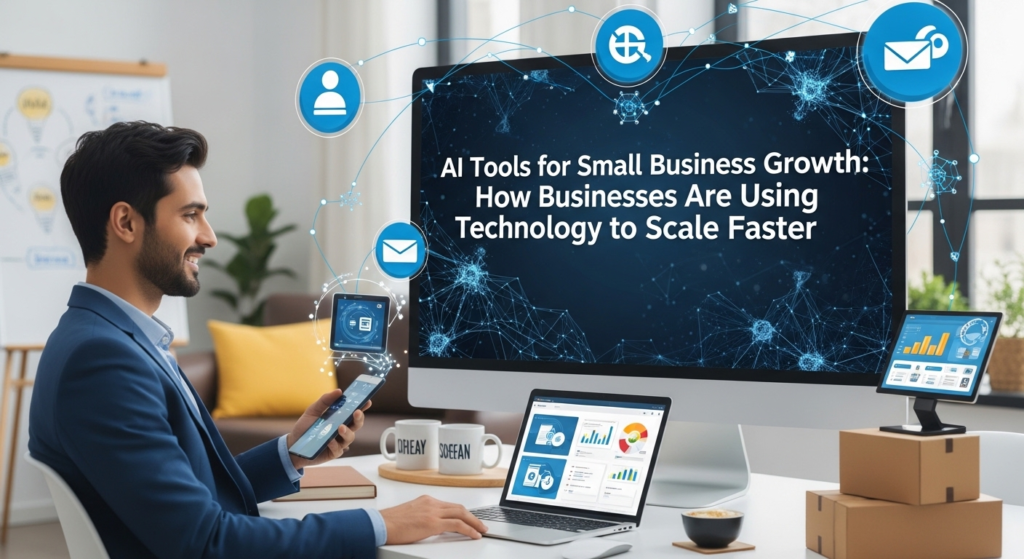
The use of AI in small businesses has increased steadily. Earlier, most small businesses depended on basic software or manual systems to manage operations. Now, tools like ChatGPT and Canva are helping them perform multiple tasks with minimal effort.
These tools allow business owners to automate routine work such as responding to customer messages, creating marketing content, and organizing data. This reduces the time spent on repetitive tasks and allows more focus on strategic decisions.
Another reason for this growth is accessibility. Most AI tools are cloud-based and do not require advanced technical knowledge. Business owners can start using them with simple instructions and gradually expand their usage as they become more comfortable.
Key Areas Where AI Tools Are Making an Impact
AI tools are now being used across different functions of a business. Each area benefits in a specific way, making overall operations smoother and more efficient.
Customer Support and Communication

Customer support is one of the most important parts of any business. AI tools are helping businesses improve response time and consistency. Chatbots powered by tools like ChatGPT can handle common customer queries instantly. They provide information about products, services, and policies without requiring human intervention.
This not only improves customer experience but also reduces the workload on support teams. Businesses can handle more queries at the same time without increasing staff.
Marketing and Content Creation
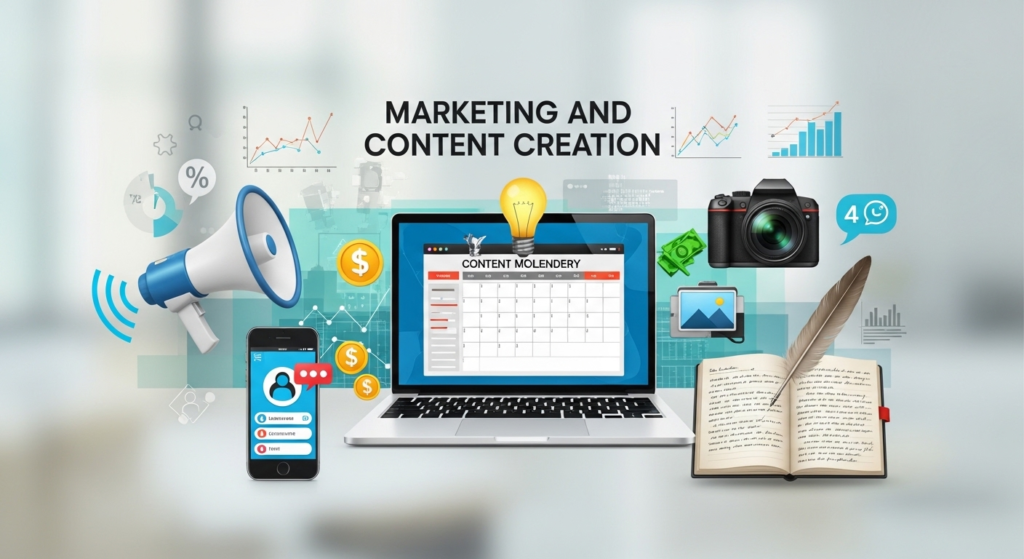
Marketing requires consistent content creation, which can be time-consuming. AI tools help generate social media posts, blog articles, and advertisements quickly. Platforms like Canva make it easier to design visuals even without professional skills.
This allows small businesses to maintain an active online presence without spending too much time or money. Regular content also helps in building brand awareness and attracting new customers.
Sales and Lead Management

AI tools help businesses identify potential customers by analyzing behavior and patterns. This makes it easier to focus on leads that are more likely to convert. Automated email campaigns and follow-ups ensure that customers stay engaged throughout the buying process.
By using AI, businesses can manage their sales pipeline more efficiently and reduce the chances of losing potential customers.
Data Analysis and Decision Making

Data plays an important role in business growth. AI tools help analyze data quickly and present it in a simple format. Business owners can understand trends, customer preferences, and performance metrics without needing advanced skills.

This makes decision-making faster and more accurate. Instead of relying on guesswork, businesses can use data to guide their strategies.
Common AI Tools Used by Small Businesses
Small businesses are using a variety of AI tools depending on their needs. The table below shows some commonly used tools and their main functions.
| Tool Name | Main Function | Use Case |
|---|---|---|
| ChatGPT | Content generation and automation | Blogs, customer support |
| Canva | Design and visuals | Social media, marketing |
| Zapier | Workflow automation | Task integration |
| Notion AI | Productivity and planning | Documentation, ideas |
| Grammarly | Writing improvement | Emails, content editing |
These tools are popular because they are easy to use and provide clear benefits. They can be integrated into daily workflows without major changes.
Benefits of Using AI Tools in Small Businesses

The use of small business AI tools offers several advantages that directly impact growth and efficiency. One of the biggest benefits is time-saving. Tasks that previously required hours can now be completed in minutes. This increases productivity and allows business owners to focus on important activities.
Cost reduction is another major benefit. Businesses do not need to hire large teams for every function. AI tools can handle multiple tasks, reducing operational expenses. This is especially helpful for startups with limited budgets.
Accuracy also improves when using AI tools. Automated systems reduce the chances of human errors in repetitive tasks. This ensures better quality and consistency in work.
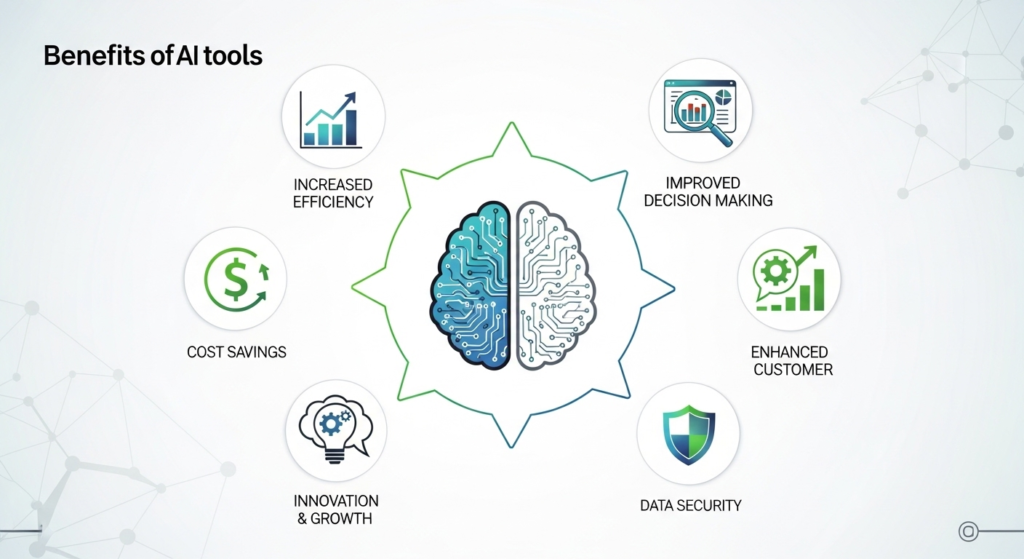
AI tools also support scalability. As a business grows, these tools can handle increased workload without requiring major changes. This makes it easier to expand operations without additional pressure.
Challenges in Adopting AI Tools

Despite the benefits, small businesses may face some challenges when adopting AI tools. One common issue is lack of awareness. Many business owners are not fully aware of the available tools or how to use them effectively.
Another challenge is the initial setup. While most tools are user-friendly, it still takes time to understand how they work. Businesses may need to experiment before finding the right approach.
Data privacy is also a concern. Businesses must ensure that customer data is handled securely and in compliance with regulations. This requires careful selection of tools and proper usage.
Cost can also be a factor for some businesses. Although many tools are affordable, using multiple tools together can increase expenses. Businesses need to choose tools wisely based on their needs.
How Small Businesses Are Implementing AI
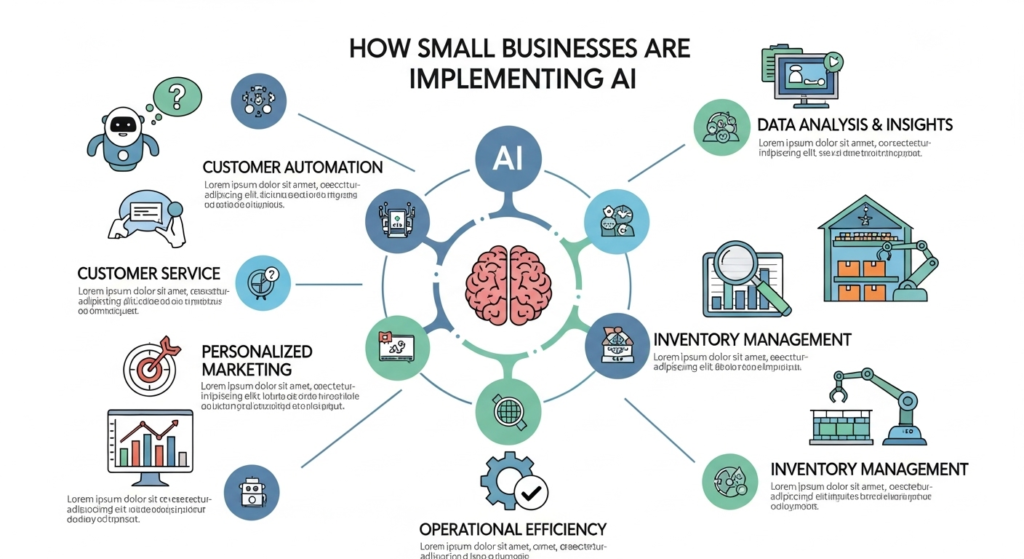
Small businesses are adopting AI in a step-by-step manner. Instead of using multiple tools at once, they start with one or two tools that solve their immediate problems. For example, a business may begin by using AI for customer support and later expand to marketing and automation.
This gradual approach makes it easier to understand how each tool works and how it fits into the overall system. It also reduces the risk of confusion and inefficiency.
Many businesses are also combining AI with human effort. AI handles repetitive tasks, while humans focus on creativity and decision-making. This balance improves overall performance and results.
Importance of Choosing the Right AI Tools

Choosing the right tools is important for achieving the desired results. Businesses need to identify their needs before selecting any tool. For example, a business focused on social media growth may benefit more from design and content tools, while a service-based business may prioritize communication tools.
Using too many tools at the same time can create confusion. It is better to start with a few essential tools and gradually expand based on requirements. This ensures better control and understanding.
Businesses should also consider factors such as ease of use, cost, and integration before selecting tools. This helps in making informed decisions and avoiding unnecessary complications.
Future Outlook of AI in Small Business Growth

The role of AI in small businesses is expected to increase further. As technology continues to improve, AI tools will become more advanced and easier to use. This will make them accessible to even more businesses.
More tools will focus on automation, personalization, and data analysis. This will help businesses provide better services and improve customer experience. The integration of AI into daily operations will become more common, making it a standard part of business management.

Small businesses that adopt AI early will have an advantage. They will be able to operate more efficiently and respond to changes more quickly.
Conclusion
The use of AI tools for small business growth is transforming how businesses operate. These tools help automate tasks, reduce costs, and improve efficiency. From customer support to marketing and data analysis, AI is becoming an important part of daily operations.
This development matters because it allows small businesses to compete with larger companies without requiring large resources. By adopting the right tools and using them effectively, businesses can improve productivity and create better growth opportunities.
Going forward, the use of small business AI tools is likely to become more common. Businesses that understand and implement these tools correctly will be better positioned for long-term success.