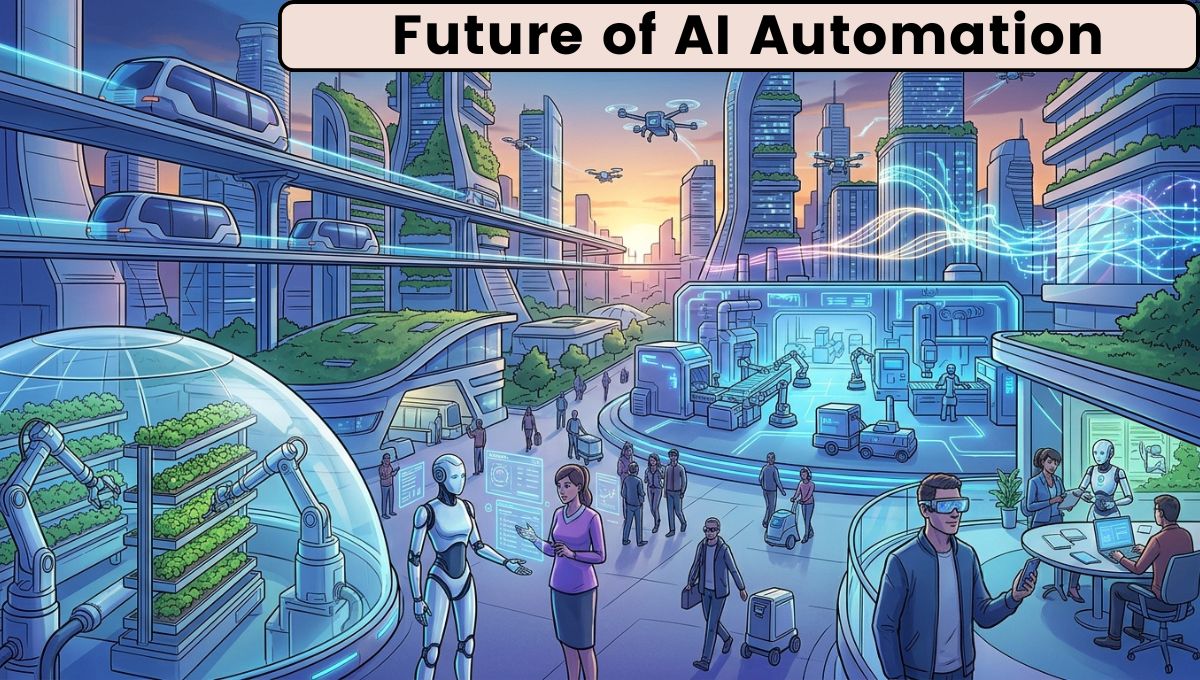
Artificial Intelligence (AI) has rapidly evolved from a futuristic concept into one of the most influential technologies of the modern era. Over the past decade, AI has transformed the way businesses operate, how people communicate, and how organizations make decisions. When combined with automation, AI has created powerful systems capable of performing repetitive, data-intensive, and even complex cognitive tasks with minimal human intervention. This combination, commonly known as AI automation, is changing industries at an unprecedented pace.
The future of AI automation is expected to go far beyond simple task automation. Modern AI systems are becoming increasingly capable of learning from data, adapting to changing environments, predicting outcomes, generating creative content, and assisting humans in solving complex problems. These advancements are opening new possibilities across sectors such as healthcare, manufacturing, finance, education, agriculture, retail, transportation, and customer service.
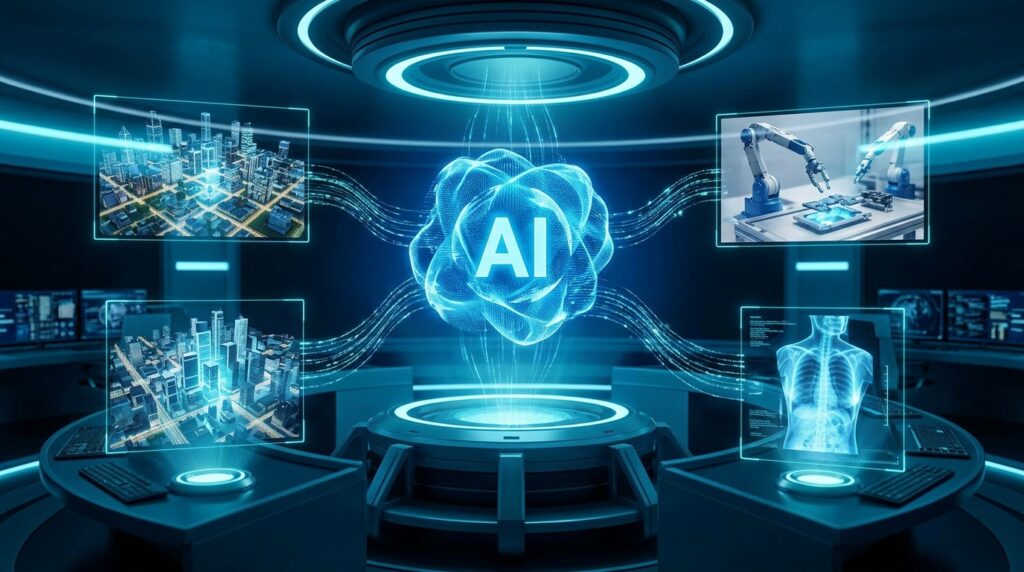
Businesses are investing heavily in AI automation because it offers significant advantages, including increased productivity, reduced operational costs, faster decision-making, improved accuracy, and enhanced customer experiences. Organizations that successfully integrate AI into their workflows can streamline operations, minimize human errors, and respond more quickly to changing market demands. At the same time, governments, educational institutions, and technology companies are working to prepare the workforce for an AI-driven future through training, research, and policy development.
However, the future of AI automation also presents challenges. Concerns about job displacement, data privacy, cybersecurity, algorithmic bias, and ethical decision-making continue to shape discussions about responsible AI adoption. While AI can automate many routine tasks, human creativity, emotional intelligence, ethical judgment, and strategic thinking remain essential qualities that machines cannot fully replicate.
This article explores the future of AI automation in detail, examining emerging trends, real-world applications, benefits, challenges, technological advancements, and the skills individuals and businesses will need to thrive in an increasingly automated world.
What Is AI Automation?

AI automation refers to the use of artificial intelligence technologies to automate tasks, processes, and decision-making with little or no human intervention. Unlike traditional automation systems, which follow predefined rules and fixed instructions, AI-powered automation can analyze large volumes of data, recognize patterns, learn from previous experiences, and improve its performance over time.
AI automation combines several advanced technologies to create intelligent systems capable of handling both simple and complex operations. These technologies include:
- Machine Learning (ML)
- Natural Language Processing (NLP)
- Computer Vision
- Robotic Process Automation (RPA)
- Deep Learning
- Predictive Analytics
- Generative AI
For example, a traditional automated system may simply sort emails based on predefined rules. An AI-powered automation system, however, can understand the content of emails, determine their priority, classify customer inquiries, generate responses, and continuously improve its accuracy by learning from user interactions.
This ability to adapt and learn makes AI automation significantly more powerful than conventional automation technologies.
Evolution of AI Automation
The journey of AI automation has progressed through several important stages.
Rule-Based Automation
The earliest automation systems relied entirely on programmed rules. These systems could perform repetitive tasks efficiently but lacked flexibility and intelligence.
Machine Learning Era
Machine learning introduced the ability for systems to learn from historical data instead of relying solely on manually written rules. This enabled AI to improve predictions, recognize patterns, and automate more complex business processes.
Deep Learning Revolution
Deep learning significantly expanded AI capabilities by enabling computers to process images, speech, text, and complex datasets with remarkable accuracy. This breakthrough accelerated AI adoption across healthcare, finance, retail, and manufacturing.
Generative AI
Recent advancements in generative AI have transformed automation even further. Modern AI systems can generate articles, marketing content, software code, images, videos, presentations, and customer support responses, making automation applicable to knowledge-based work in addition to repetitive tasks.
The Future Phase
The next generation of AI automation will focus on collaboration between humans and intelligent machines. Rather than simply replacing repetitive work, AI will assist professionals by providing recommendations, automating research, analyzing complex datasets, and supporting strategic decision-making.
Why AI Automation Is Growing Rapidly
Several technological and economic factors are driving the rapid adoption of AI automation worldwide.
1. Explosion of Digital Data
Every day, businesses generate enormous amounts of digital information from websites, mobile applications, sensors, financial transactions, customer interactions, and connected devices. Processing this data manually is nearly impossible.
AI automation enables organizations to analyze vast datasets within seconds, uncover hidden insights, identify trends, and make informed decisions faster than traditional methods.
2. Rising Business Competition
Companies face increasing pressure to reduce operational costs while improving customer satisfaction. AI automation allows organizations to streamline workflows, eliminate repetitive tasks, and improve overall efficiency without compromising quality.
Businesses that adopt AI automation often gain a competitive advantage by responding more quickly to customer needs and market changes.
3. Advances in Cloud Computing
Cloud computing has made AI technologies more accessible than ever before. Organizations no longer need to invest heavily in expensive infrastructure because AI tools and services are now available through cloud-based platforms.
This accessibility has accelerated AI adoption among startups, small businesses, and large enterprises alike.
4. Improved AI Models
Modern AI models are capable of understanding language, recognizing images, generating human-like text, translating languages, analyzing videos, and assisting with software development.
As these models continue to improve, AI automation is becoming capable of handling increasingly sophisticated tasks across diverse industries.
5. Growing Demand for Personalization
Consumers expect personalized experiences when shopping online, using digital services, or interacting with businesses. AI automation enables companies to analyze customer preferences and deliver tailored recommendations, targeted marketing campaigns, and customized support.
This personalized approach improves customer engagement, satisfaction, and long-term loyalty.
Key Technologies Driving the Future of AI Automation
Several cutting-edge technologies are shaping the future of intelligent automation.
Machine Learning
Machine learning enables systems to identify patterns in data and improve their performance over time without explicit programming. It is widely used for fraud detection, recommendation systems, demand forecasting, and predictive analytics.
Natural Language Processing
Natural Language Processing allows AI systems to understand, interpret, and generate human language. Applications include chatbots, virtual assistants, language translation, document summarization, and sentiment analysis.
Computer Vision
Computer vision enables machines to analyze and interpret visual information from images and videos. It supports facial recognition, medical imaging, quality inspection in manufacturing, autonomous vehicles, and security monitoring.
Robotic Process Automation
Robotic Process Automation automates repetitive digital tasks such as data entry, invoice processing, payroll management, and report generation. When integrated with AI, RPA becomes capable of handling more complex workflows and making intelligent decisions.
Generative AI
Generative AI creates original content such as articles, software code, marketing copy, presentations, videos, and images based on user prompts. It is transforming industries by increasing productivity and enabling faster content creation.