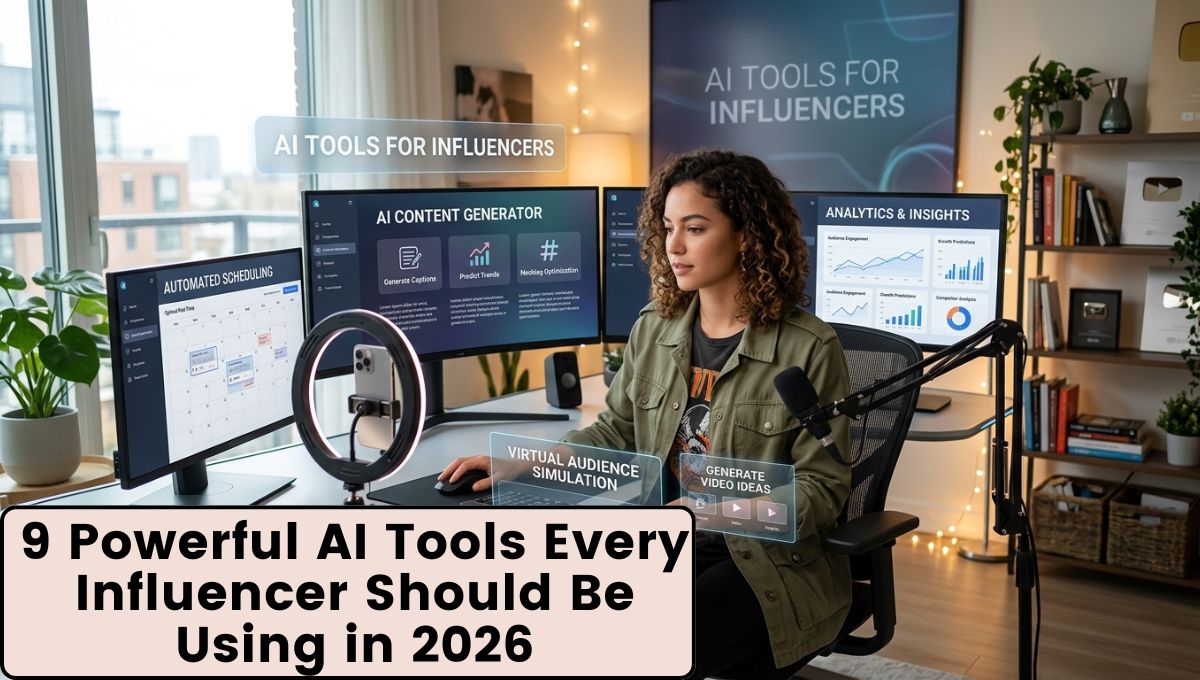
The influencer industry has grown rapidly over the past decade, transforming social media creators into powerful voices across industries such as fashion, technology, fitness, travel, education, beauty, gaming, and business. Influencers are expected to create engaging content consistently, interact with followers, analyze performance metrics, collaborate with brands, and stay ahead of changing trends.
Managing all these responsibilities can be time-consuming and demanding. This is where AI Tools for Influencers are becoming increasingly valuable. Artificial intelligence is helping creators streamline content production, automate repetitive tasks, improve audience engagement, and make data-driven decisions. From generating content ideas and editing videos to scheduling posts and analyzing audience behavior, AI tools are reshaping how influencers manage their digital presence.
As competition on social media platforms continues to increase, influencers are turning to AI-powered solutions to improve productivity and maintain consistency. These tools allow creators to focus more on creativity and community building while reducing the workload associated with content management.
Understanding the Role of AI in Influencer Marketing
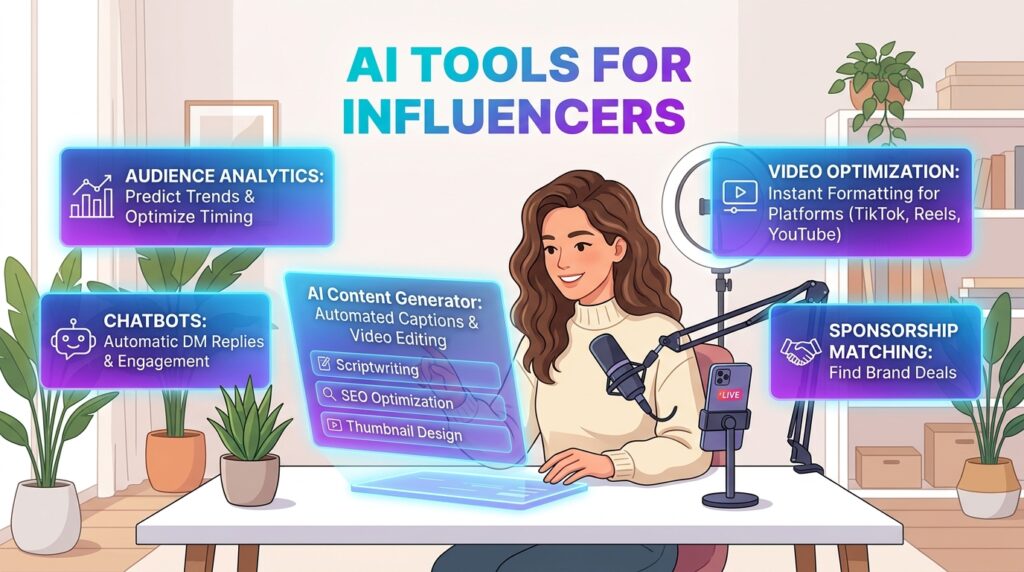
Artificial intelligence refers to technology that can perform tasks traditionally requiring human intelligence. In the influencer space, AI is being used to assist with content creation, audience analysis, campaign management, social media scheduling, and performance tracking.
Modern AI tools can:
- Generate content ideas.
- Write captions and descriptions.
- Edit videos automatically.
- Create graphics and images.
- Schedule social media posts.
- Analyze audience engagement.
- Identify content trends.
- Assist with brand collaborations.
- Produce marketing materials.
These capabilities help influencers operate more efficiently while maintaining a consistent online presence.
Why Influencers Are Adopting AI Tools
Creating content regularly requires significant effort. Influencers often need to manage multiple platforms, respond to followers, negotiate partnerships, and track campaign performance while continuing to produce high-quality content.
AI helps reduce these challenges by automating repetitive tasks and providing actionable insights. Rather than spending hours on administrative work, influencers can use AI tools to improve workflows and focus on strategic activities.
The growing availability of user-friendly AI platforms has also made advanced technology accessible to creators regardless of their technical expertise.
Benefits of Using AI Tools for Influencers
The popularity of AI-powered platforms among influencers continues to increase because of the practical advantages they offer.
Some major benefits include:
| Benefit | Description |
|---|---|
| Time Savings | Automates repetitive tasks and workflows |
| Better Content Planning | Helps organize and schedule content |
| Improved Engagement | Provides audience behavior insights |
| Increased Productivity | Reduces manual content management work |
| Enhanced Creativity | Generates ideas and content suggestions |
| Data-Driven Decisions | Supports strategy through analytics |
These benefits help influencers manage growing audiences while maintaining content quality and consistency.
ChatGPT
ChatGPT has become one of the most versatile AI tools available to influencers. It can assist with content planning, caption writing, script creation, audience engagement strategies, and brainstorming content ideas.
Influencers commonly use ChatGPT to create:
- Social media captions
- Video scripts
- Blog outlines
- Content calendars
- Brand collaboration pitches
- YouTube video ideas
- Newsletter content
The platform can adapt content for different audiences and platforms, making it useful for creators who maintain a presence across multiple social networks.
Canva Magic Studio
Canva offers AI-powered design features that simplify content creation for influencers. Users can create social media graphics, presentations, promotional materials, and marketing visuals without advanced design skills.
Its AI tools assist with image generation, design suggestions, background removal, and content resizing. Canva’s brand management features also help creators maintain visual consistency across platforms.
The platform is widely used by influencers who need professional-looking graphics quickly.
CapCut
CapCut has become a popular video editing platform among content creators. Its AI-powered features help automate editing tasks, generate captions, remove backgrounds, and enhance videos.
Influencers often use CapCut to create short-form content for platforms such as Instagram Reels, YouTube Shorts, and TikTok. The platform’s automation capabilities reduce editing time while improving content quality.
Its accessibility makes it suitable for both beginner and experienced creators.
Descript
Descript combines audio and video editing with AI-driven content production tools. Influencers can edit content by modifying text transcripts, making the editing process more intuitive.
The platform also offers transcription, voice enhancement, subtitle generation, and content repurposing features. These capabilities help creators transform podcasts, interviews, and videos into multiple content formats.
Descript is particularly useful for influencers producing long-form content.
Jasper
Jasper is an AI writing platform designed to assist with marketing and content creation. Influencers use Jasper to generate social media captions, blog posts, promotional copy, and campaign messaging.
The platform provides templates and writing assistance that can speed up content production while maintaining consistency in tone and style.
It is especially useful for creators who regularly produce written content alongside visual media.
Later
Later helps influencers schedule and manage content across multiple social media platforms. The platform uses AI-powered insights to recommend posting times based on audience activity.
Influencers can organize content calendars, schedule posts in advance, and track performance metrics through a centralized dashboard. This helps maintain consistency while reducing the pressure of daily posting.
The platform is particularly popular among creators who rely heavily on visual content.
Hootsuite
Hootsuite offers comprehensive social media management capabilities, including scheduling, monitoring, analytics, and content planning.
AI features help identify engagement opportunities and optimize posting schedules. Influencers managing multiple accounts can use Hootsuite to coordinate content strategies and monitor audience interactions efficiently.
Its analytics tools also provide valuable insights into campaign performance.
Opus Clip
Opus Clip specializes in converting long-form videos into short-form clips suitable for social media platforms. The platform uses AI to identify engaging moments and create optimized video snippets automatically.
Influencers can transform podcasts, interviews, webinars, and YouTube videos into multiple pieces of content for platforms such as TikTok, Instagram Reels, and YouTube Shorts.
This capability helps maximize the value of existing content while increasing content output.
Synthesia
Synthesia allows users to create AI-generated videos using text-based scripts. The platform includes virtual presenters and multilingual support, making video production more accessible.
Influencers can use Synthesia to create educational content, tutorials, product explanations, and promotional videos without traditional filming requirements.
The platform is particularly useful for creators producing informational or business-focused content.
Key Features to Look for in AI Tools for Influencers
Not every AI platform serves the same purpose. Choosing the right tool depends on content strategy, audience preferences, and workflow requirements.
Some important features to consider include:
| Feature | Why It Matters |
|---|---|
| Content Generation | Supports idea creation and content planning |
| Video Editing | Simplifies multimedia production |
| Social Media Scheduling | Automates content publishing |
| Audience Analytics | Provides engagement insights |
| Graphic Design Tools | Helps create professional visuals |
| Content Repurposing | Maximizes the value of existing content |
| Collaboration Features | Supports partnerships and team workflows |
Evaluating these features can help influencers select tools that align with their specific goals.
Best Practices for Using AI as an Influencer
While AI offers many advantages, successful influencer marketing still depends on authenticity, creativity, and audience trust. AI should be used as a support system rather than a complete replacement for human input.
Some recommended practices include:
- Review AI-generated content before publishing.
- Maintain a consistent personal voice.
- Use analytics to understand audience preferences.
- Customize automated outputs.
- Balance efficiency with authenticity.
- Monitor audience feedback regularly.
Combining AI capabilities with genuine creativity often leads to the best results.
Challenges of AI-Powered Influencer Workflows
Although AI tools can improve efficiency, they also present certain limitations that influencers should understand.
Common challenges include:
- Generic content generation.
- Overreliance on automation.
- Reduced personal touch in communication.
- Need for content verification.
- Platform-specific adaptation requirements.
- Potential audience concerns about authenticity.
Human oversight remains essential to ensure content remains engaging and aligned with audience expectations.
The Future of AI for Influencers
Artificial intelligence is expected to become even more integrated into influencer marketing. Future tools may offer advanced audience segmentation, predictive trend analysis, personalized content recommendations, and automated campaign optimization.
AI systems are also likely to improve their ability to understand audience preferences and platform-specific behavior. This could help influencers create more targeted content while improving engagement and reach.
As technology continues to evolve, AI will likely become a standard part of influencer workflows across industries.
Conclusion
The rise of AI Tools for Influencers is transforming how creators manage content production, audience engagement, and brand partnerships. These tools help automate routine tasks, streamline workflows, and provide valuable insights that support growth and efficiency.
Platforms such as ChatGPT, Canva, CapCut, Descript, Jasper, Later, Hootsuite, Opus Clip, and Synthesia offer a wide range of capabilities designed to assist influencers at every stage of the content creation process. Whether the goal is producing videos, designing graphics, scheduling posts, or analyzing audience behavior, these tools can significantly improve productivity.
As artificial intelligence continues to advance, influencers who effectively integrate these technologies into their workflows may gain advantages in content creation, audience engagement, and digital growth. By combining AI-driven efficiency with authentic creativity, creators can build stronger connections with their audiences while managing the increasing demands of the digital content landscape.