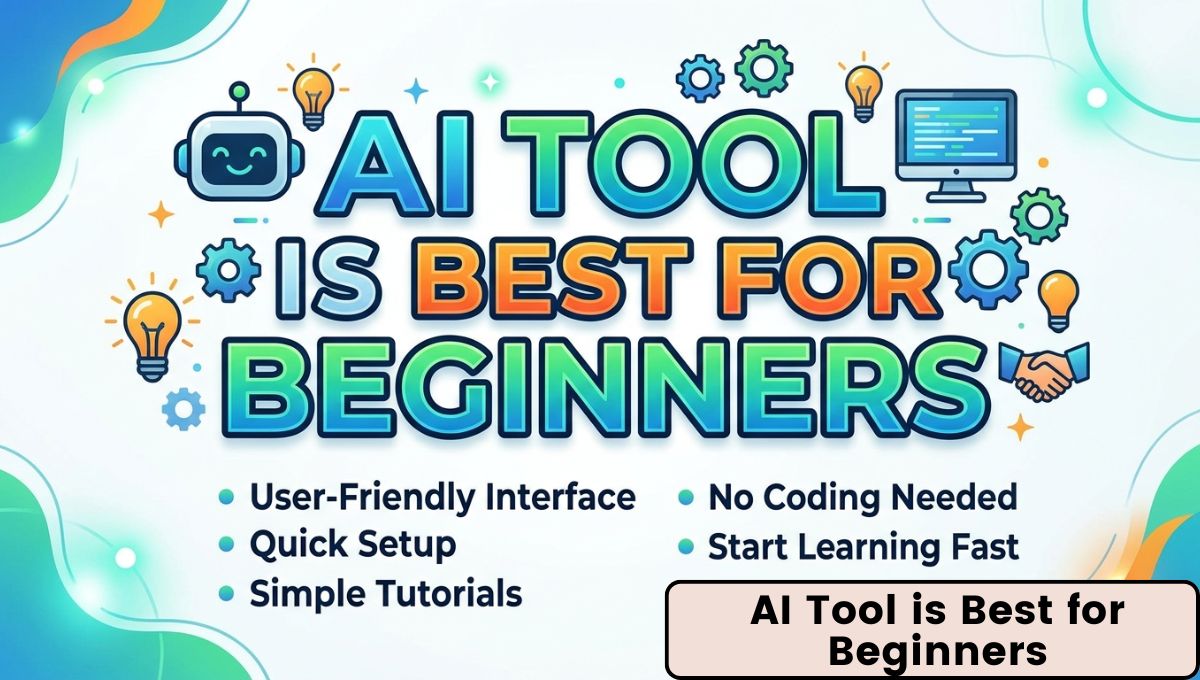
Artificial Intelligence has become one of the fastest-growing technologies in the world, and in 2026 it is no longer limited to programmers, engineers, or large technology companies. AI tools are now being used daily by students, freelancers, bloggers, YouTubers, social media creators, marketers, business owners, teachers, office workers, and even complete beginners with no technical background.
Over the last few years, AI platforms have evolved from complex experimental systems into simple and user-friendly tools that can help people write content, create images, edit videos, summarize documents, answer questions, generate ideas, automate tasks, and improve productivity. Because of this rapid growth, millions of beginners are now exploring AI for the first time.
However, the biggest challenge most new users face is choosing the right AI tool to start with. There are now hundreds of AI applications available online, including chatbots, writing assistants, image generators, research tools, productivity apps, coding assistants, and design platforms. For someone completely new to AI, this huge number of choices can quickly become confusing and overwhelming.
Beginners often ask questions like:
- Which AI tool is easiest to use?
- What is the best free AI tool for beginners?
- Is ChatGPT good for first-time users?
- Which AI app requires no coding?
- What AI platform is best for writing and productivity?
- Which AI tool is easiest to learn?
The good news is that modern AI platforms are designed specifically to be beginner-friendly. Most tools now offer simple interfaces, conversational prompts, drag-and-drop systems, templates, and guided experiences that allow users to start using AI almost immediately.
Among all available AI tools, ChatGPT is currently considered the best overall AI tool for beginners because of its ease of use, versatility, conversational interface, and ability to handle multiple tasks in one place. At the same time, other AI tools such as Gemini, Canva AI, Claude, Grammarly, Perplexity, and Notion AI are also becoming highly popular depending on specific beginner needs.
This detailed guide explores the best beginner AI tools, explains why they are beginner-friendly, compares their features, highlights their strengths and limitations, and helps users understand which AI platform is best for different types of beginners in 2026.
Why AI Tools Are Becoming Popular Among Beginners

Artificial Intelligence has become popular because it saves time and makes many digital tasks easier. Earlier, people often needed specialized software skills to perform tasks like editing images, writing professional content, designing presentations, or researching information efficiently. AI tools are changing this completely.
Today, beginners can simply type instructions in normal language and receive instant help from AI systems.
For example, beginners now use AI to:
- Write emails
- Create blog posts
- Generate social media captions
- Design posters and graphics
- Edit videos
- Summarize articles
- Learn coding
- Create resumes
- Brainstorm ideas
- Research topics
- Build presentations
- Translate content
- Improve writing quality
One major reason AI adoption is increasing rapidly is that modern tools no longer require technical expertise. Most AI systems are now designed for ordinary internet users instead of developers only.
This shift has made AI accessible to millions of people who previously had no experience with advanced technology tools.
What Makes an AI Tool Beginner-Friendly?
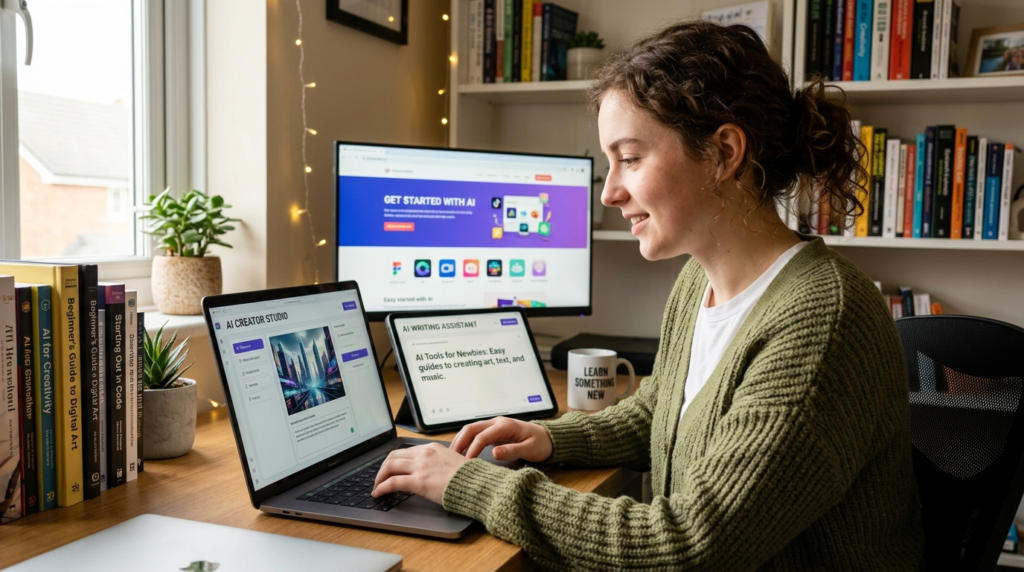
Not all AI tools are easy for beginners. Some platforms are designed for advanced developers, enterprise teams, or professional researchers. These tools may include technical interfaces, complicated settings, or workflow systems that can confuse new users.
A beginner-friendly AI tool usually includes several important qualities.
| Feature | Why It Matters for Beginners |
|---|---|
| Simple interface | Makes navigation easier |
| Conversational prompts | Feels natural and human-like |
| Fast responses | Helps users learn quickly |
| Free access | Allows experimentation without cost |
| No coding required | Easier for non-technical users |
| Multi-purpose features | Reduces need for multiple apps |
| Templates and suggestions | Guides beginners naturally |
| Mobile compatibility | Improves accessibility |
Most beginners prefer tools that feel simple and intuitive from the first interaction.
AI platforms that require complicated setups or technical knowledge often discourage first-time users.
ChatGPT Is the Best Overall AI Tool for Beginners
Among all AI platforms available in 2026, ChatGPT remains the most beginner-friendly and widely recommended AI assistant. Its popularity comes from its conversational design, multi-purpose functionality, and extremely simple user experience.
Unlike traditional software, ChatGPT works like a conversation. Beginners can simply type questions or instructions in everyday language.
For example:
- “Write a short Instagram caption”
- “Explain digital marketing simply”
- “Help me learn Python coding”
- “Create a business name”
- “Summarize this article”
- “Generate blog ideas”
The system responds instantly, and users can continue refining outputs naturally through follow-up questions.
This conversational experience removes much of the intimidation beginners usually feel when learning new technology.
Why ChatGPT Is So Popular Among Beginners
Several important reasons explain why ChatGPT is considered the best AI tool for beginners.
Natural Human-Like Conversations
One of ChatGPT’s biggest advantages is that users can communicate naturally. There is no need to learn coding languages, technical commands, or advanced interfaces.
Beginners simply describe what they want in plain English.
This makes the platform feel approachable even for users who have never used AI before.
Multi-Purpose Capabilities
ChatGPT can perform many different tasks inside one platform.
Users can use it for:
- Writing
- Brainstorming
- Learning
- Coding
- Research
- Productivity
- Planning
- Summarization
- Translation
Instead of learning several separate tools, beginners can handle multiple workflows in one place.
This simplicity is extremely valuable for new users.
Strong Free Version
The free version of ChatGPT already offers powerful functionality for most beginners.
Users can:
- Ask unlimited questions
- Generate content
- Learn topics
- Research information
- Practice prompts
Because beginners can start without financial commitment, ChatGPT has become the first AI platform many people experiment with.
Fast Learning Curve
Beginners usually understand ChatGPT quickly because the interface feels similar to messaging applications.
There are no complex dashboards or overwhelming menus.
Users type instructions and receive immediate results, helping them gain confidence rapidly.
Useful for Students and Professionals
ChatGPT works for many types of users, including:
- Students
- Bloggers
- Teachers
- Freelancers
- Small business owners
- Content creators
- Office workers
- Developers
This broad usefulness makes it one of the safest starting points for beginners exploring AI.
Gemini Is Best for Google Ecosystem Users
Google Gemini has also become one of the most beginner-friendly AI platforms, especially for users already connected to Google products such as Gmail, Google Docs, Google Drive, and Android devices.
Gemini focuses heavily on productivity and research workflows.
Many beginners prefer Gemini because it integrates naturally with tools they already use daily.
Users commonly use Gemini for:
- Summarizing emails
- Organizing tasks
- Research assistance
- Google Docs writing help
- Brainstorming ideas
- Productivity support
Because many people already trust Google services, Gemini often feels familiar and comfortable for beginners.
Why Gemini Is Good for Beginners
Gemini offers several beginner-friendly benefits.
Simple Interface
Gemini has a clean and minimal interface that feels easy to navigate.
New users can start conversations quickly without technical setup.
Strong Research Capabilities
Many beginners use Gemini for learning and research because it integrates effectively with Google Search systems.
This makes it useful for students and researchers.
Google Integration
Users already working inside Gmail, Docs, and Drive can access AI assistance more naturally.
This reduces the learning curve significantly.
Canva AI Is Best for Design Beginners
Canva AI has become one of the easiest AI-powered design platforms available today. Unlike professional design software that often requires training, Canva focuses heavily on simplicity and drag-and-drop workflows.
The platform allows beginners to create:
- Instagram posts
- Posters
- YouTube thumbnails
- Presentations
- Business cards
- Infographics
- Social media graphics
Canva AI features also help users generate images, write text, and create layouts automatically.
Why Canva AI Is Beginner-Friendly
Several features make Canva AI extremely easy for beginners.
Drag-and-Drop Simplicity
Users can create designs visually without needing advanced editing skills.
Ready-Made Templates
Canva includes thousands of templates that help beginners create professional-looking designs quickly.
AI Design Assistance
Users can describe what they want, and Canva AI helps generate layouts and visual suggestions automatically.
No Professional Design Experience Needed
This is one of Canva’s biggest strengths. Beginners can produce high-quality visuals without learning complicated design software.
Grammarly Is Best for Writing Improvement
Grammarly remains one of the most popular beginner AI tools for improving writing quality.
Unlike full AI chatbots, Grammarly focuses specifically on writing enhancement.
It helps users:
- Correct grammar
- Improve clarity
- Adjust tone
- Rewrite sentences
- Enhance professionalism
Because Grammarly works inside browsers and writing apps, beginners receive real-time assistance while writing naturally.
Why Grammarly Helps Beginners
Many beginners struggle with confidence while writing emails, articles, or professional messages.
Grammarly simplifies this process by offering automatic suggestions directly during writing.
It is especially useful for:
- Students
- Bloggers
- Office workers
- Freelancers
- Non-native English speakers
The platform’s simplicity makes it accessible even for users with minimal technical knowledge.
Claude Is Best for Long Writing and Deep Explanations
Claude has become increasingly popular among beginners who focus on long-form writing, detailed discussions, and document analysis.
Many users describe Claude as calmer, more structured, and more thoughtful in its responses compared to some other chatbots.
Claude is commonly used for:
- Essays
- Reports
- Research analysis
- Long documents
- Article writing
- Deep explanations
Why Claude Is Beginner-Friendly
Claude offers a clean and distraction-free interface that feels easy to use.
Many beginners also appreciate:
- Longer responses
- More organized explanations
- Better handling of long documents
- Clear writing style
This makes it attractive for students, researchers, and professional writers.
Perplexity Is Best for AI Research
Perplexity is one of the most beginner-friendly AI research tools because it combines conversational AI with live source citations.
Unlike standard chatbots, Perplexity focuses heavily on:
- Research
- Fact-checking
- Source discovery
- Information summaries
Beginners often prefer Perplexity because it provides references alongside answers, helping users verify information more easily.
Why Perplexity Helps Beginners
Many new AI users worry about misinformation and hallucinations.
Perplexity reduces this concern by showing supporting sources directly.
This makes it especially useful for:
- Students
- Journalists
- Bloggers
- Researchers
- Academic users
The platform also feels simple and conversational, helping beginners learn AI research workflows naturally.
Notion AI Is Best for Productivity and Organization
Notion AI combines productivity management with AI assistance.
The platform helps users organize:
- Notes
- Projects
- Tasks
- Workspaces
- Documents
- Schedules
Many beginners use Notion AI because it centralizes productivity workflows in one place.
Why Notion AI Is Beginner-Friendly
Notion AI simplifies organization while adding AI-powered writing and summarization features.
Beginners use it for:
- Daily planning
- Content organization
- Meeting notes
- Team collaboration
- Productivity management
Its clean interface and flexible structure make it attractive for students and professionals.
Best Beginner AI Tools by Category
| Category | Best Beginner AI Tool |
|---|---|
| Overall AI assistant | ChatGPT |
| Google productivity | Gemini |
| Graphic design | Canva AI |
| Writing improvement | Grammarly |
| Long-form writing | Claude |
| AI research | Perplexity |
| Productivity | Notion AI |
| Video editing | CapCut AI |
| Coding assistance | GitHub Copilot / Codeium |
This comparison helps beginners choose tools based on personal goals instead of trying every available AI platform.
Why Beginners Should Start with One AI Tool
One common mistake new users make is trying too many AI tools at once.
This often creates confusion because each platform has different workflows, interfaces, and strengths.
Most AI experts recommend that beginners start with one versatile AI assistant such as ChatGPT before exploring specialized tools later.
This approach helps users:
- Build confidence
- Learn prompting skills
- Understand AI behavior
- Develop practical workflows
- Avoid information overload
Once beginners become comfortable using one AI platform, transitioning to other tools becomes much easier.
Common Mistakes Beginners Make While Using AI
Many beginners expect AI tools to produce perfect results instantly.
However, AI works best when users learn how to guide systems properly.
Common beginner mistakes include:
- Using unclear prompts
- Trusting outputs without reviewing them
- Trying too many tools simultaneously
- Expecting perfect accuracy
- Ignoring fact-checking
- Overusing AI-generated content without editing
Experienced users often describe AI as a powerful assistant rather than a complete replacement for human thinking.
Learning how to communicate effectively with AI improves results significantly over time.
Free vs Paid AI Tools for Beginners
Most beginners start with free AI plans.
Free versions of tools like:
- ChatGPT
- Gemini
- Canva
- Grammarly
- Claude
- Perplexity
already provide enough functionality for learning and experimentation.
Paid plans become useful mainly when users need:
- Faster responses
- Higher usage limits
- Advanced AI models
- Better image generation
- Team collaboration
- Larger file support
For most beginners, free plans are sufficient initially.
How AI Tools Are Changing Learning and Productivity
AI tools are now becoming part of daily life for millions of people.
Students use AI for studying, creators use it for content generation, businesses use it for automation, and professionals use it for productivity enhancement.
This shift is creating a future where AI literacy may become as important as internet literacy.
People who learn how to use AI effectively today may gain major productivity advantages in education, work, and business over the next decade.
The Future of Beginner AI Tools
AI tools are becoming simpler and more accessible every year.
Future beginner AI systems are expected to include:
- Voice-based interaction
- Better personalization
- More automation
- Smarter assistants
- Easier workflows
- Integrated productivity systems
Companies are focusing heavily on reducing complexity and making AI feel more natural for everyday users.
This trend will likely make AI even easier for beginners in the coming years.
Conclusion
Artificial Intelligence is no longer limited to experts or technical professionals. Modern AI platforms are designed specifically to help beginners use powerful technology with minimal effort. Among all available options, ChatGPT remains the best overall AI tool for beginners in 2026 because of its conversational interface, versatility, ease of use, and strong free version.
At the same time, other beginner AI tools also serve important roles depending on user goals. Gemini works well for Google users, Canva AI simplifies graphic design, Grammarly improves writing quality, Claude supports long-form writing, Perplexity enhances research workflows, and Notion AI improves productivity and organization.
For most beginners, the best strategy is to start with one simple AI assistant and gradually explore more specialized tools over time. AI technology is becoming increasingly integrated into everyday work, education, creativity, and business operations, making AI skills more valuable than ever before.
As AI continues evolving rapidly, beginners who learn how to use these tools effectively today will likely gain significant advantages in productivity, learning, creativity, and digital opportunities in the future.