
The digital economy in 2026 is growing at a fast pace, and one of the biggest opportunities available today is selling digital products. From eBooks and online courses to templates, software, and design assets, creators are finding new ways to earn income without dealing with physical inventory. A major factor behind this shift is the increasing use of AI Tools for Selling Digital Products, which are helping individuals create, market, and sell products more efficiently.
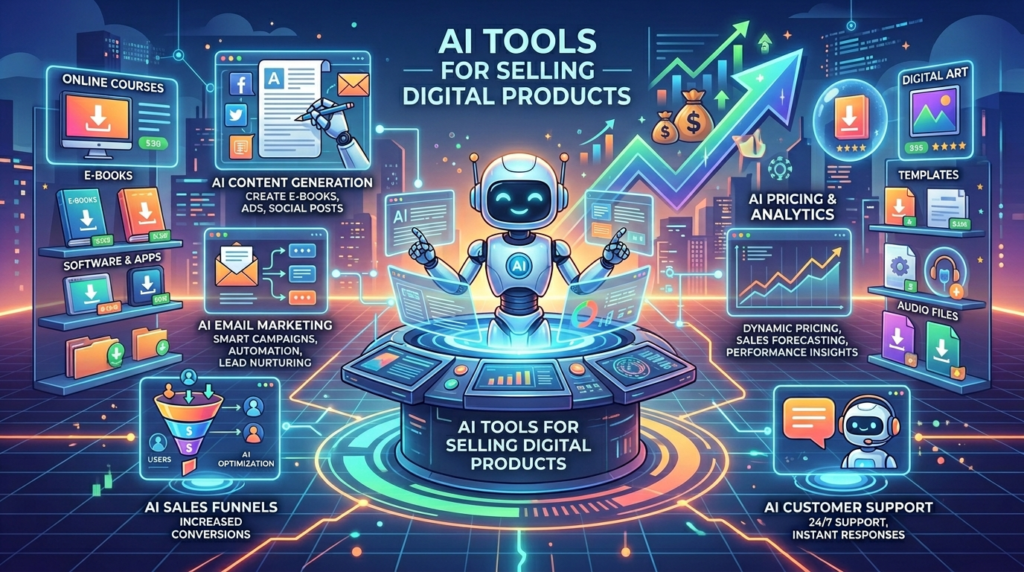
In earlier years, launching a digital product required technical skills, time, and a clear understanding of marketing strategies. Today, artificial intelligence has simplified most of these steps. With the help of AI, creators can generate product ideas, design content, automate sales processes, and analyze customer behavior. This transformation has made it easier for beginners to enter the market while also helping experienced sellers scale their businesses.
At the same time, Digital Products 2026 are becoming more diverse and accessible. Consumers are actively looking for online solutions, learning resources, and ready-to-use digital assets. This growing demand is creating new opportunities for creators who are ready to use AI effectively.
Understanding Digital Products in 2026
Digital products are items that can be created, sold, and delivered online without any physical form. These include eBooks, online courses, templates, design files, software tools, and downloadable resources. In 2026, the demand for such products has increased as more people prefer online learning and digital solutions.
The advantage of digital products is that they can be created once and sold multiple times. This makes them a scalable source of income. With the support of AI Tools for Selling Digital Products, the process of creating and distributing these products has become faster and more efficient.
Creators can now focus more on value and less on technical complexity. AI tools handle tasks such as content creation, formatting, and optimization, allowing creators to bring their ideas to market quickly.
How AI Tools Are Transforming Product Creation

One of the biggest challenges in selling digital products is creating high-quality content. AI tools are solving this problem by assisting in content generation and design.
AI writing tools can help create eBooks, course scripts, and product descriptions within minutes. These tools provide structured content that can be edited and customized based on the creator’s needs. This reduces the time required to develop a product.
Design tools powered by AI can generate professional layouts, graphics, and templates. This is especially useful for creators who do not have advanced design skills. By using AI, creators can produce visually appealing products that meet market standards.
Product Idea Research and Validation

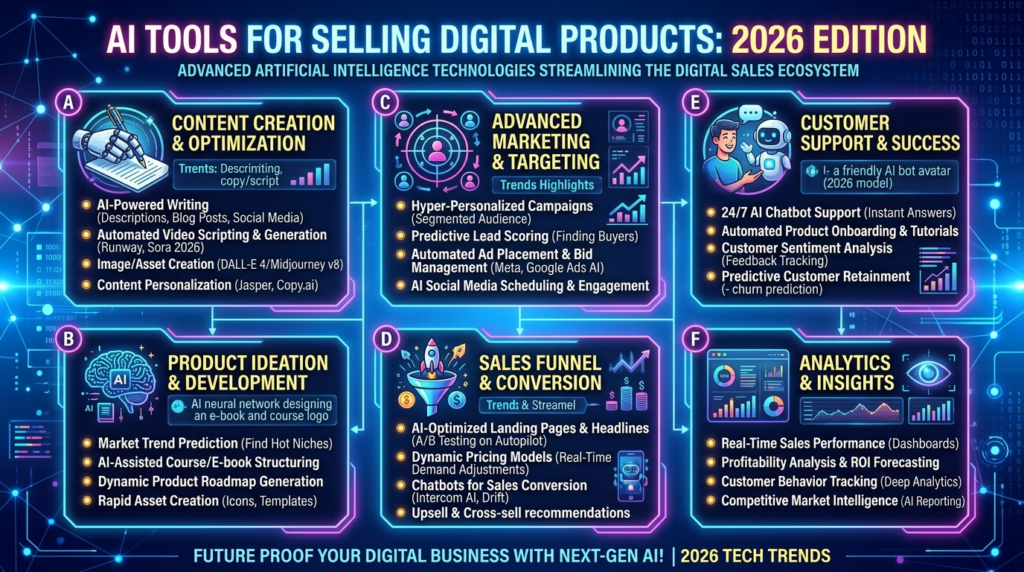
Before creating a digital product, it is important to identify what people are looking for. AI tools help in researching trends and validating product ideas.
These tools analyze search data, customer behavior, and market demand to suggest ideas that have a higher chance of success. This ensures that creators invest their time and effort in products that are likely to sell.
By using data-driven insights, creators can reduce the risk of failure and focus on opportunities that align with market needs.
Content Development and Automation

Once a product idea is finalized, the next step is development. AI tools streamline this process by automating various tasks.
For example, AI can:
- Generate course modules and lesson plans
- Create written content for eBooks
- Suggest improvements for clarity and structure
- Format content for different platforms
Automation allows creators to produce products faster while maintaining quality. This is particularly useful for those managing multiple products or working on tight schedules.
Marketing and Promotion Using AI

Creating a product is only one part of the process. Marketing plays a crucial role in ensuring that the product reaches the right audience. AI tools are widely used to improve marketing strategies.
They help in writing promotional content, creating social media posts, and designing advertisements. AI can also analyze audience behavior to suggest the best channels and timing for promotion.
Email marketing is another area where AI is effective. Automated campaigns can be created to nurture leads and convert them into customers. This improves efficiency and increases the chances of sales.
Sales Funnel Optimization

A sales funnel is the journey a customer takes from discovering a product to making a purchase. AI tools help optimize this process by analyzing user behavior and identifying areas for improvement.
They can track how users interact with landing pages, emails, and product listings. Based on this data, creators can make changes to improve conversion rates.
Automation also plays a role in managing the funnel. AI tools can send follow-up emails, offer discounts, and provide personalized recommendations to potential buyers.
Customer Engagement and Support

Maintaining good customer relationships is important for long-term success. AI tools help in managing customer interactions and providing support.
Chatbots and automated messaging systems can handle common queries and provide instant responses. This improves customer satisfaction and reduces the workload on creators.
AI also helps in collecting feedback and analyzing customer preferences. This information can be used to improve existing products and develop new ones.
Essential AI Tools and Their Functions
To successfully sell digital products, creators often use a combination of AI tools. Each tool serves a specific purpose in the workflow.
| Task | Tool Type | Purpose |
|---|---|---|
| Idea Research | AI Research Tool | Identifies trending product ideas |
| Content Creation | AI Writing Tool | Generates product content |
| Design | AI Design Tool | Creates visuals and layouts |
| Marketing | AI Marketing Tool | Promotes products online |
| Sales Funnel | Automation Tool | Optimizes customer journey |
| Customer Support | AI Chat Tool | Handles queries and feedback |
These tools work together to create a complete system for building and selling digital products.
Scaling Digital Product Business

One of the key advantages of digital products is scalability. Once a product is created, it can be sold multiple times without additional production costs. AI tools make it easier to scale by automating processes and improving efficiency.
Creators can launch multiple products, target different audiences, and expand their reach without significantly increasing workload. This allows for steady growth and higher income potential.
AI also helps in managing operations, tracking performance, and identifying new opportunities for expansion.
Challenges and Responsible Use of AI
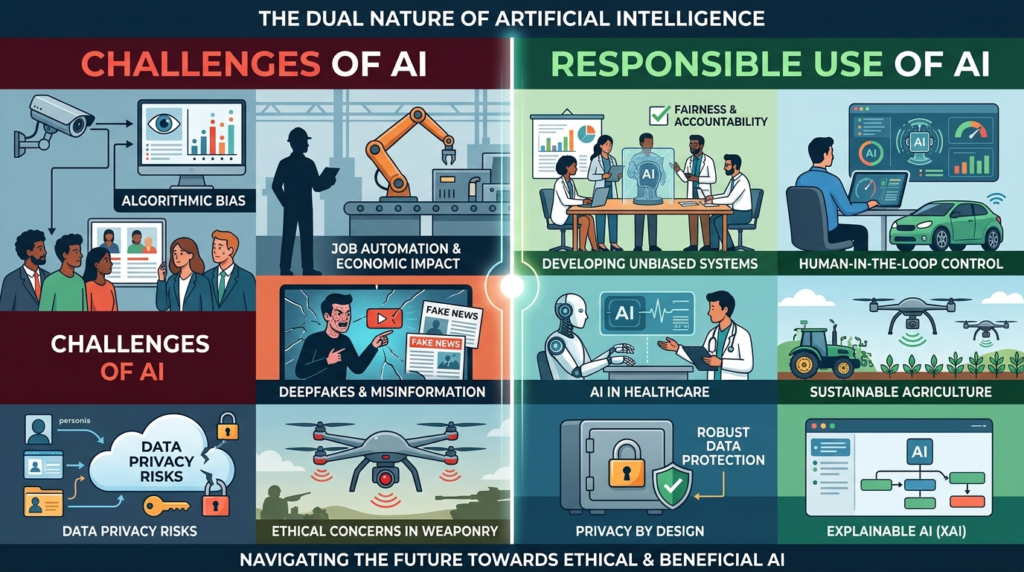
While AI tools offer many benefits, they must be used carefully. Over-reliance on automation can lead to generic products that lack originality.
Creators should review and customize AI-generated content to ensure quality and relevance. It is important to maintain a balance between automation and creativity.
Another challenge is staying updated with changing technology. As AI tools evolve, creators need to adapt and learn new features to stay competitive.
Future of AI in Digital Products 2026

The role of AI in digital product creation and sales is expected to grow further. New tools are being developed to improve personalization, automation, and analytics.
AI will continue to make it easier for creators to enter the market and compete effectively. As demand for Digital Products 2026 increases, the use of AI will become even more important.
Creators who adopt these tools early will have a better chance of building successful and sustainable businesses.
Conclusion
The rise of AI Tools for Selling Digital Products has transformed the way creators build and grow online businesses. From idea generation to product creation, marketing, and sales, AI simplifies every step of the process.
At the same time, Digital Products 2026 are becoming a major source of income for individuals worldwide. The ability to create once and sell multiple times makes this model highly scalable and efficient.
By using AI tools strategically, creators can improve productivity, reach a wider audience, and increase their earnings. Understanding how to combine technology with a clear business strategy is essential for success in the modern digital economy.